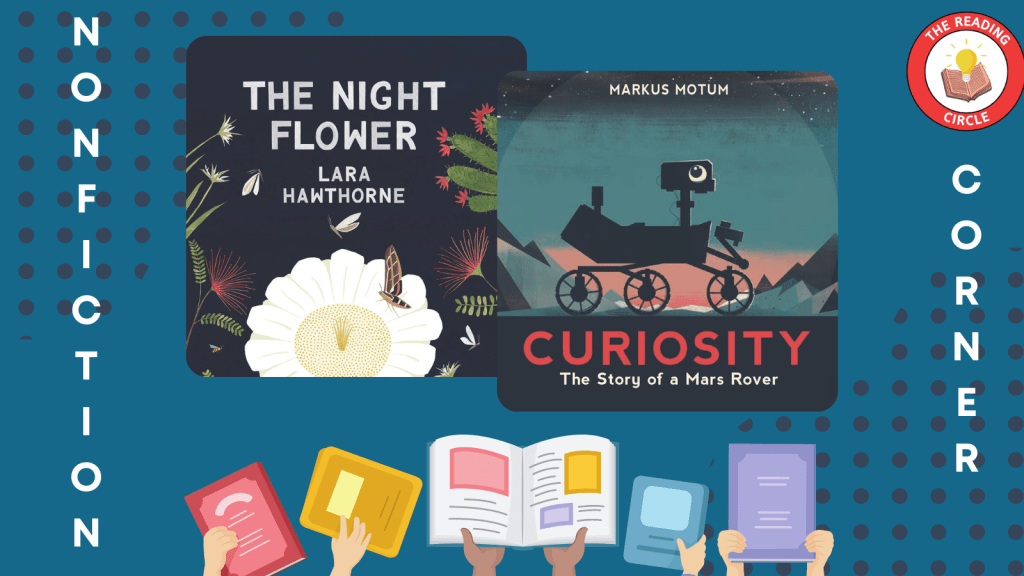
The Night Flower: The Blooming of the Saguaro Cactus (Candlewick Press)
Written & Illustrated by Laura Hawthorne
For ages: 3-7
This beautifully illustrated nonfiction text uses the life cycle of the saguaro cactus as a way to showcase the diversity of life in the desert. While other depictions of this biome show a barren landscape, Laura Hawthorne’s art focuses on color and vibrancy. Cacti are shown to be perfect homes for desert birds to the point it resembles a high-rise apartment building. Butterflies join the birds as they fill the desert sky, landing to drink from the fruitful cacti. One crucial detail for young readers is that the daytime is a sleepy period in the desert, with the night being when the place comes alive.
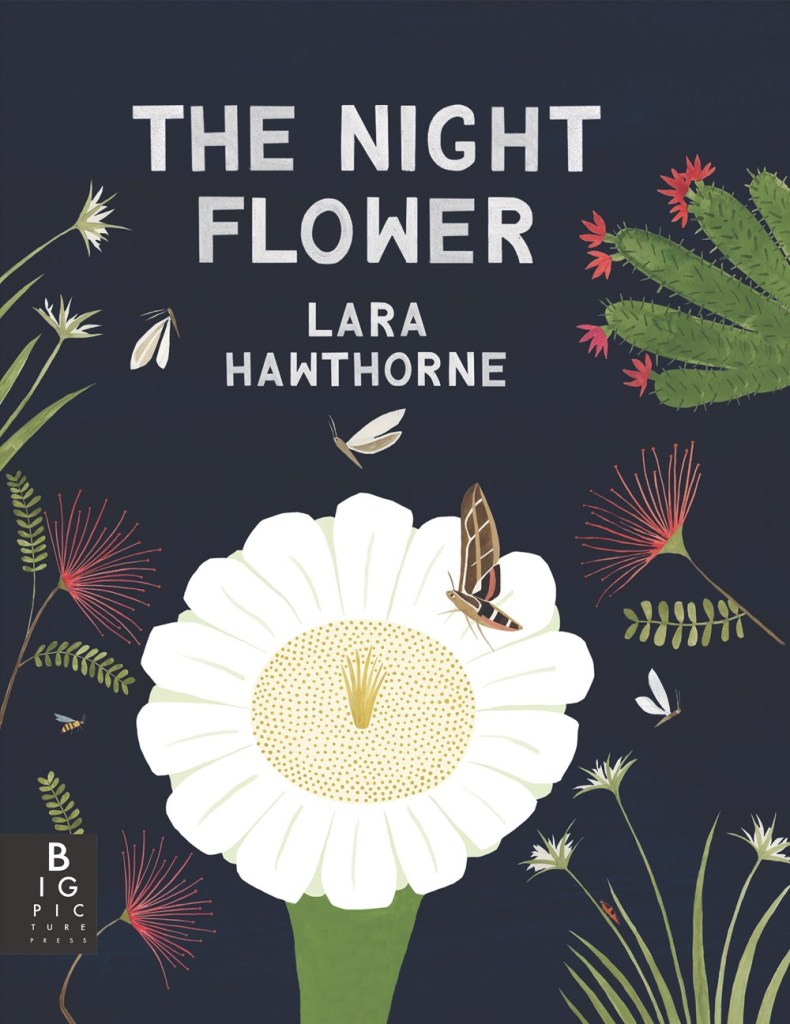
The text is written in simple couplets rhyming words like “scent-event” or “sweet-treat.” The vocabulary comprises many familiar words with subject-specific vocab aided by a glossary on the end pages. One of my favorite parts of the book is a scene at night depicting the arrival of brown bats who nectar from a saguaro bloom. We must address misconceptions about the world that students often pick up from inaccurate media. A book like The Night Flower isn’t just working to change children’s perceptions of cacti but all the animals who live in the desert. While cacti and bats might be things kids view with trepidation and fear, this book explains how they are essential parts of ecosystems in a wonderful way.
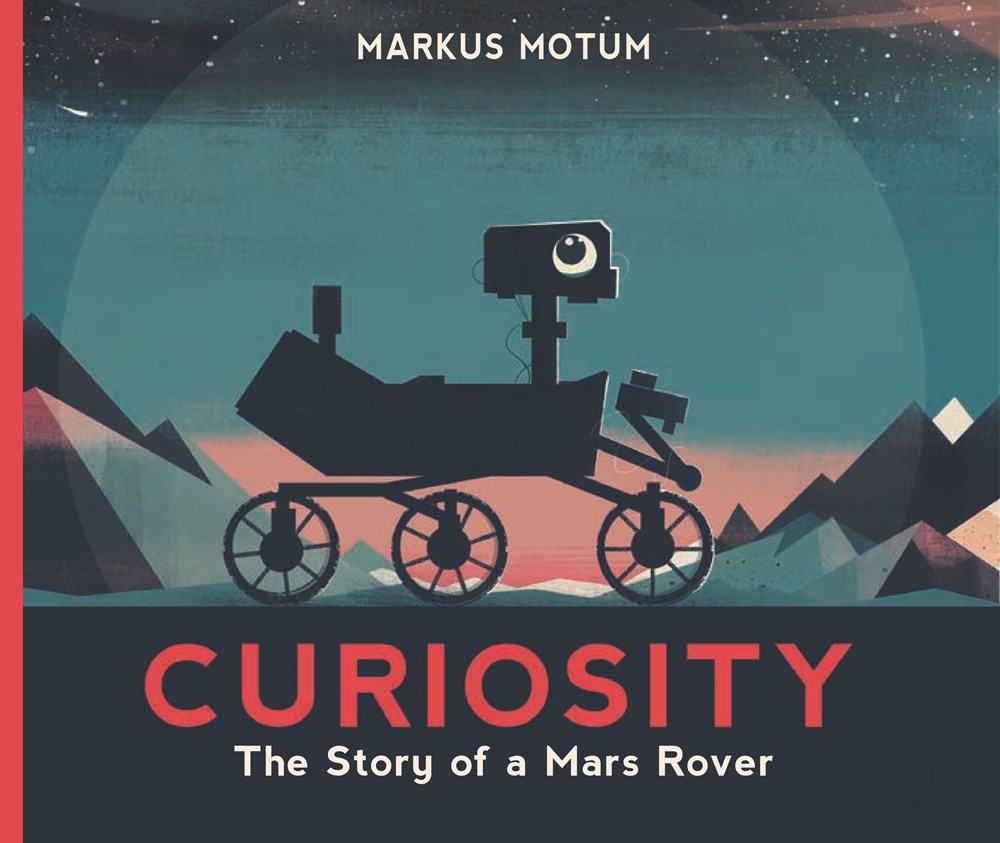
Curiosity: The Story of the Mars Rover (Candlewick Press)
Written & Illustrated by Markus Motum
For ages: 4-8
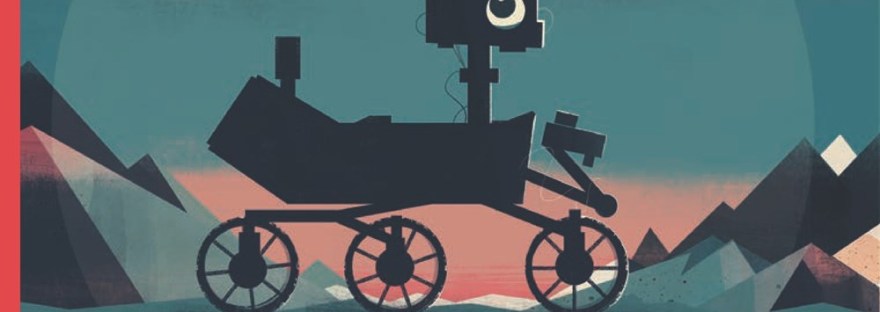
If you are looking for a book on the Mars Rover that is very kid-friendly and delivers comprehensive information on the topic, this is the one. Author-illustrator Markus Motum can draw Curiosity in a way that anthropomorphizes it but doesn’t do it in an overly cartoonish way. The technical aspects of the rover are perfectly accurate, with its camera lens acting as its expressive “eye.” The text begins before Curiosity has been built and sets up the context that led to a desire to explore Mars. Students are treated with an in-depth explanation of how NASA labs work and the conditions needed to make Curiosity a reality.
I was impressed with how Motum handled the specifics of space flight, especially some fundamental concepts in physics. This picture book may need to be read in parts, making each read-aloud sitting focused on the next stage of the process of getting Curiosity to Mars. Motum’s illustration style is in a modern vein while drawing elements from 1950s pop art, the type you might find in print illustration and animation of that period. This book would make a fantastic centerpiece for a space exploration unit, with the concepts illustrated being relevant for manned space flights and probes sent to other planets. If you have a young reader fixated on space, this book would be a must-purchase.

 The Reading Circle