book list, folktales, humor

Book List: Remixed Fairy Tales

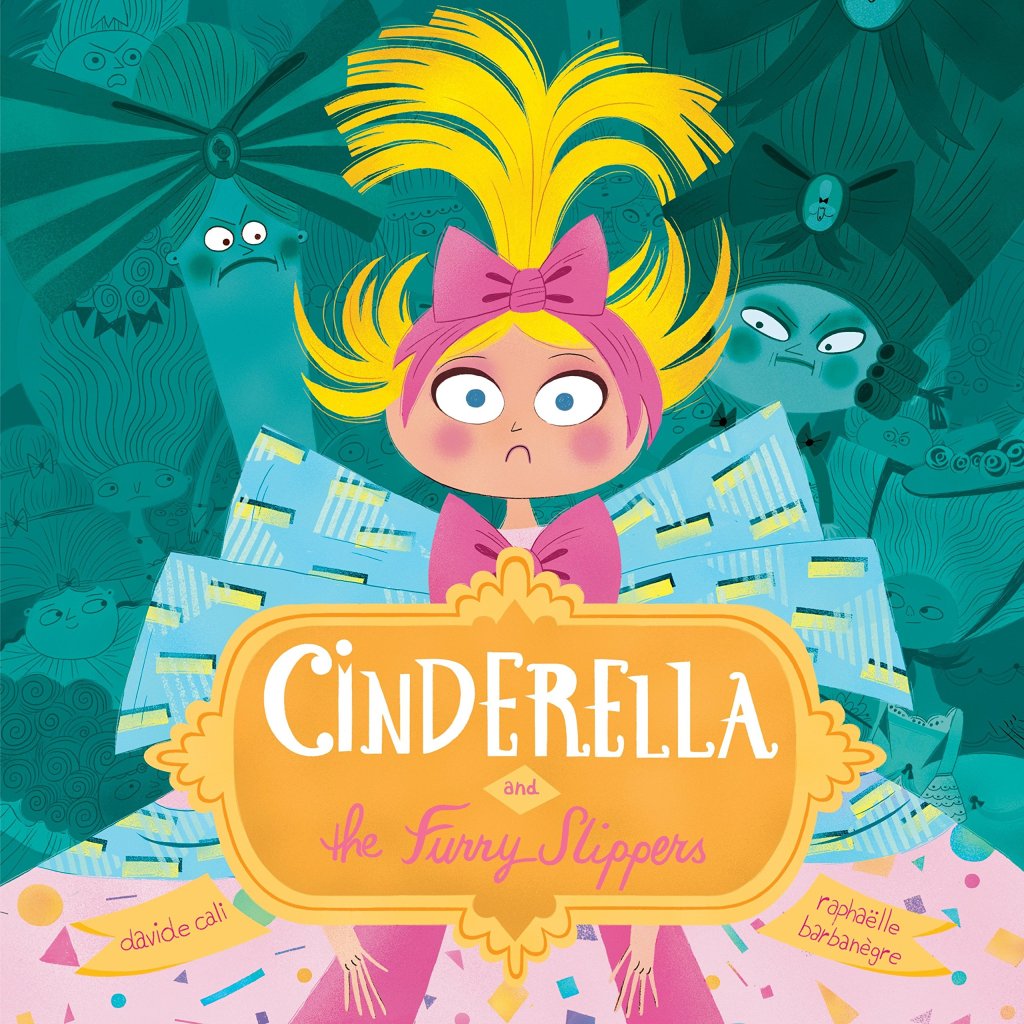
Cinderella and the Furry Slippers (Tundra Books)
Written by Davide Cali
Illustrated by Raphaelle Barbanegre

For ages: 3-7
Things start how you might expect. Cinderella is a put upon young woman, made to do endless chores at the hands of her stepmother and stepsisters. So when the prince’s ball is announced, Cinderella phones a fairy godmother she finds advertised in a magazine. Unfortunately, what she gets delivered is not as promised, including the titular furry slippers. But Cindy has to work with what she’s got. It turns out the ball isn’t all it was cracked up to be, and Prince Charming has severe bad breath. The lesson here is an empowering one, to not rely on the fantasies young girls are inundated with but be you, be who you want to be, and not be shaped and influenced by outside forces.

Continue reading “Book List: Remixed Fairy Tales”
arabic, book list, culture, muslim

Book List: Muslim Lives

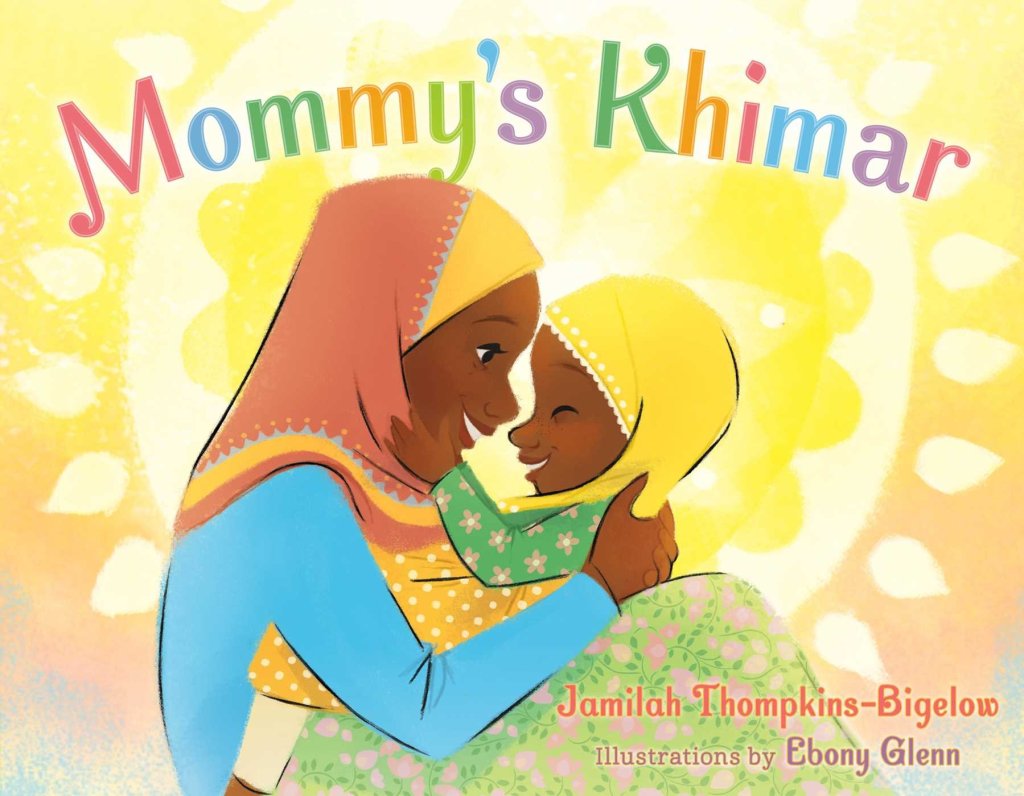
Mommy’s Khimar (Salaam Reads / Simon & Schuster Books for Young Readers)
Written by Jamilah Thompkins-Bigelow
Illustrated by Ebony Glenn

For ages: 4-8
This lovely text is all about finding beauty in your culture. The young girl who narrates the tale loves her headscarf or khimar. For our young friend, the scarf can be many things: a bird’s wings, a queen’s cloak, and a superhero’s cape. The family is presented as Black, and there are rich details about the girl’s braided hair and the scent of coconut oil and cocoa butter that will connect with children who have these sensory experiences in their lives. The book even addresses people outside the Muslim community, like a Christian grandmother on her mom’s side. She loves her sweet granddaughter even though they practice different belief systems. There’s so much joy and warmth in this text I expect most readers will be unable to resist a smile.

Continue reading “Book List: Muslim Lives”
book list, humor, social-emotional

Book List: Bedtime Books

The Going To Bed Book (Little Simon)
Written & Illustrated by Sandra Boynton

For ages: 2-5
The first books a child likely receives are thick, sturdy board books designed to stand up to teething toddlers and grasping hands. The Going To Bed Book is a bedtime routine delivered as a rhyming story for our littlest ones. Boynton’s illustrations are expressive and straightforward, with animal characters going about the steps of preparing for bed. We see them taking a bath, putting on pajamas, brushing their teeth, etc. The Going To Bed Book would make an excellent first bedtime book for any child. It will help reinforce the routine we work to instill in our children while giving them a sweetly written story before nodding off for the night.

Continue reading “Book List: Bedtime Books”
animals, book list

Book List: Nighttime Animals

Nighttime is a fascinating thing for many children. It happens when they are asleep, and we all remember wondering what happened when the lights went out. Children are also fascinated with animals, watching them in their natural habitats and seeing how they survive. Nighttime animals are some of the most interesting and show us that even though the sun has gone down, much is happening under the cover of night.

Continue reading “Book List: Nighttime Animals”
book list, race, social studies, social-emotional

Book List: Race in America

I have been increasingly ashamed of the various state legislatures around America who have chosen to devote their energy to eliminating meaningful classroom instruction for people of color. Framed as “Critical Race Theory,” which is a legal theory, not an elementary school concept, these racists intend to hide the truth and promote white supremacy. While activism in some corners has been successful, sadly, in other spots, the majority seem to be clamoring for censorship. Not talking about race as an educator is to do a disservice to your students. Part of me is pleased I walked away from teaching in Tennessee when I did, but I can’t help but feel deeply saddened by the students who will have their history hidden from them. If you are a teacher who refuses to hide the truth, these books provide a fantastic jumping-off point.

Continue reading “Book List: Race in America”
african, arabic, book list, culture, hispanic, social studies, social-emotional

Book List: Refugee Stories

It’s calculated that at least 26.4 million people worldwide are classified as refugees, but the number of people displaced as a whole is closer to 83 million right now. If you live in North America or Europe, your life has been touched by these people seeking a safe place to live their lives. To not have the refugee experience represented in your school or classroom library is to do a disservice to the children coming in and out of your classroom. Adults often have the most difficult time getting outside of their comfort zone, and we see it so often with the most pressing human rights issues of our day. Children who are refugees and the children of refugees have a right to be seen in the literature they and their peers are reading. I hope you find some great selections here that you can add to your stacks.

Continue reading “Book List: Refugee Stories”
book list, humor, read-aloud

Book List: Read Alouds

Don’t Blink (Random House for Young Readers)
Written by Amy Krouse Rosenthal
Illustrated by David Roberts

For ages: 3-7
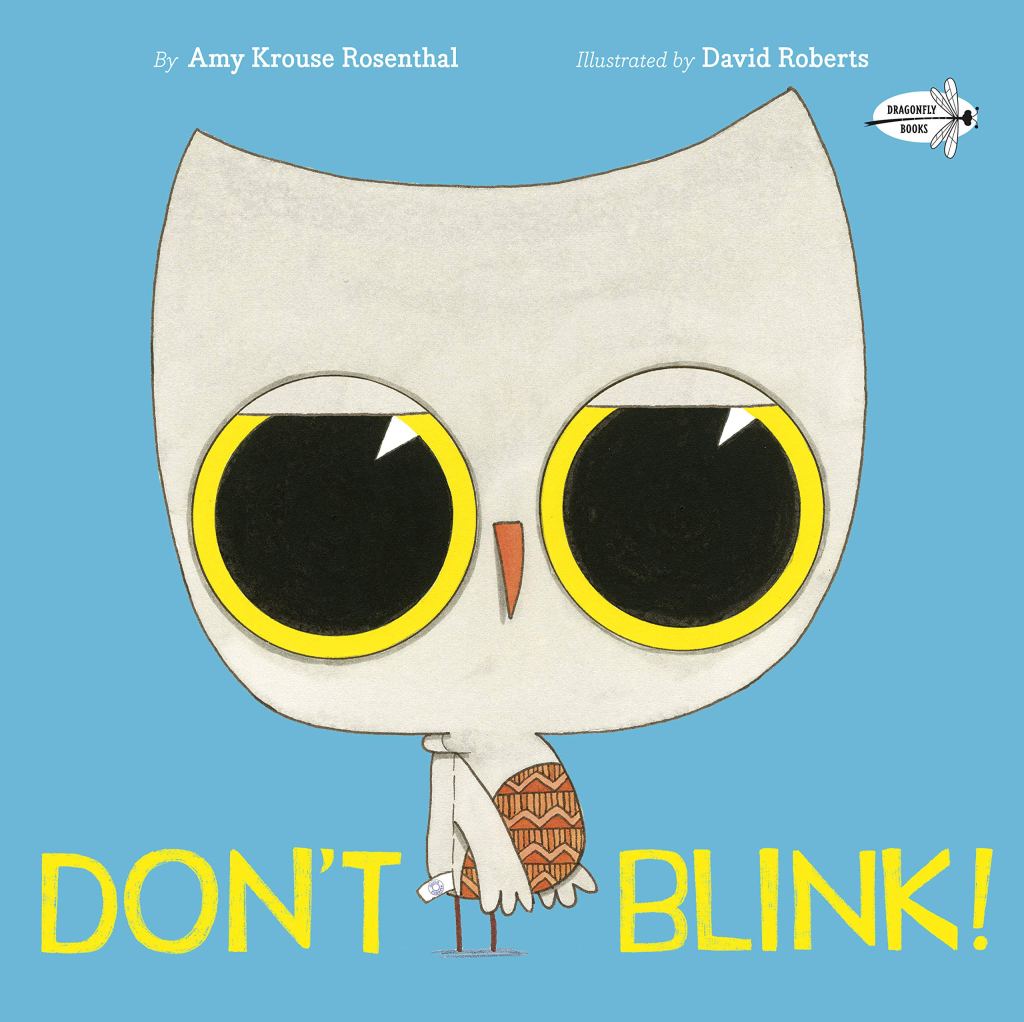
One of the most fun things about books made for reading aloud is that they engage early readers in a manner that helps reinforce the joy of reading. Don’t Blink is a perfect starter and a great bedtime read. The narrator, a big-headed owl, asks the reader not to blink. However, if they do, they must turn the page. The little owl keeps trying to help the reader with suggestions and aids to stop blinking on the page. As you know, this will, of course, fail and so by the end, children will be laughed out and relaxed, ready for sleep. One of the standard tropes with these read-aloud books is simple pictures and sentences. This is no exception making it a book that won’t intimidate reluctant readers.


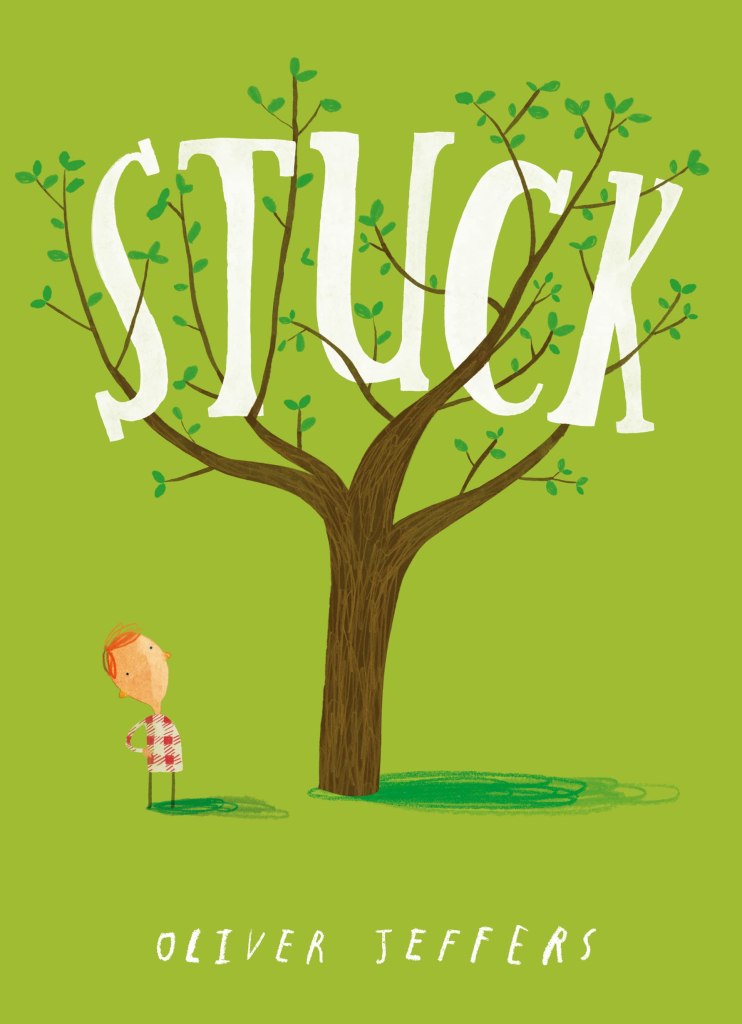
Stuck (Philomel Books)
Written & Illustrated by Oliver Jeffers

For ages: 3-7
Irish writer-illustrator Oliver Jeffers has such a clever sense of humor, and it’s on full display here in the silly, bite-size Stuck. A boy named Floyd gets his kite stuck in a tree and wants to get it down. Simple enough. His decision to keep throwing increasingly ridiculous things up into the tree to get the kite down is where the laughs begin. At first, they are small and inanimate. By the end, he’s chucking a bucket of paint, the milkman, a lighthouse, and even a whale into the tree. Jeffers’s writing plays as a highly deadpan narration. It should be read as such to elicit laughs from your audience. This is one of those books that will become a treasured favorite re-read.


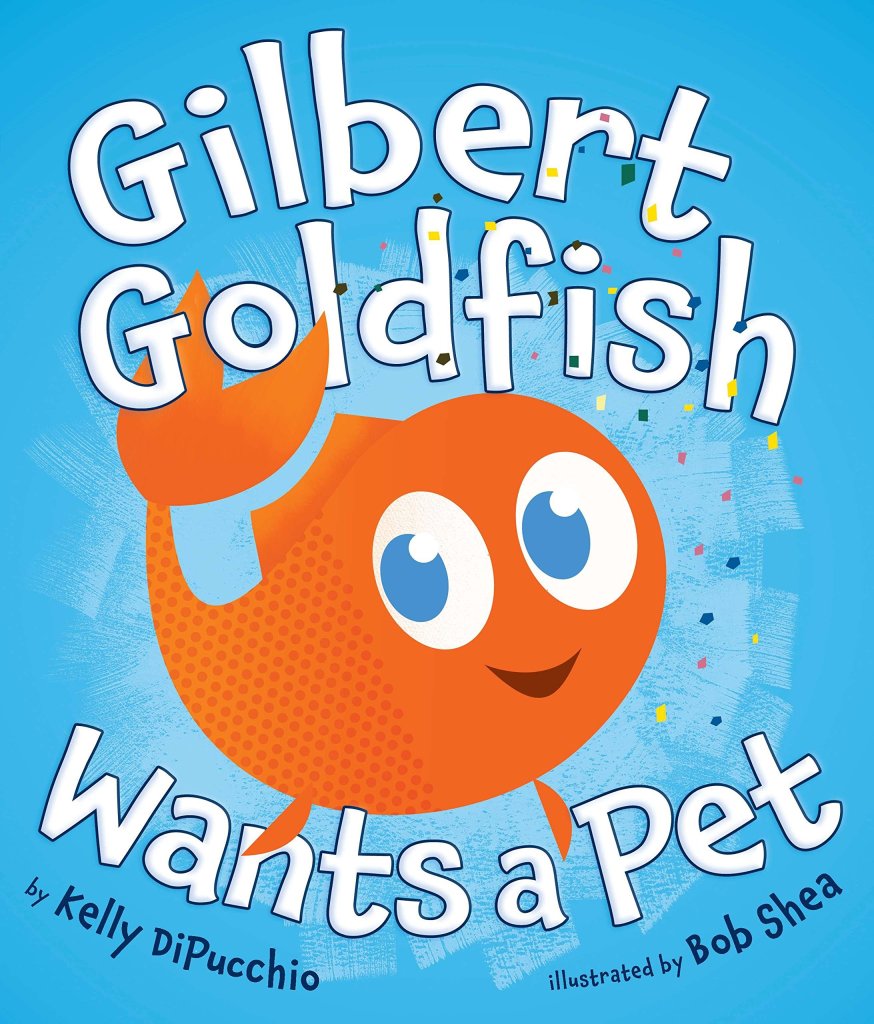
Gilbert Goldfish Wants a Pet (Dial Books)
Written by Kelly DiPucchio
Illustrated by Bob Shea

For ages: 3-7
Gilbert is a goldfish who wants a pet of his own. He doesn’t limit himself based on living in a fishbowl and imagines himself able to handle any pet a human could. A dog comes to the house, and Gilbert loves him, but the loud barking brings our fish friend back to reality. A curious mouse approaches the bowl but runs away when he realizes Gilbert isn’t a piece of cheese. A fly is quickly taken out of the picture, thanks to a swatter. Throughout these encounters, Gilbert questions if he can handle a pet. This makes for a great read-aloud due to all the predictions opportunities. With each pet comes a moment where you can ask your little readers what they think will happen and why.


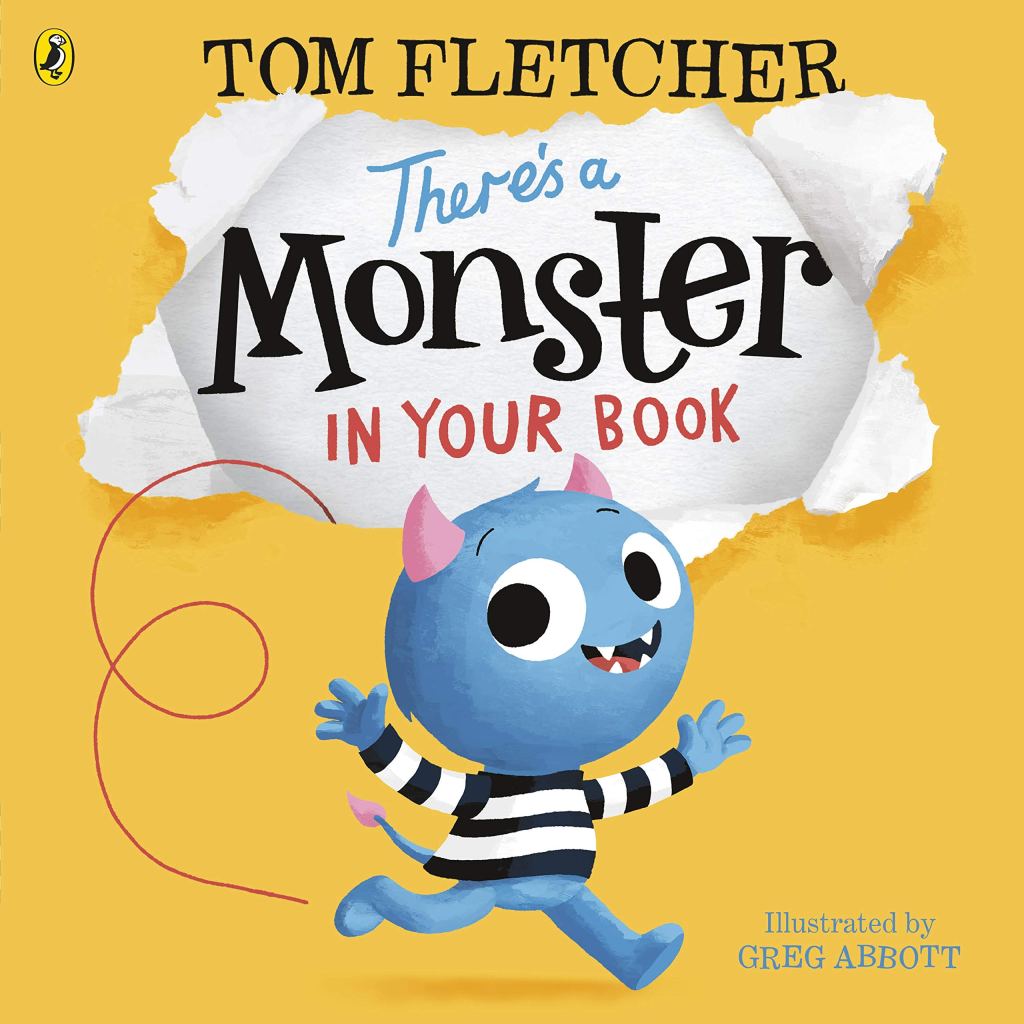
There’s a Monster in Your Book (Random House Books for Young Readers)
Written by Tom Fletcher
Illustrated by Greg Abbott

For ages: 3-7
There’s a Monster in Your Book begins with a cute little creature munching away on the corner of a page. The unseen narrator implores the reader to help him get rid of this uninvited guest. Readers are asked to shake, spin, and tilt the book to knock him out. It gets amusing when readers will need to blow, shout, and tickle the monster as he clings tighter. Eventually, the narrator realizes it’s much better to keep the monster in the book than have him running around their room. This is a fun, innocent tale that will command young readers’ attention. The book provides many opportunities for movement and laughter but eventually transitions readers back into a calm state.


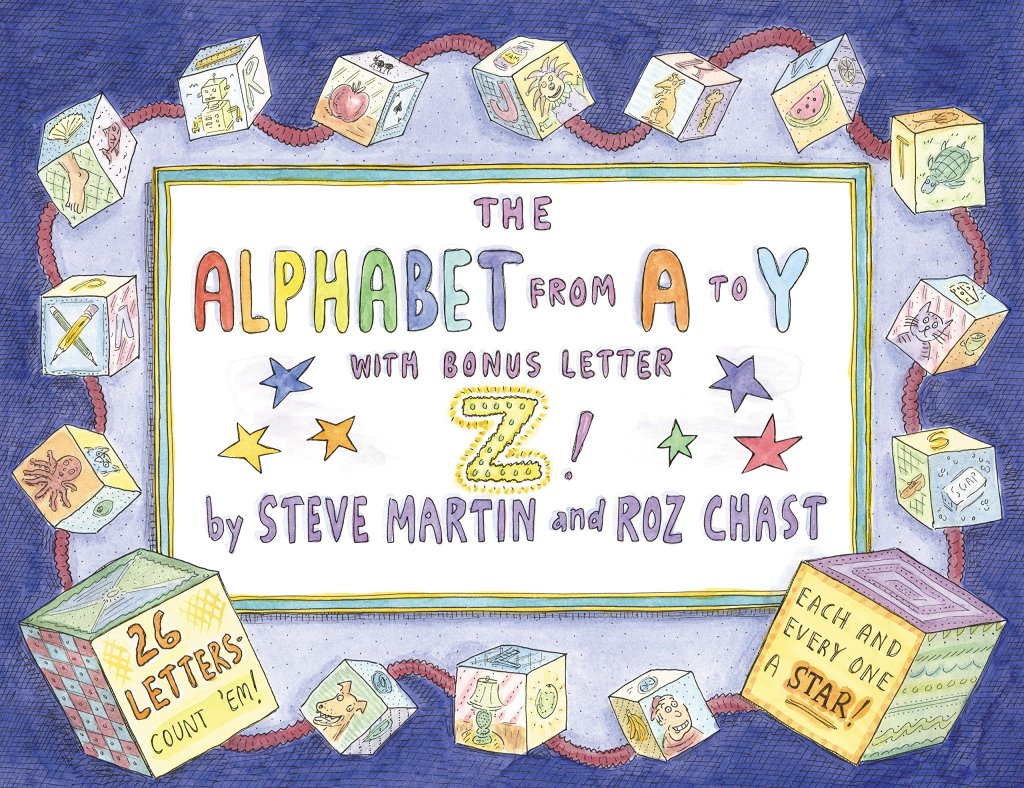
The Alphabet from A to Y with Bonus Letter Z With Bonus Letter Z! (Flying Dolphin Press)
Written & Illustrated by Steve Martin and Roz Chast

For ages: 3-7
Comedian Steve Martin brings his sense of humor to this children’s alphabet book. Each two-page spread includes an alliterative couplet featuring the spotlighted letter and a very busy image bringing that couplet to life. There are many details, all tied to the featured letter, in the picture that make revisits to stare at the pictures very likely. This won’t click with every person, but for those who share Martin’s sensibilities, they’ll have a lot of fun. There are references to poop and other things that could be considered tasteless. Still, I think they’re funny, and I believe this book is a clever, creative little read.

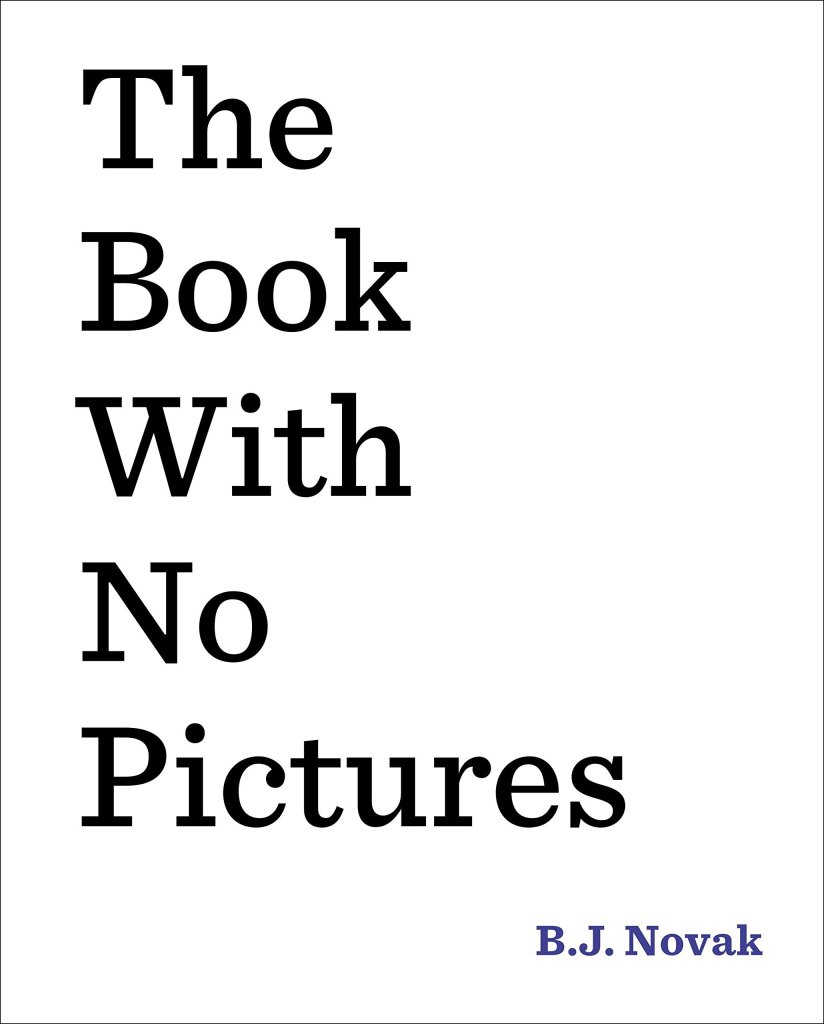
The Book With No Pictures (Dial Books)
Written by B.J. Novak

For ages: 5-8
It doesn’t sound too interesting, a children’s picture book with no pictures; however, comedian/actor B.J. Novak provides a script for a lively narrator to bring to life. The book even lacks an author portrait, describing what Mr. Novak looks like instead. There’s no narrative either; the book is just words sometimes with colorful typography. So what exactly is this book then? It’s a way for an adult to allow themselves to look silly and help self-conscious young readers see how much fun it can be to read with emotion. The reader, via the text, will beg the children in the audience to let them off the hook avoid being too silly. But of course, that’s not what the kids want, so things get wilder.


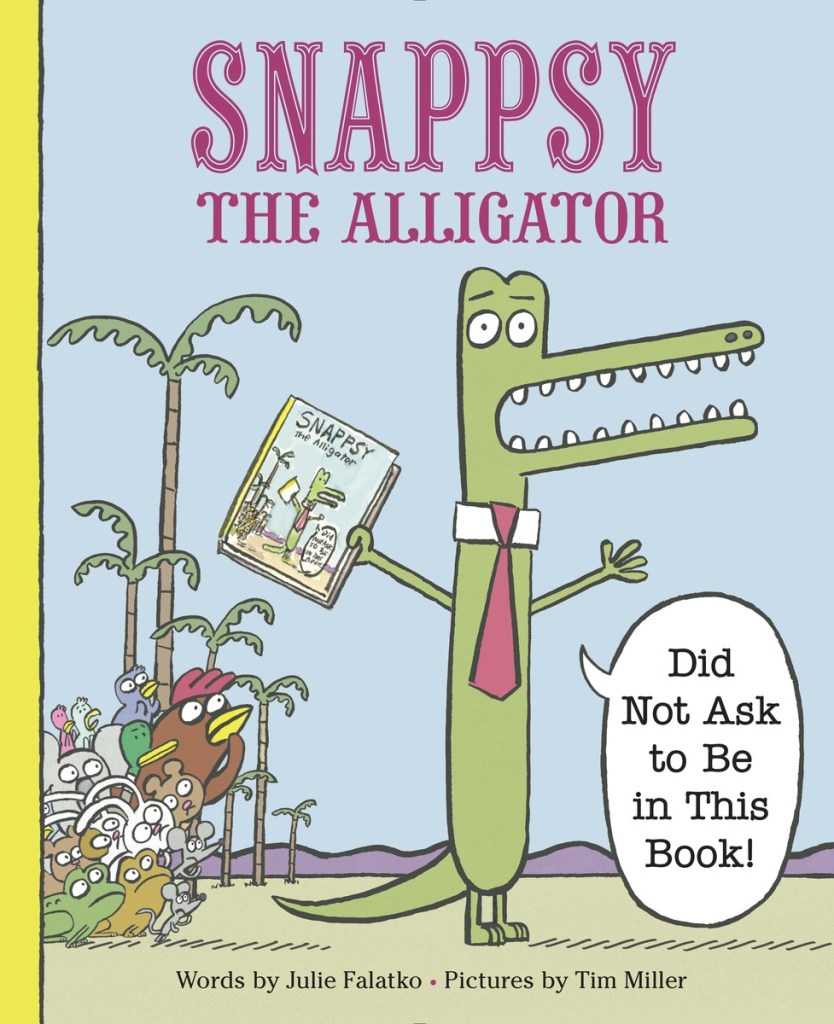
Snappsy the Alligator (Did Not Ask to Be in This Book) (Viking Books for Young Readers)
Written by Julie Falatko
Illustrated by Tim Miller

For ages: 5-8
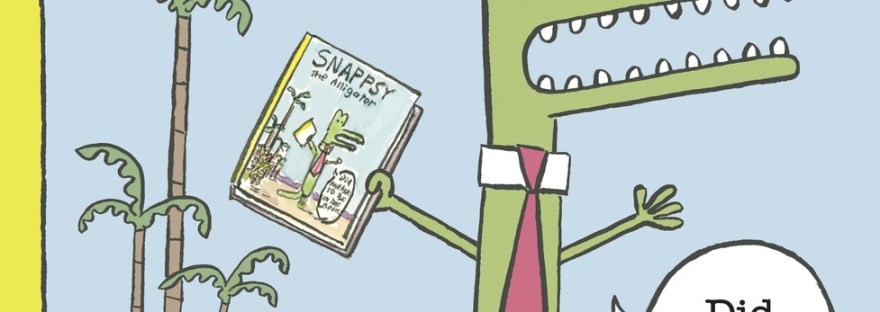
Writer Julie Falatko plays with readers’ pre-conceived notions as she introduces us to Snappsy. The narrator tells us what a vicious predator he is, while the pictures by Tim Miller directly contrast this. Even Snappsy speaks up, telling the narrator he gets his food from the grocery store, not hunting down weak animals. Eventually, the narrator forces Snappsy into having a party, and the alligator goes along. The narrator is brought into the story at the end and gives up trying to frame Snappsy as a threat. This is an excellent introduction to unreliable narration for our young readers. Snappsy breaks the fourth wall, addressing the person holding the book and asking them to see if what they are being told is the truth or not.
book list, culture, folktales, indigenous, social studies

Book List: Indigenous Stories

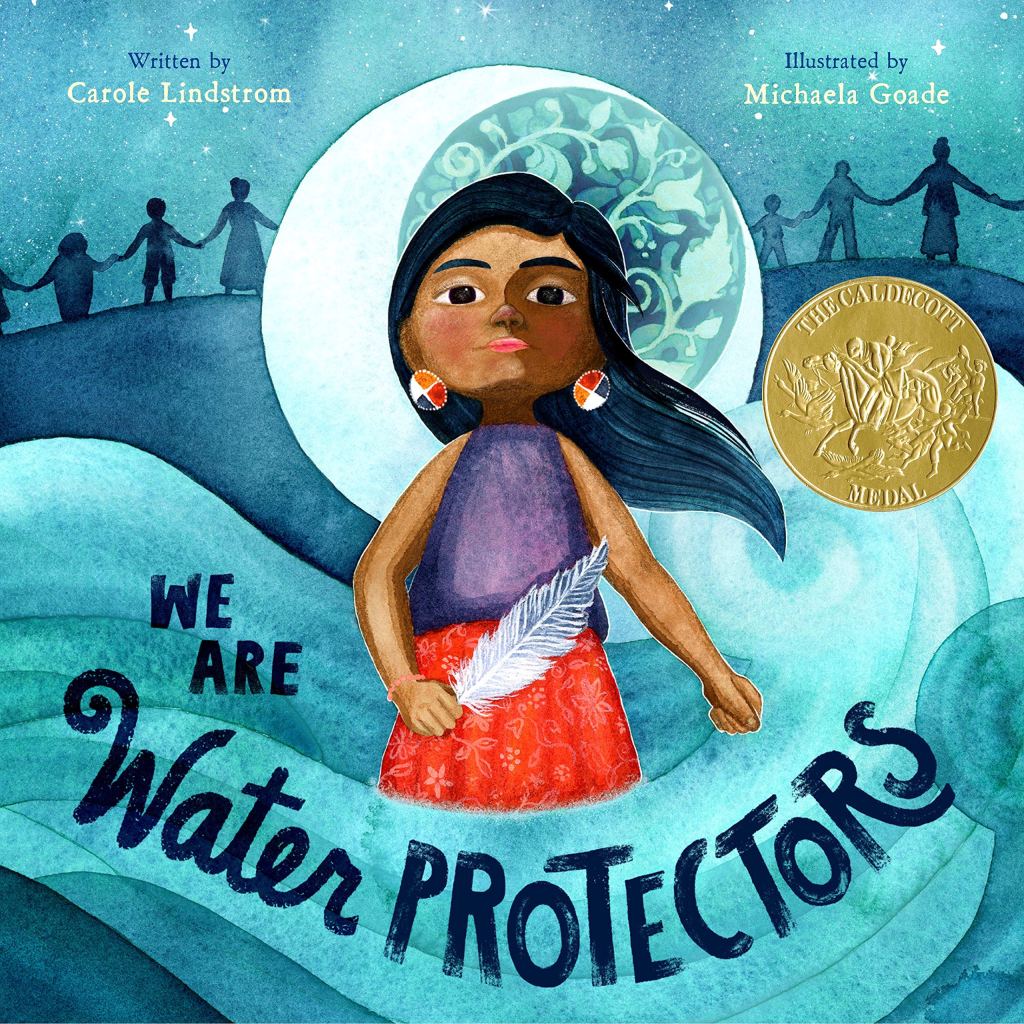
The Water Protectors (Roaring Brook Press)
Written by Carole Lindstrom
Illustrated by Michaela Goade

For ages: 3-7
Indigenous people have long been protectors of the natural world against industrial expansion. Recently, the Dakota Pipeline was the focus of years of protests by native groups trying to keep their water sources free of contamination. The young unnamed narrator tells us how “water was the first medicine,” the origin of life in all communities. She tells of a prophecy about a black snake who would come to poison the land, and this turns out to be a pipeline pumping oil. The imagery here is gorgeous, rich with metaphor, and incredibly evocative. Throughout the text, the idea of community responsibility and ancestry is emphasized. Students will walk away realizing they are part of a continuum that goes back generations, so they need to think about how they leave this world for the generations to come.


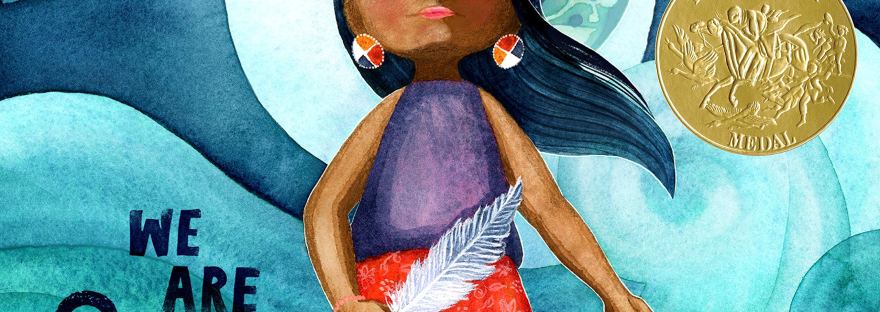
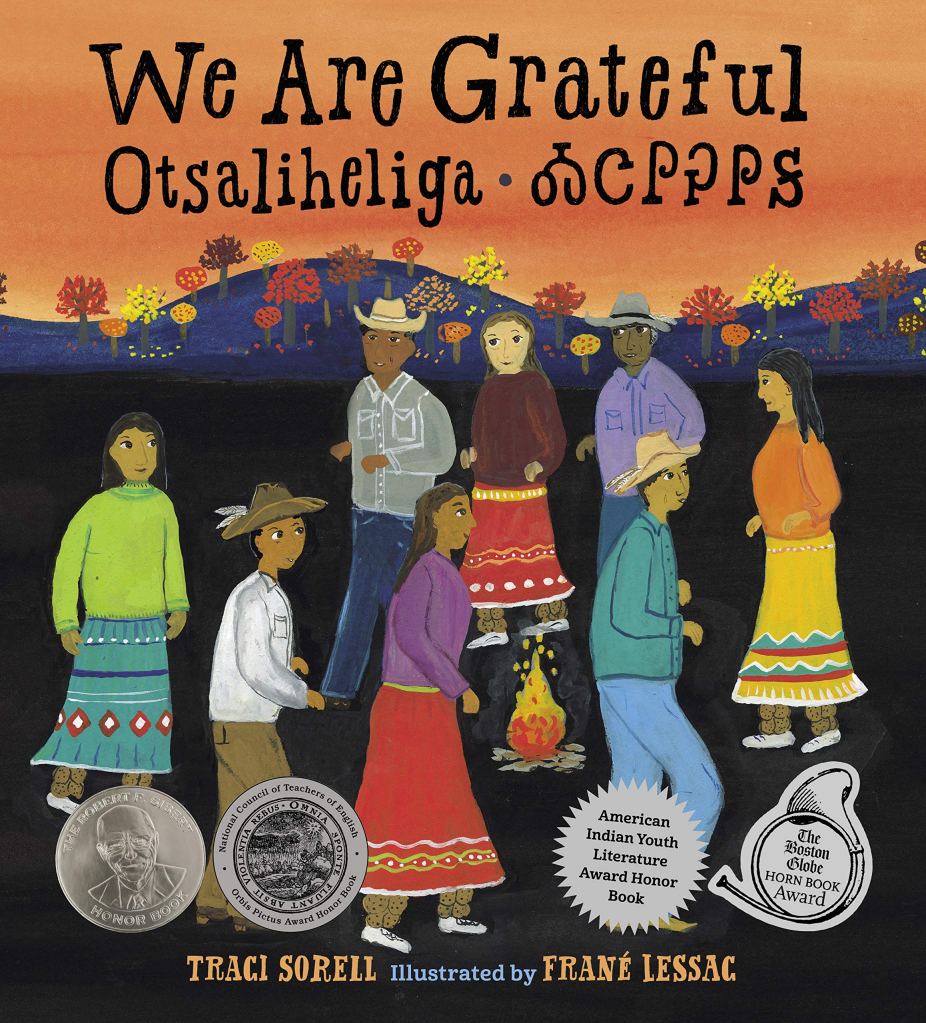
We Are Grateful: Otsalihelgia (Charlesbridge)
Written by Traci Sorrell
Illustrated by Frane Lessac

For ages: 3-7
In Cherokee, the phrase “Otsalihelgia” means “we are grateful,” It is a sentiment shown towards each day of life and the passing of time. Author Traci Sorrell was raised in the Cherokee Nation and presents a story about the seasons that also showcases how modern Cherokee life continues many of the traditions of their ancestors. Through a folk art style provided by Frane Lessac, we watch Cherokee people participate in contemporary life: dad’s staying at home to raise kids, a relative in the military deployed. This is intermixed with seasonal rites of passage & traditions like planting strawberries, playing stickball, and holding special community meals. The text also includes a glossary for the Cherokee words used, which helps expand the learning that can be done with this great book. 


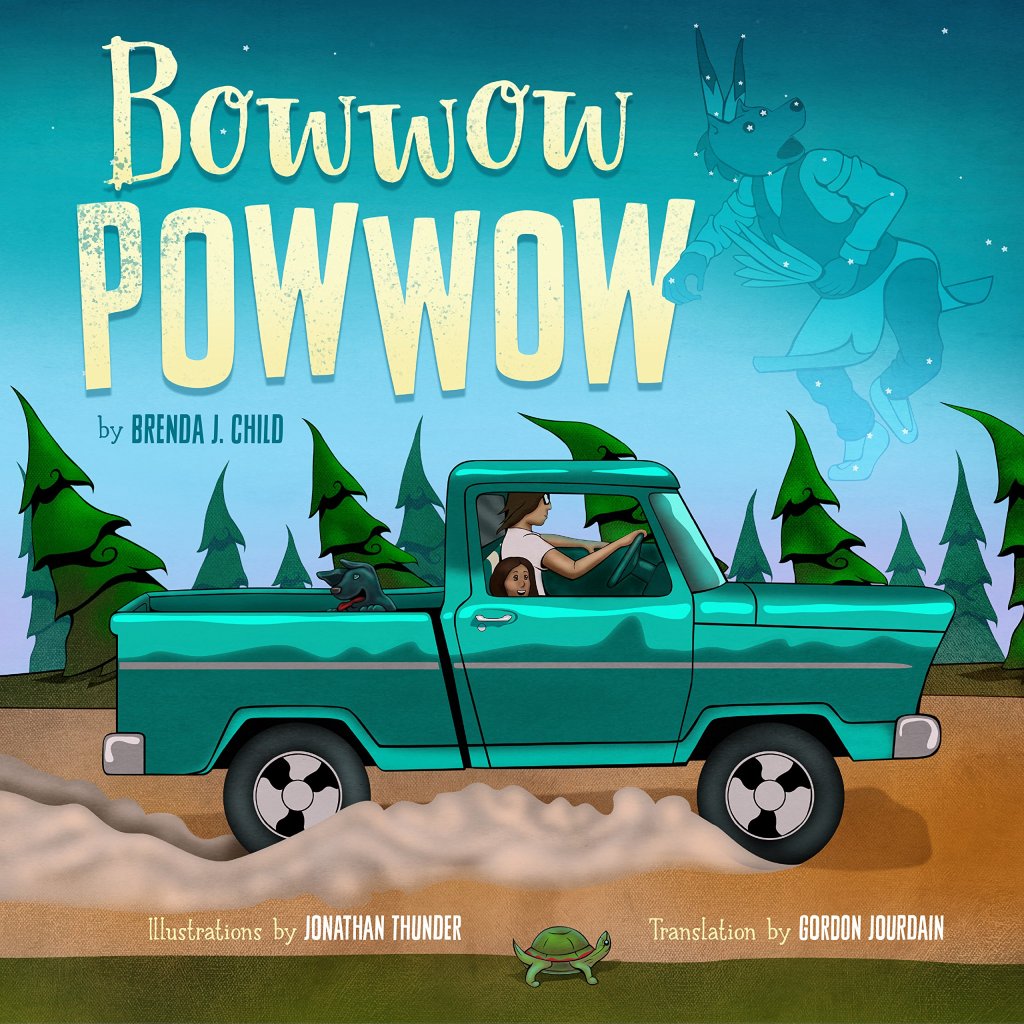
Bowwow Powwow (Minnesota Historical Society Press)
Written by Brenda J. Child/Translated to Ojibwe by Gordon Jourdain
Illustrated by Jonathan Thunder

For ages: 3-7
Windy Girl loves many things: Her dog Itchy Boy, her Uncle, and the annual Powwow. She rides around in Uncle’s truck listening to him tell stories about his youth on the reservation. When they arrive, Windy Girl begins to imagine what this big event would be like if the dogs ran it. She imagines the animals running the food stalls, wearing ornate costumes, and engaging in tribal dances. Author Brenda Child has worked with Gordon Jourdain to translate the entire book into Ojibwe, so students get a chance to not just learn about the customs of this particular people but also see their language side by side with English. 


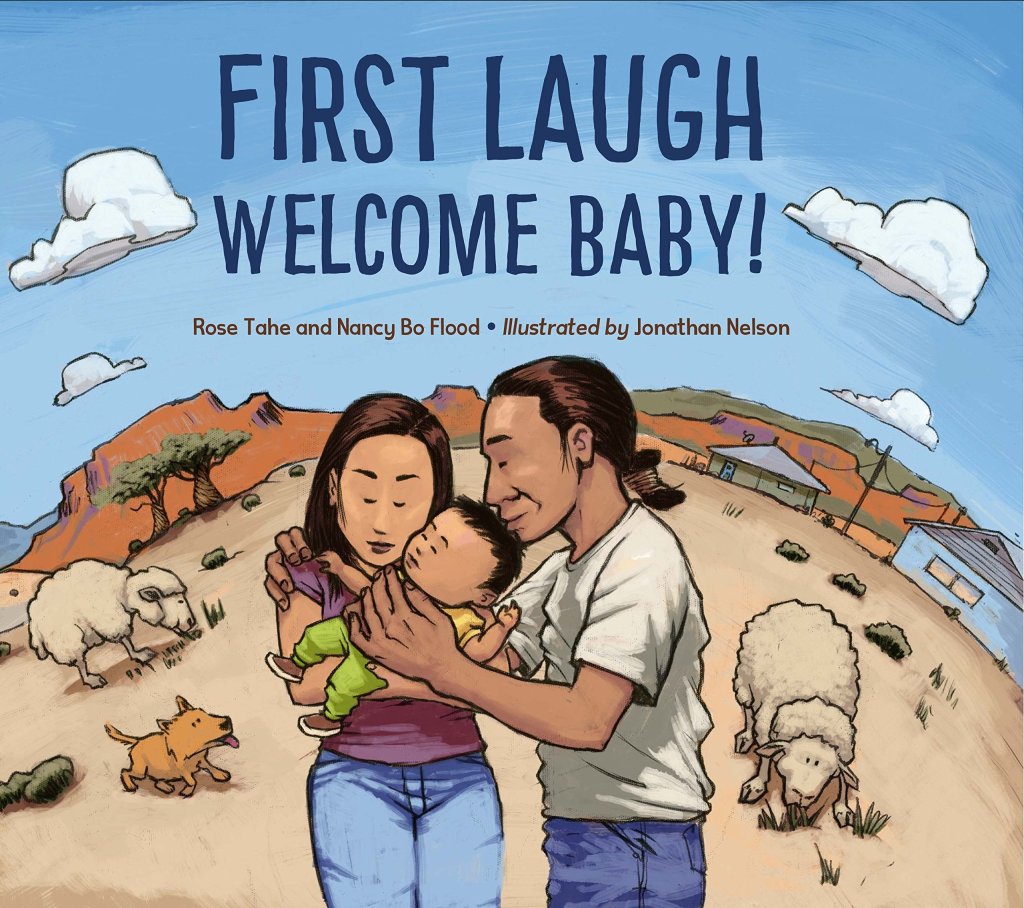
First Laugh: Welcome Baby! (Charlesbridge)
Written by Rose AnnTahe and Nancy Bo Flood
Illustrated by Jonathan Nelson

For ages: 3-7
First Laugh introduces readers from outside Navajo traditions to a unique cultural experience. For a Navajo family, their baby’s first laugh is a celebratory moment. The book follows a family as they anticipate this moment. Baby yawns and cries but hasn’t laughed yet. The family is shown living in a contemporary urban space with both parents working while Grandmother attends to the baby. Older siblings help take care as we see a beautiful depiction of an intergenerational household. The family also retreats to a rural area where Baby is bound upon a cradleboard as the parents attend to chores around the land. First Laugh reminds us of the beauty in everyday acts, showing how even a baby’s laugh is something to cherish. Unfortunately, author Rose AnnTahe passed away before her debut book was published. Still, she’s left behind a reminder of what we can learn from indigenous people. Celebrate every moment of life as time passes way too quickly.


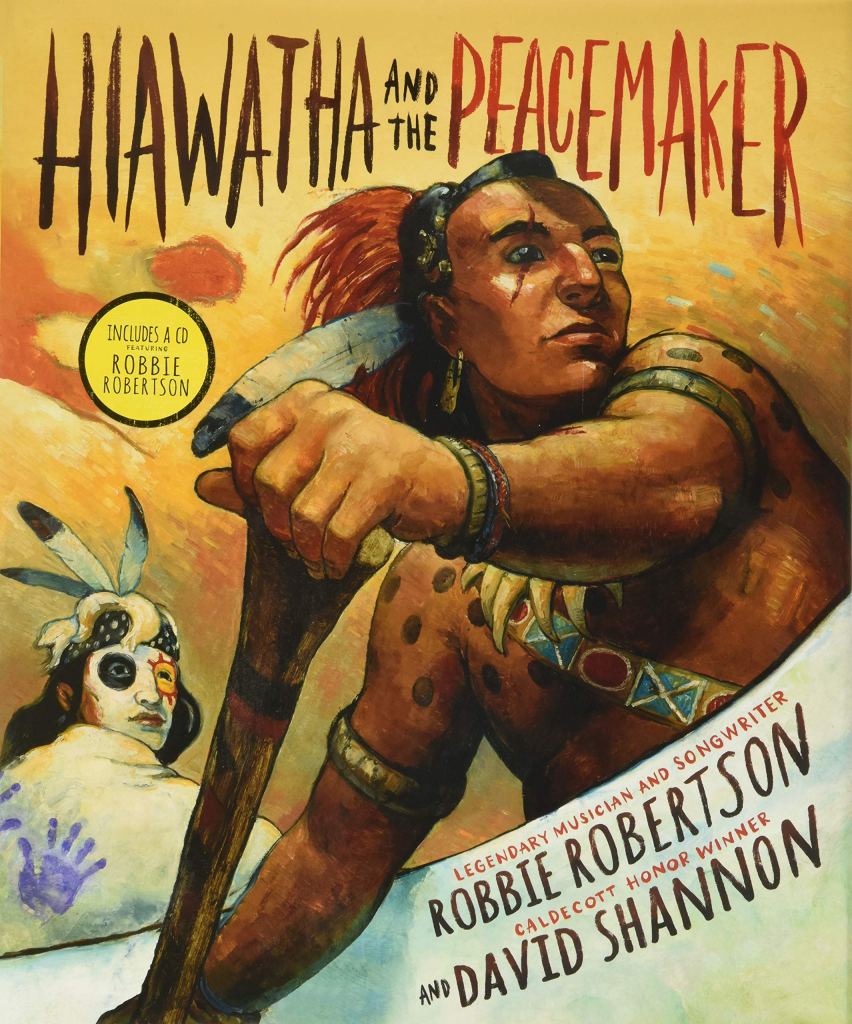
Hiawatha and the Peacemaker  (Harry N. Abrams)
Written by Robbie Robertson
Illustrated by David Shannon

For ages: 4-8
Award-winning musician Robbie Robertson tells a story close to his First Nations heritage. Hiawatha’s family is killed by an enemy tribe while hunting. This sends the man into a place of despair until the mysterious Peacemaker arrives to offer him hope. This Native wise man guides Hiawatha in forming the Iroquois Confederacy and working through his grief & anger. David Shannon makes many appearances on this list, providing colorful, dynamic illustrations for this beautiful story. The founding of this united tribal group would prove to have significant ramifications, working as a blueprint for America’s founding fathers when they penned the Constitution. One of the most engaging texts I’ve worked on with students.


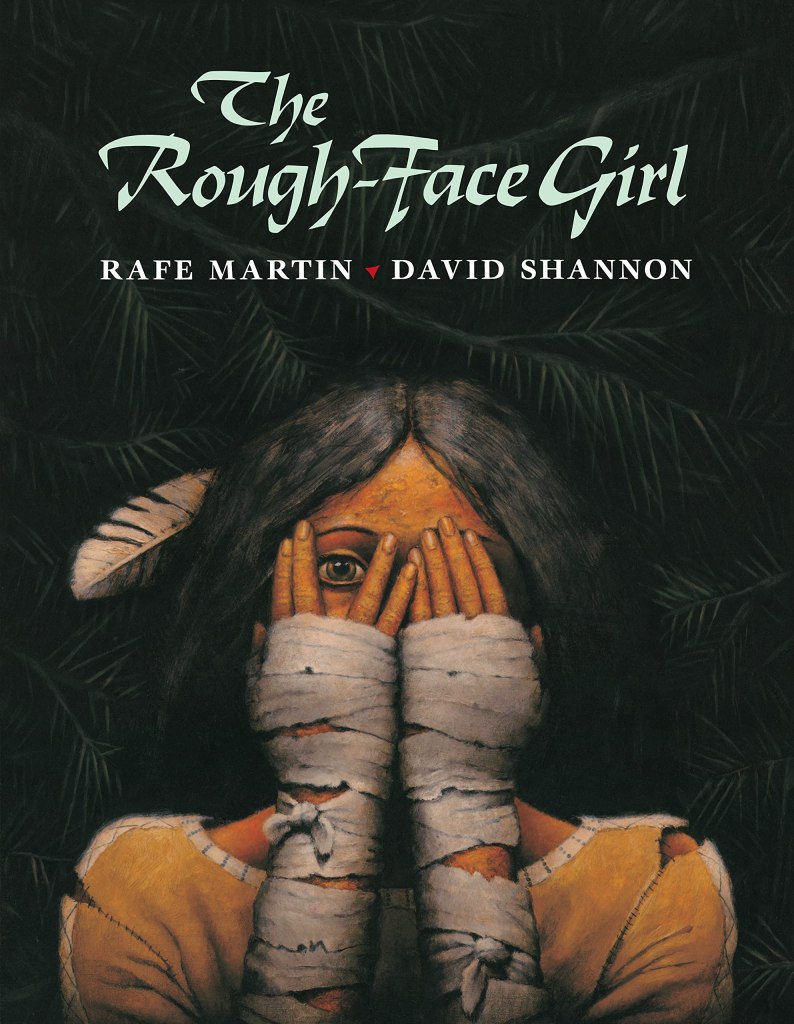
The Rough-Faced Girl (Puffin Books)
Written by Rafe Martin
Illustrated by David Shannon

For ages: 4-8
From the Algonquin people comes this variation on the Cinderella fairy tale. On the shores of Lake Ontario lives an invisible man. All the women in the region wanted to marry him. He was supposedly very handsome, rich, and powerful. The only way to marry him, though, is to prove to his ever-present sister that you have seen him. Woman after woman fails to prove it until the strange rough-faced girl comes to visit. The art here by David Shannon will shock those familiar with his cartoon-ier work; it’s incredibly effective and dark at some points. It’s also a Cinderella story in the most fundamental concept and is its own very engaging tale. Students will be left with a powerful message about the difference between honesty over dishonesty.


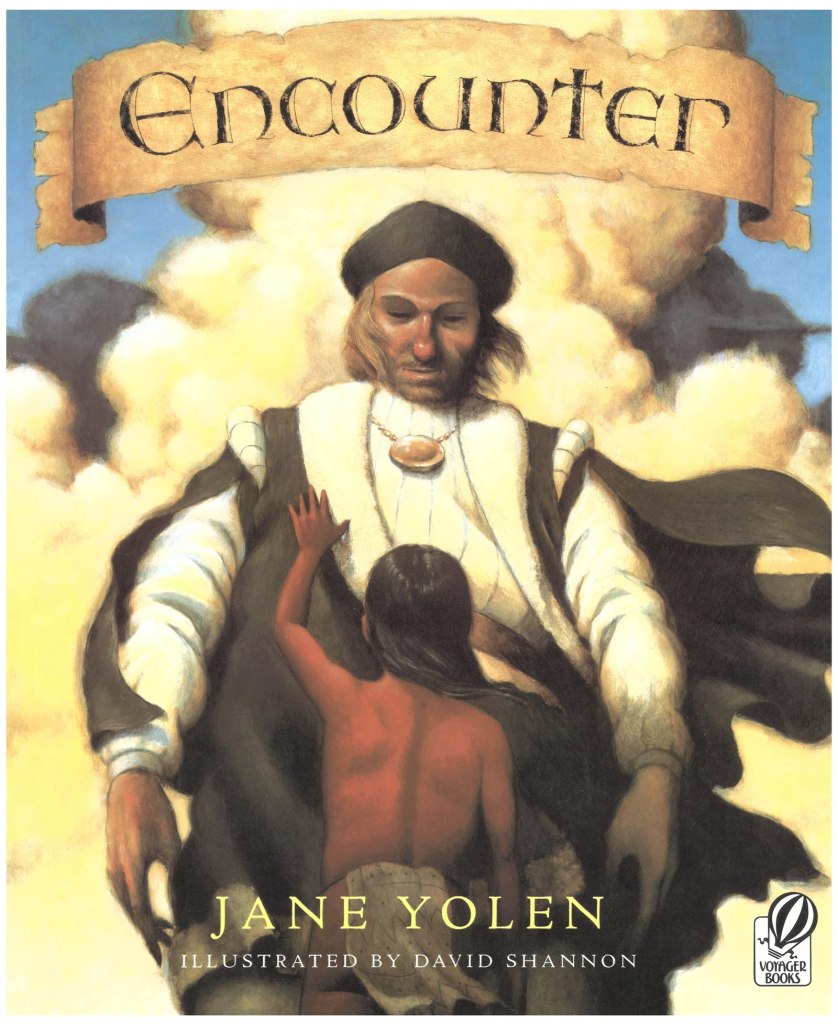
Encounter (Houghton Mifflin Harcourt Books for Young Readers)
Written by Jane Yolen
Illustrated by David Shannon

For ages: 6-9
The story of Christopher Columbus and his arrival in the New World has seen a lot of clarification in the last few decades. Legendary author Jane Yolen delivers an emotionally moving story of Columbus’s arrival told from the perspective of an indigenous child. The narrator sees both the beauty and the horror of what is happening to their home in some truly effective illustrations courtesy of David Shannon. Yolen has composed a story that is age-appropriate for primary students while not softening the blow of the harm done by the famous explorer. Encounter is a story both children & adults need to hear, and it’s an essential part of reckoning with our past to make a better future.

book list, fairy tales

Book List: Princess Power

Interstellar Cinderella (Chronicle Books)
Written by Deborah Underwood
Illustrated by Meg Hunt

For ages: 4-8

We’ll start with a classic that gets a fresh new look and feel. Cinderella is a very familiar story, and we could have filled this whole list up with variations on that tale. However, I put forward this space-age twist on the story. Cinderella is a mechanically-gifted young woman who gets left behind when her stepmother and stepsisters jet off to the ball. With help from her fair godrobot, Cinderella can repair a broken spaceship so she can go too. After meeting the prince, she must rush off but leaves behind one of her most important tools, which he uses to track her down. Unlike previous incarnations, this is a great update that shatters some gender conventions to showcase a Cinderella.


The Paper Bag Princess (Annick Press)
Written by Robert Munsch
Illustrated by Michael Martchenko

For ages: 4-8
Princess Elizabeth starts out seeming like a pretty typical princess living the expected life and waiting around to get married to a prince. However, things get flipped on their head when a dragon shows up at the castle and steals her groom-to-be. Her home and belongings get torched, and she’s left with just a paper bag to wear. So Elizabeth embarks on a journey where she learns to have the self-confidence and fortitude others may not have expected from her. Elizabeth ends up saving her prince and contemplates whether she should go back to being the passive royalty she was or hold tight to this newfound independence. The Paper Bag Princess is a modern classic and should be part of every fairy tale lover’s library.


The Princess and the Pig (Bloomsbury USA Children’s)
Written by Jonathan Emmett
Illustrated by Poly Bernatene

For ages: 4-8
Taking its cues from Mark Twain’s The Princess and The Pauper, the hilarious story sees a royal mix-up that goes on for years. Princess Priscilla is only a baby when an accident causes her to switch places with Pigmella, a newborn piglet. The farmer believes a good witch has turned his pig into a little girl, while the royal family thinks a wicked witch has cursed their child. The story follows these two characters as they grow up in their mixed-up lives. There is a lot of clever fun to be had here; author Jonathan Emmett is very playful in making nods to other classic stories. There’s a hilarious finale as Pigmella is married off to a handsome prince. Her parents persuade him with stories of The Frog Prince and magical kisses.


Princess Grace (Lincoln Children’s Books)
Written by Mary Hoffman
Illustrated by Cornelius van Wright and Ying-Hwa Hu

For ages: 5-9
This gorgeous illustrated book takes place in the modern-day as young Grace dreams of being a princess in the upcoming parade. She suddenly realizes that she doesn’t know what a princess does and seeks answers at school. Grace learns that princesses have been more than just pretty faces in lovely dresses throughout history. The young girl discovers princesses from China, Egypt, the Philippines, and Zimbabwe through her teacher. This newfound information ripples through the classroom, causing both boys and girls to re-evaluate what it means to be a princess. Some beautiful seeds of lesser-known history here will inspire students to want to know more. The book would make an excellent core to a lesson with students reading up on these specific real princesses to learn more details of their lives.


Dangerously Ever After (Dial Books)
Written by Dashka Slater
Illustrated by Valeria Docampo

For ages: 5-9
Princess Amanita is NOT like most princesses. She doesn’t spend her days pining away for a prince. Instead, Amanite has cultivated a unique garden full of spiky, dangerous plants. She adores thorns and needles and becomes fascinated with the roses Prince Florian brings her, putting them in a vase upside down so she can admire their sharp stems. This causes her to want rose seeds to plant in her garden, but things go wrong when they turn out to be nose seeds. Now she has bright red sneezing and snoring noses, creating problems in her palace. There are lovely moments of absurdity here, akin to the classic Alice and Wonderland and its magical illogic. If your student is tired of the “prim and proper” princess stereotype, Dangerously Ever After provides an alternative with an amusing edge.

The Little Wooden Robot and The Log Princess (Neal Porter Books)
Written & Illustrated by Tom Gauld

For ages: 5-9
I have been a big fan of modern fantasy cartoon series like Adventure Time and Over the Garden Wall. This fantastic book captures that same sort of funny & amazing energy in a story about two unlikely siblings and their journey home. The Little Wooden Robot is the king’s solution to lacking a child, while his wife gets The Log Princess from a kindly witch in the woods. Raised as siblings, they take care of each other which is needed when Log Princess becomes lost. Tom Gauld provides illustrations that are simplistic in design but part of fascinating worlds. I love a pair of pages that teases the adventures these two have along the way, a wonderful inspiration for your own wannabe writer to fuel their imaginations. This is one of the books it’s impossible not to be smiling the whole time through.

Not One Damsel in Distress: Heroic Girls from World Folklore (Clarion Books)
Written by Jane Yolen
Illustrated by Susan Guevara

For ages: 4-8
Children’s literature veteran Jane Yolen delivers this collection of fifteen folktales about princesses worldwide. You’ll learn about Li Chi, a Chinese girl who slays a dragon and saves her village. There’s Makhta of the Sioux, who leads her tribe into battle. Bradamante is a female knight riding bravely through the medieval era. Not only will this book provide students with a treasure trove of great stories told by a master writer it can also help build geography skills. The princesses in this book hail from places like Indonesia, Azerbaijan, Greece, Japan, Russia, and more. There are still some elements of outdated gender norms, often with girls posing as males to be accepted as having strength. The book could prove to be a great conversation starter about the traits we label as “strong” and having older students evaluate the greater meaning of “strength” our culture could have.

book list, community, work

Book List: Exploring Careers

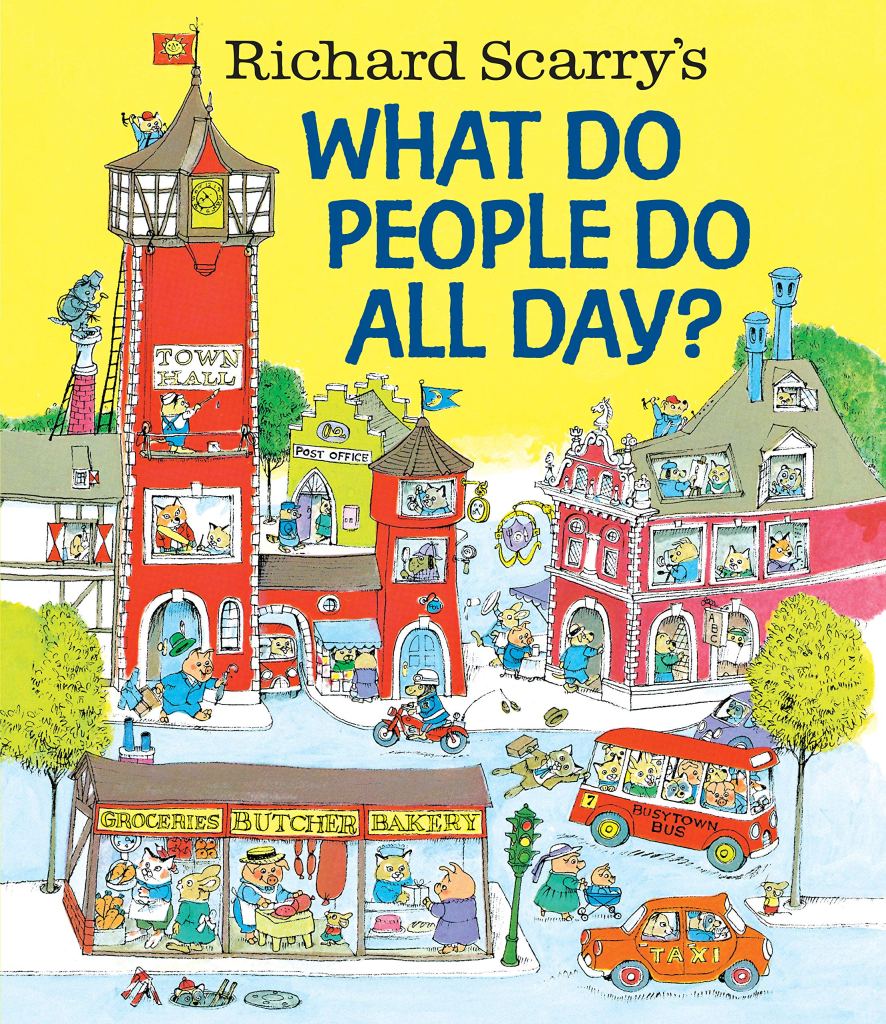
Richard Scarry’s What Do People Do All Day? (Random House)
Written & Illustrated by Richard Scarry

For ages: 3-7
As a preschool and early elementary student, I spent many hours pouring over the delightfully detailed books of Richard Scarry. While those “classic” editions did have some outdated gender roles, they have thankfully been updated and had diversity added. Now female characters share the same work as male ones, and it is a pleasant update. That said, this is such a comprehensive overview of labor in America. As Scarry so often does, he makes sure to label things providing outstanding opportunities to expand your child’s vocabulary in various directions. The book also explores occupations that get easily forgotten but are crucial in our day-to-day lives. This is one of those books meant to be revisited again and again for years to come.


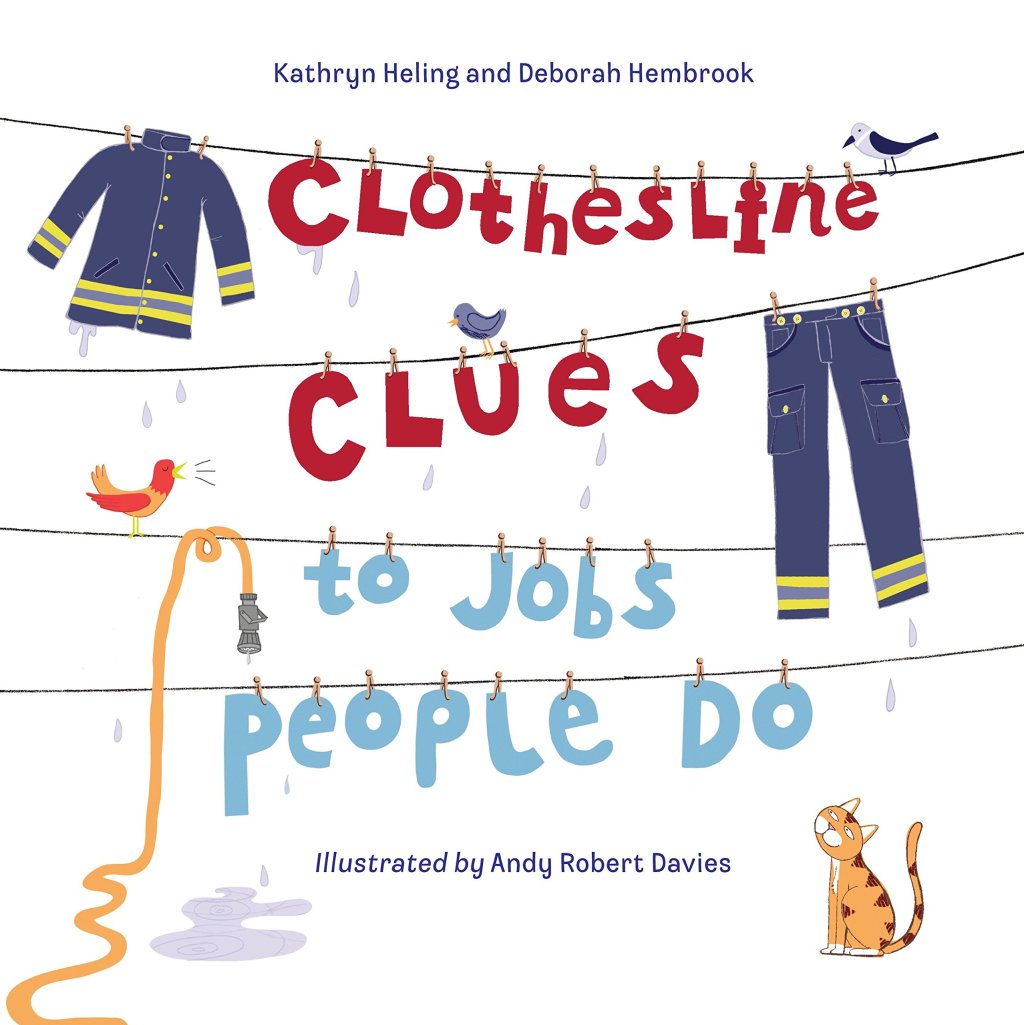
Clothesline Clues to Jobs People Do (Charlesbridge)
Written by Kathryn Heling and Deborah Hembrook
Illustrated by Andy Robert Davies

For ages: 3-7
This book presents a fun concept that also pushes children’s developing critical thinking skills. Instead of naming jobs upfront, a page will show an outfit worn in that profession. Children are asked to guess what job is hinted at before the reveal on the next page. That’s perfect fodder for discussion as you read but also (for older students) a chance to develop writing while citing evidence. Making predictions is a critical cognitive skill, so books like these are incredibly valuable. The story is told in rhyme, but it’s not the smoothest verse. I appreciated how genders vary among the professions, so it doesn’t lock boys and girls into specific paths. This would make a superb kick-off to a K/1st unit on community & jobs.


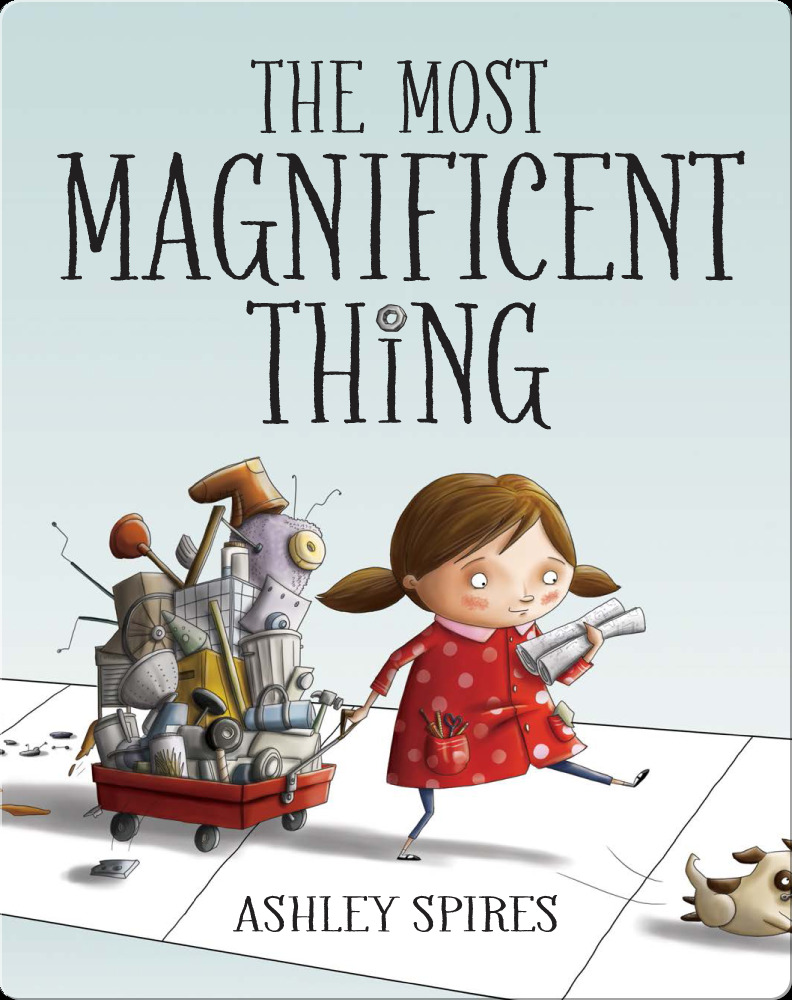
The Most Magnificent Thing (Kids Can Press)
Written & Illustrated by Ashley Spires

For ages: 3-7
It’s never too early to introduce children to the idea of exploring skills & crafts they enjoy that could make them a living one day or provide some wonderful time to recharge after a long week. An unnamed girl has an idea that is clear in her head, but every time she cobbles it together with found materials, it’s not like it was in her head. This leads to frustration, but she keeps working and changing things to reach that idea she has locked in her mind. This text reinforces the crucial notion that worthwhile goals can be challenging to achieve, whether in your career or personal growth. The book shows the girl’s strategies by going for a walk, thinking about other things, and learning how to take ownership of her emotions. By doing this, she can finally manifest that great idea she’s had since the start.


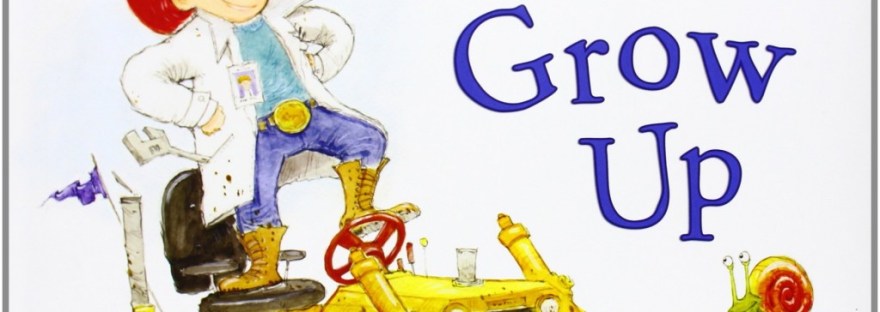
When I Grow Up (HarperCollins)
Written by Al Yankovic
Illustrated by Wes Hargis

For ages: 4-8
It’s imperative to note this is not “Weird” Al Yankovic. There’s a reason the popular entertainer drops that moniker from his name to author this book about what you can be when you grow up. This is not a book about lampooning anything, but a heartfelt and fun journey with a little boy contemplating what he might be. His teacher gives him center stage on Show and Tell Day, leading to a meandering monologue about being a chef, artist, or snail trainer. The sky’s the limit here! Yankovic manages to play around with a variety of different rhyming structures, so this provides some fantastic opportunities for older students engaged in a poetry unit. The accompanying illustrations by Wes Hargis perfectly match the tone Yankovic is going for. It’s undoubtedly a packed to the edges book worthy of many visits.


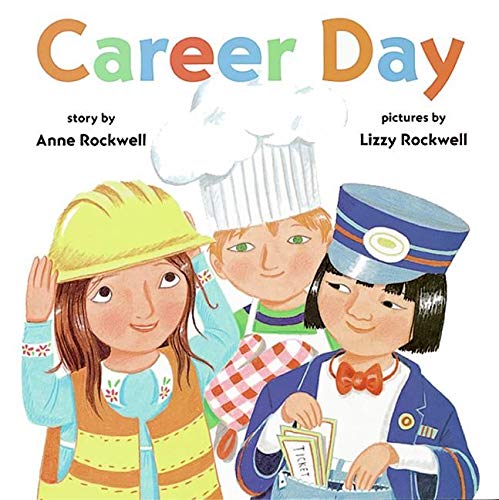
Career Day (HarperCollins)
Written by Anne Rockwell
Illustrated by Lizzy Rockwell

For ages: 4-8
It’s Career Day in Mrs. Madoff’s classroom, and the students are abuzz with having their parents at school. One student narrates what they see; he brought his construction-working father. One boy’s mom is a judge; another’s father tends to the kids in the day and plays in an orchestra at night. Yet another is a college professor there for the student-teacher working in the class. I love how real this book feels, although its illustrations are straightforward and colorful. I think student teachers will love to be included in this special story. This group often gets left out of children’s literature but is very present in many students’ lives. The illustrations jump between the adults being presented in the classroom and a single page devoted to what they look like on the job. An excellent introduction for our littlest children and a way to provide some great conversation with adults in their lives about the type of work they do. I adore when jobs outside the basic set are introduced to children through books like these.


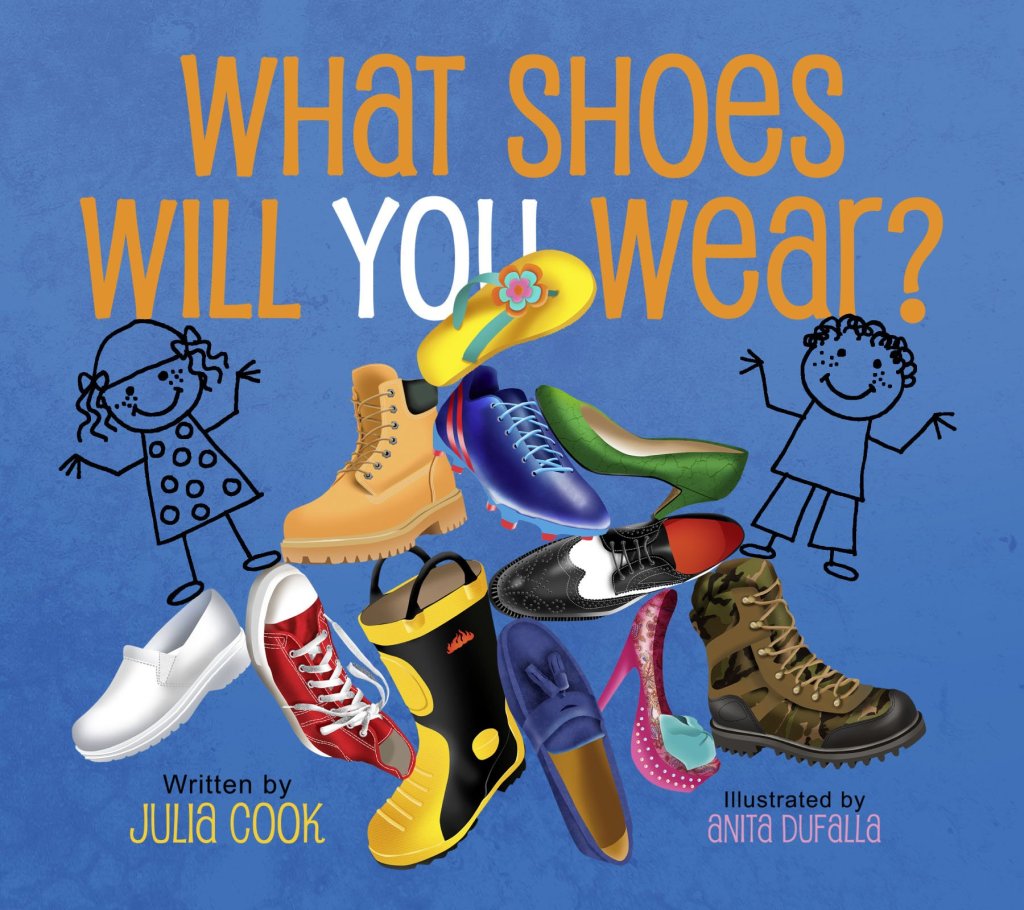
What Shoes Will You Wear? (National Center for Youth Issues)
Written by Julia Cook
Illustrated by Anita DuFalla

For ages: 5-8
A great companion to Clothesline Clues to Jobs People do but focused entirely on footwear. Author Julia Cook looks at how each type of shoe fits the work involved with each job. Like the aforementioned Clothesline Clues, children are asked to make guesses informed by prior knowledge and what they see in the pictures. Illustrator Anita DuFalla combines simple stick figure people with photo montages for the shoes discussed. It’s an unexpected mixed media blend that draws in young readers who may have never seen these types of illustrations before. The book can lead to some great conversations about why people in your own home or extended family wear certain kinds of shoes and why that fits for the work they do. A fun extension might be picking a job and having your child draw the type of shoe they imagine might be perfect for that occupation. 


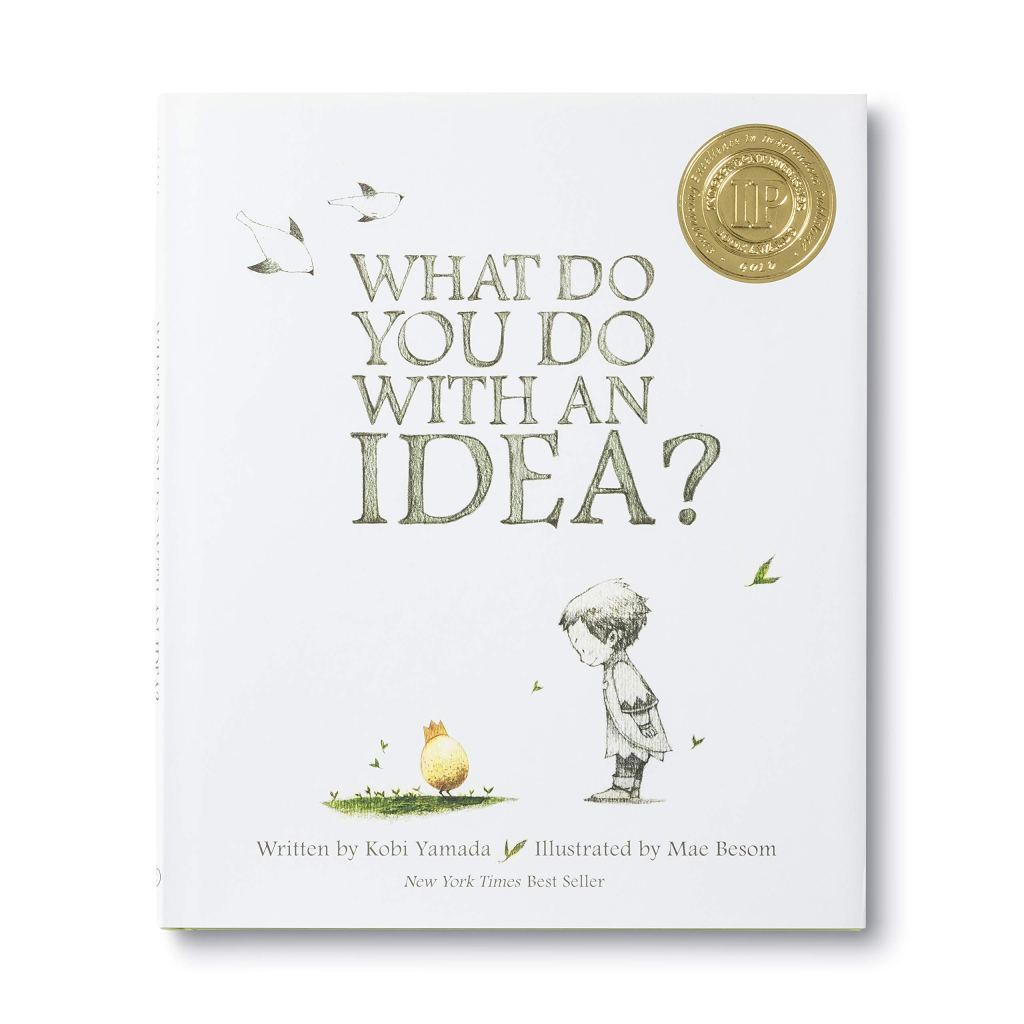
What Do You Do With an Idea? (Compendium Inc)
Written by Kobi Yamada
Illustrated by Mae Besom

For ages: 5-8
This text belongs beside The Most Magnificent Thing but aimed at older readers. A young boy has an idea, represented in the text by a golden egg with legs. The boy ponders where such an idea could have come from and what he should do with it. He keeps coming back to the concept, and that pull tells him this is something important. I see this as a great introduction to academics as a career for children. A job can involve a lot of thinking. It can also serve as a lesson about inventing new ideas and concepts that the world might balk at, at first. Author Kobi Yamada encourages children to know that if they feel drawn to an idea, it is important no matter what others say.