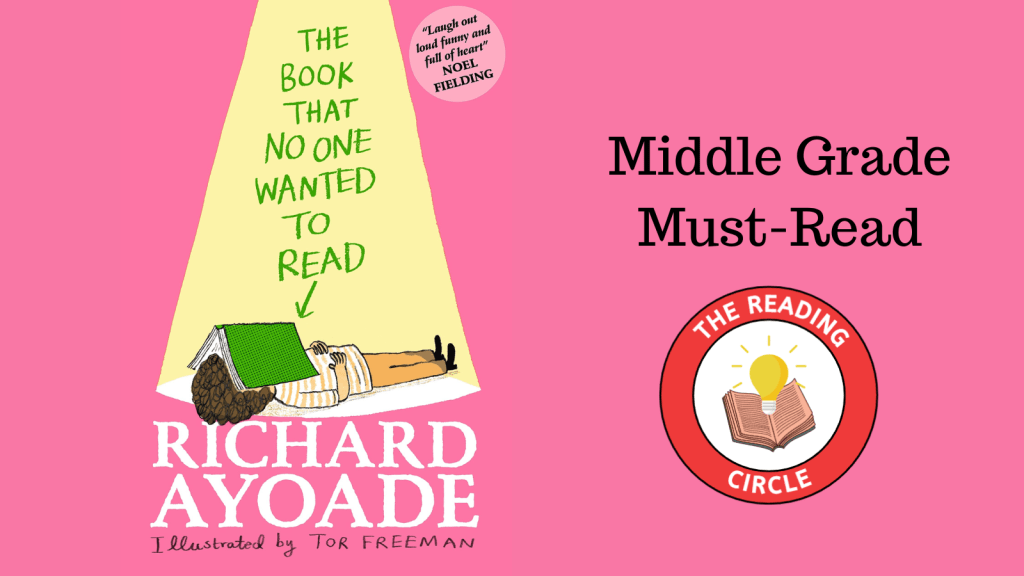
I first saw Richard Ayoade as Moss on the British sitcom The IT Crowd and immediately knew this guy’s sense of humor was in my wheelhouse. Since then, I’ve followed him across multiple projects, from television acting to hosting and even writing & directing feature films. However, I was unaware he had penned a children’s book until I came across this title in the Candlewick catalog, and I had to read it. This book met all my expectations, but I can also understand if it is not every young reader’s cup of tea. Ayoade has a very dry, British sense of humor, and this book is less about a cohesive narrative than the wit of the writing. The child that will love this book will adore it, and the ones who don’t like it will abhor it.
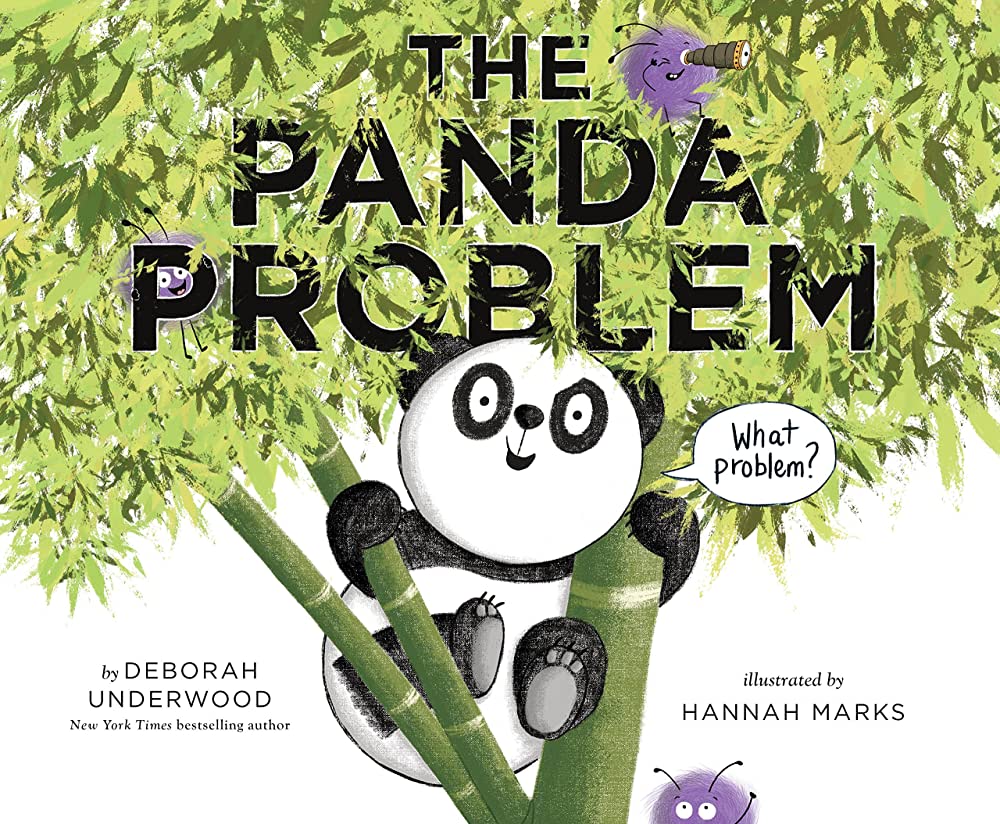
The Panda Problem (Dial Books) Written by Deborah Underwood Illustrated by Hannah Marks
For ages: 3-7 Oh, this is a great one, taking a chance to parody the strict way children are taught about fictional narratives. The narrator tells us the panda has a big problem, but the character on the page responds that they are okay. But the narrator insists that every main character in a story has to have a problem for there to be a story. The panda decides to become the problem and does several things to irritate and drive the narrator crazy. I’m always a sucker for good metafiction, and this one is perfect in that regard. It does an excellent job of showing the skill of voice in writing.
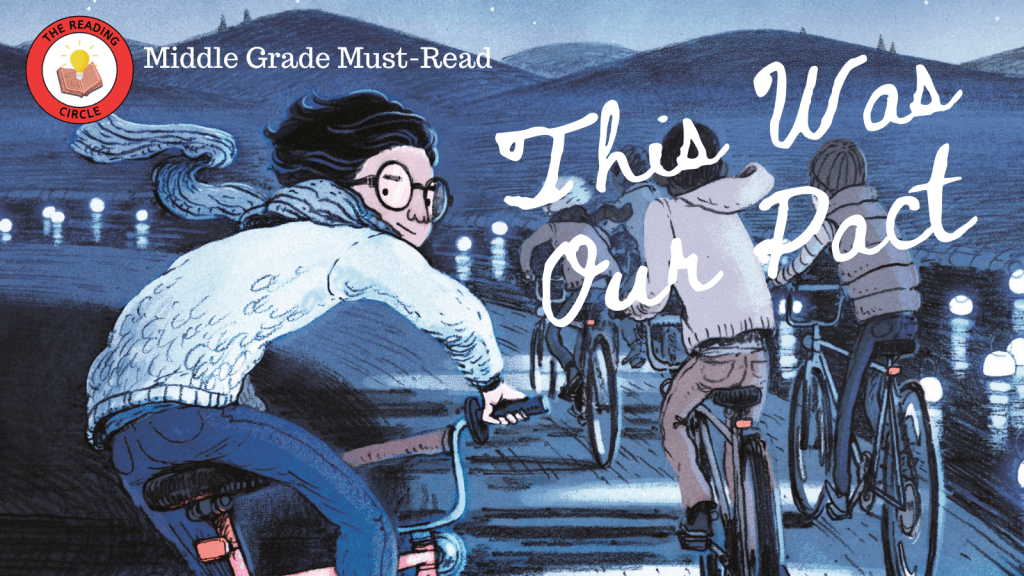
This Was Our Pact (First Second) Written & Illustrated by Ryan Andrews
I fell in love with the Cartoon Network mini-series Over the Garden Wall from my first viewing. It’s become seasonal viewing for us as autumn rolls in. What I love most is how the world surprises you at every turn, delivering magical-realist surprises, both exciting and scary. It exists in the realm of dream logic, where the oddest things just make sense. Even as an adult, it evokes that sense of wonder we had as children reading through a masterfully written middle-grade novel. That magic is captured in the pages of This Was Our Pact, a story about two friends on a bike ride that takes them into strange & wondrous lands just around the corner from their own neighborhood.
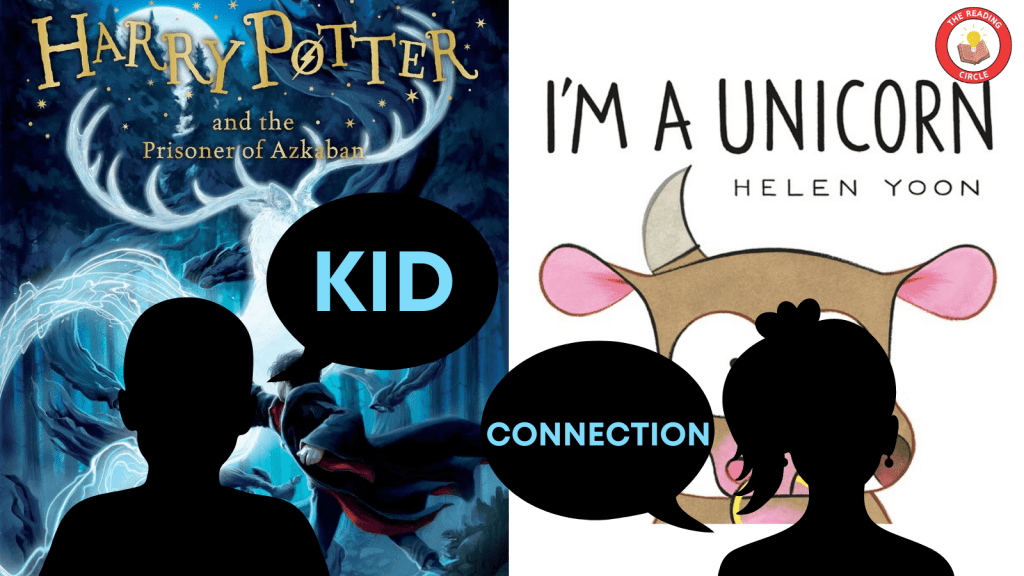
I am an uncle who regularly records & sends my nieces and nephew read-aloud videos. While I like sharing books that I love with them, I am curious about what books they enjoy and why. Kid Connection is a place where you aren’t hearing as much from me as you are my nephew and eldest niece (the youngest is only three, so one day, she will be able to join in). So I recently asked them to pick out two books they enjoyed and explain some details about what they liked.
In Boy Writers: Reclaiming Their Voices by Ralph Fletcher, the author talks about how the female-dominated landscape of elementary school has created a culture clash. Female teachers often (not always, it is certainly getting better as the younger generation become teachers) have a very particular way they like things, and that often clashes with the types of humor that appeal to boys (and many, many girls as well). It doesn’t mean either “side” is wrong, but rather that we need to meet our students on their terms. If you want someone to read & write, you can’t just let them read books that you like or write in a way that pleases you. The job is to teach them the skills and let them find their own voice & opinion. This means being open to horror, science fiction, and toilet humor. But, of course, it must remain appropriate for the school setting. Still, these books would be fantastic ways to get kids excited about reading.
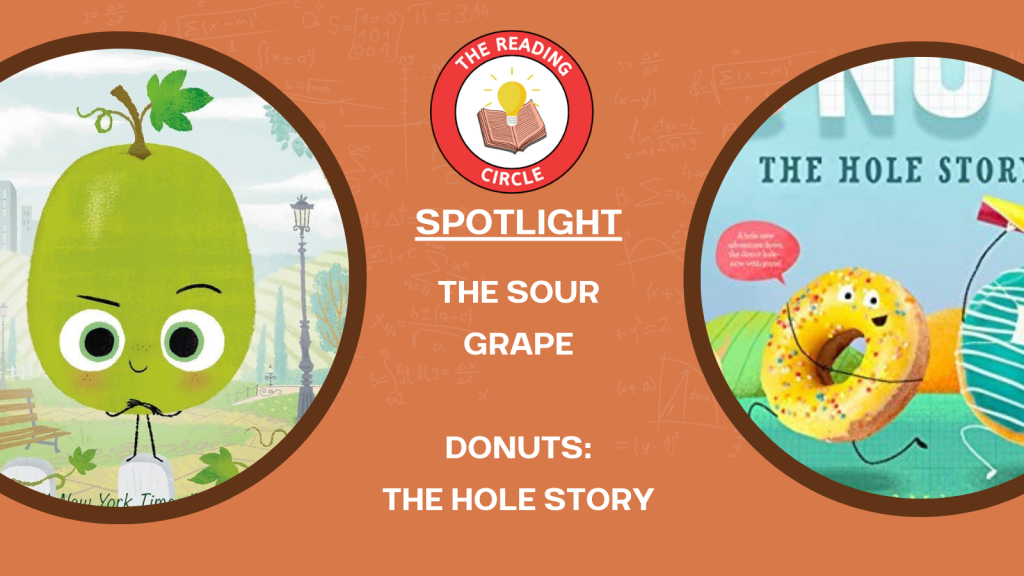
The Sour Grape (HarperCollins) Written by Jory John Illustrated by Pete Oswald
For ages: 4-8 You are likely already familiar with the Food Group series of picture books, and this is the latest (as of this writing) addition to the collection. The Sour Grape is a grumpy person who spends time explaining how they ended up this way. It started when the Grape planned an elaborate birthday party, but no one showed up. The Grape went from being sweet to bitter and then sour, lashing out at anyone who crossed their path. A relatable situation.
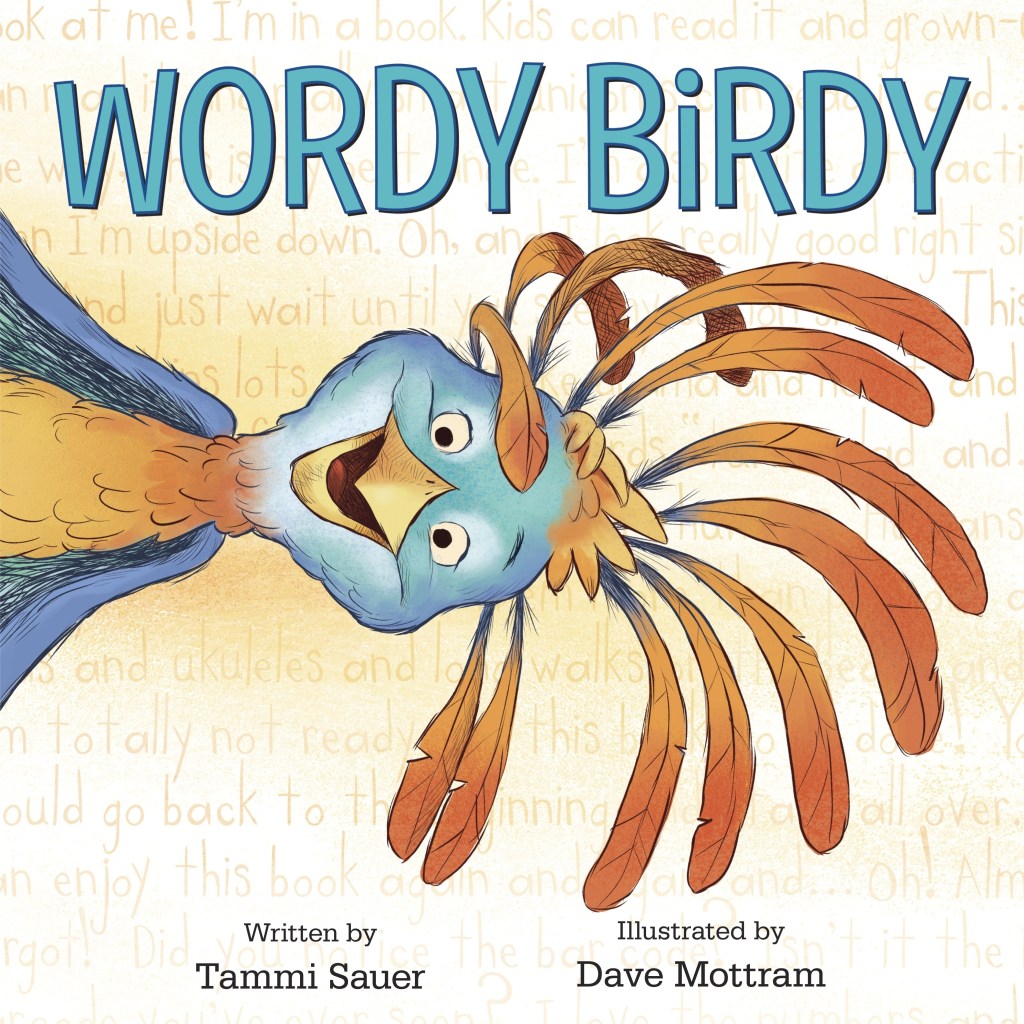
Wordy Birdy (Dragonfly Books) Written by Tammi Sauer Illustrated by Dave Mottram
For ages: 3-6 Some picture books feel like they work for children but are best appreciated by adults. Wordy Birdy may remind some childcare workers & educators of many of their students. First thing in the morning, she talks and continues until the book ends. Her friends’ reactions (Squirrel, Rabbit, Raccoon) will provide the most chuckles for adults with slight annoyance but accept that this is who Wordy Birdy is. It doesn’t help that the talkative bird likes to embellish her stories with unrealistic details. As much as she may get on their nerves sometimes, this trio is there to help when Birdy gets herself into some potential danger. A great book that acknowledges that silence is golden & friendship is essential.
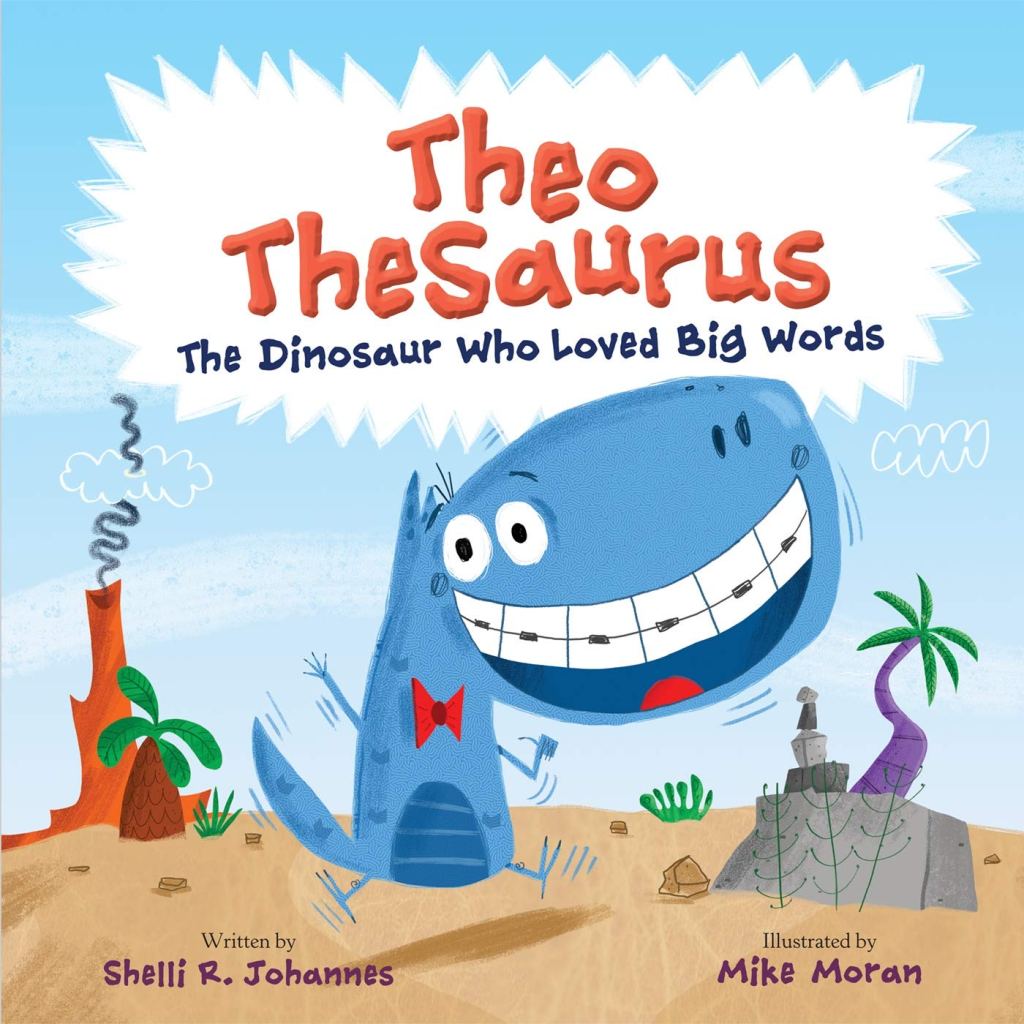
Theo TheSaurus: The Dinosaur Who Loved Big Words (Viking Books for Young Readers) Written by Shelli R. Johannes Illustrated by Mike Moran
For ages: 4-8 Theo is a TheSaurus, a dinosaur type known for their rich vocabulary. On his first day of school, he can’t help but refer to the snacks as “crudités,” lunch as a “midday repast,” and hide-and-seek as “a game of conceal and search.” Theo is aware that the words he uses are considered fancy and not ordinary, making him feel insecure. He worries that his classmates don’t like him, and it seems that Theo’s fear will be realized on his hatching day when none of his classmates show up for the party. Theo’s parents embrace him in a big, reminding their verbose child that he is an incredible little dinosaur. Then the doorbell rings, and his classmates are simply tardy. This book hits the social-emotional elements educators are always on the lookout for and will build vocabulary & spark your students’ desire to enrich their own.
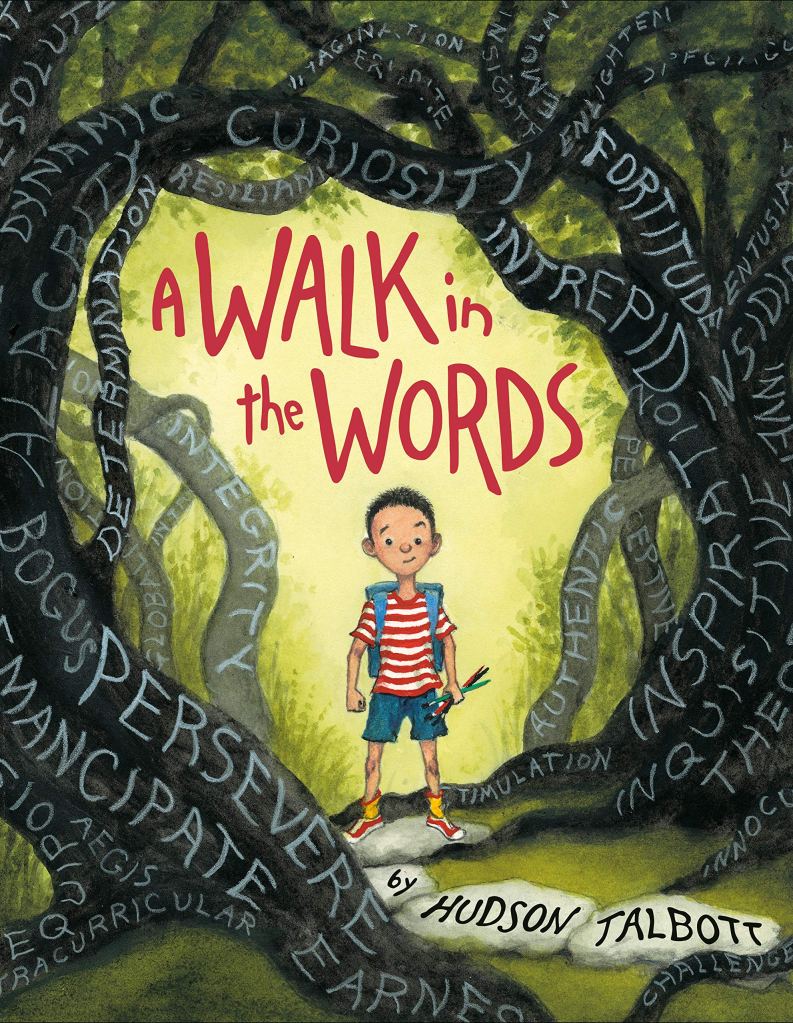
A Walk in the Words (Nancy Paulsen Books) Written & Illustrated by Hudson Talbot
For ages: 4-8 If you are an educator, you have seen students aware of their reading struggles. Unfortunately, many of these students internalize these challenges as personal faults and become either hostile to learning or develop deep feelings of inadequacy. Author Hudson Talbot turns his childhood struggle with reading into the story of a little boy navigating a scary forest where trees are adorned with complicated sentences and vocabulary. Talbot’s greatest strength is the way his illustrations work so beautifully as metaphors for his struggles and growth. The book was very similar to older morality stories like The Pilgrim’s Progress, where the metaphors are pretty obvious, but that’s needed for the intended audience. Talbot also includes a Slow Readers Hall of Fame in the end pages to remind struggling students some of our most brilliant minds faced the same difficulties as kids.
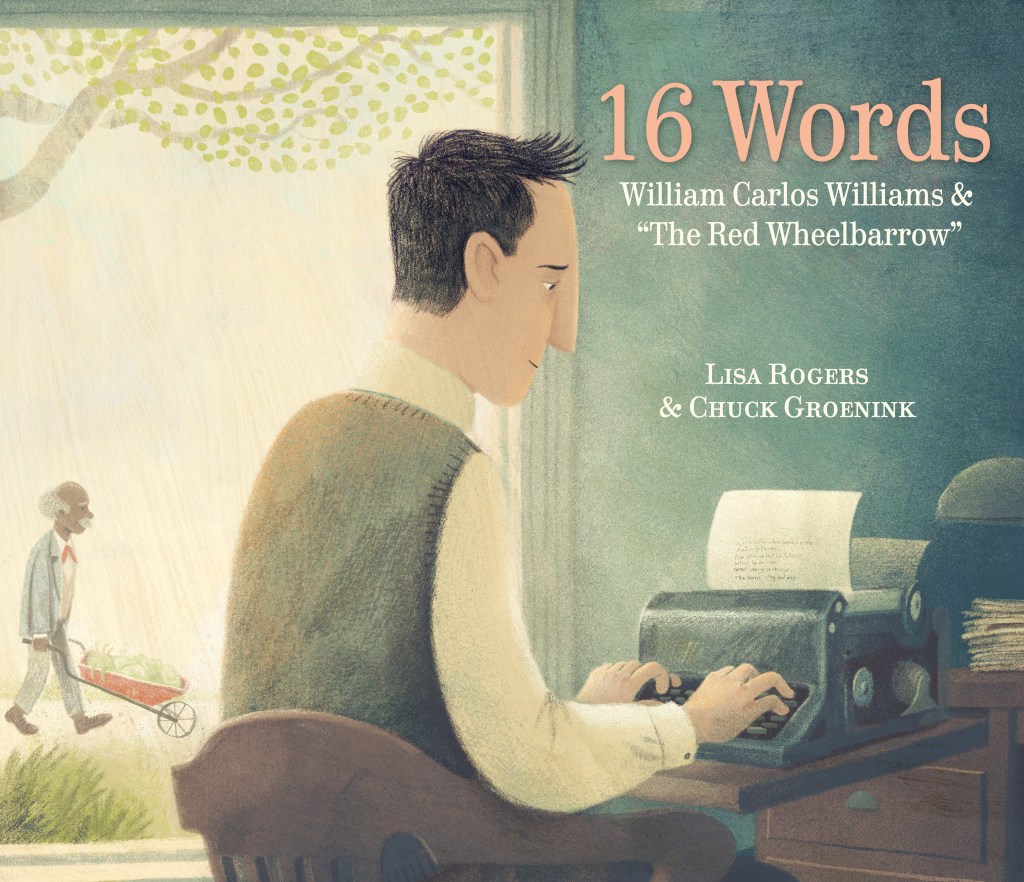
16 Words: William Carlos Williams and “The Red Wheelbarrow” (Schwartz & Wade) Written by Lisa Rogers Illustrated by Chuck Groenink
For ages: 4-8 Poetry is one art form that capitalism has been unable to sink its hooks into. As a result, it remains one of the purest forms of human expression. It is often overlooked for flashier, faster mediums. Lisa Rogers adores the writing of William Carlos Williams, and she can convey that to her readers through this history lesson/exploration of an incredibly famous poem. The poem comes as the finale, while Rogers details Williams’ life as a family doctor in the suburbs of northern New Jersey in the 1920s. Rogers also introduces Williams’ neighbor, Thaddeus Marshall, who grew a vegetable garden that Williams could spy from his window. The poet notices how Marshall’s vegetables help feed many people in their community, which starts a poem percolating in his mind. Our students are deprived of the magic of poetry, especially in elementary grades, where they need to experience how wordplay is a crucial piece of our creative development. If you are looking for a great introduction to a poetry unit, I don’t think you could do better than this picture book.
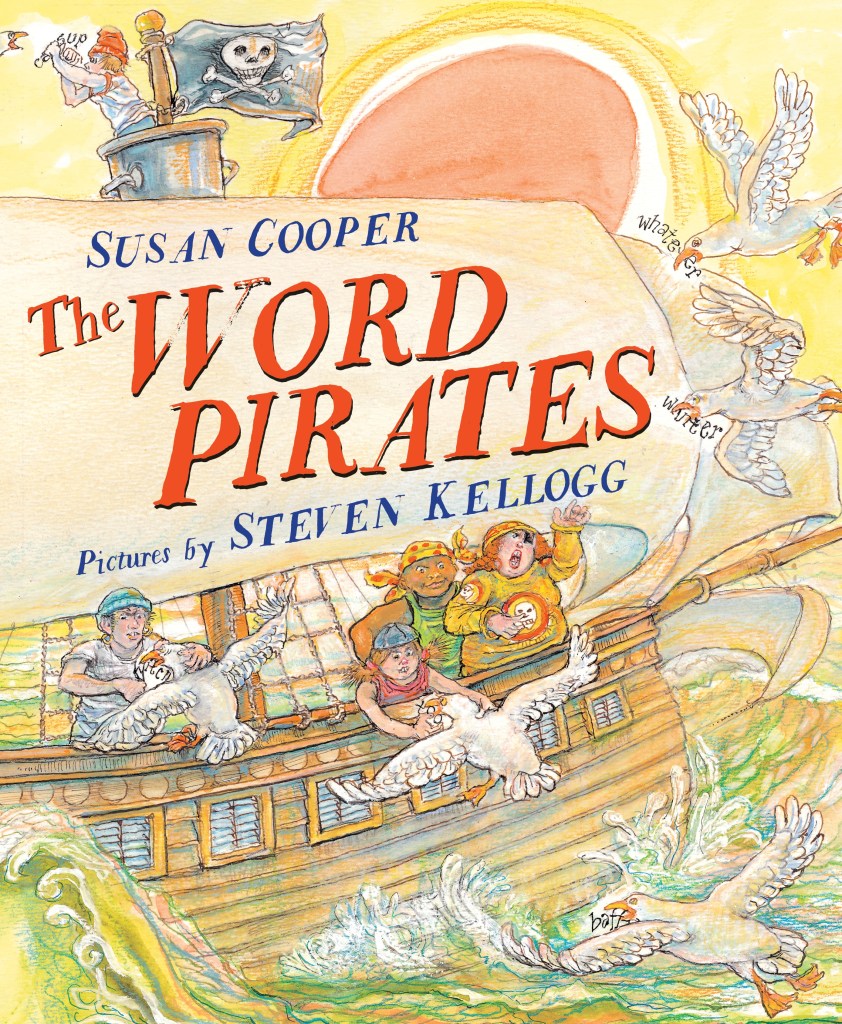
The Word Pirates (Neal Porter Books) Written by Susan Cooper Illustrated by Steven Kellogg
For ages: 4-8 The pirates that sail under the command of Captain Rottingbones hunger for one thing only, words. They have trained Bumblebirds that swoop down and steal from the best writers and books available to feast on. Some prefer aperitifs of words like “pop.” Other buccaneers desire to eat on big, filling words like “antidisestablishmentarianism.” Eventually, they do battle with a Word Wizard in New Zealand who doesn’t leave them adrift but teaches the scallywags how to make their own words rather than rely on stealing them. Steven Kellog is a tried & true legend in picture books. His illustrations feel familiar and perfectly suited for this silly story. Susan Cooper pens a tale that will undoubtedly entertain students. A great follow-up activity would be to have students design a filling meal with their favorite words to serve.
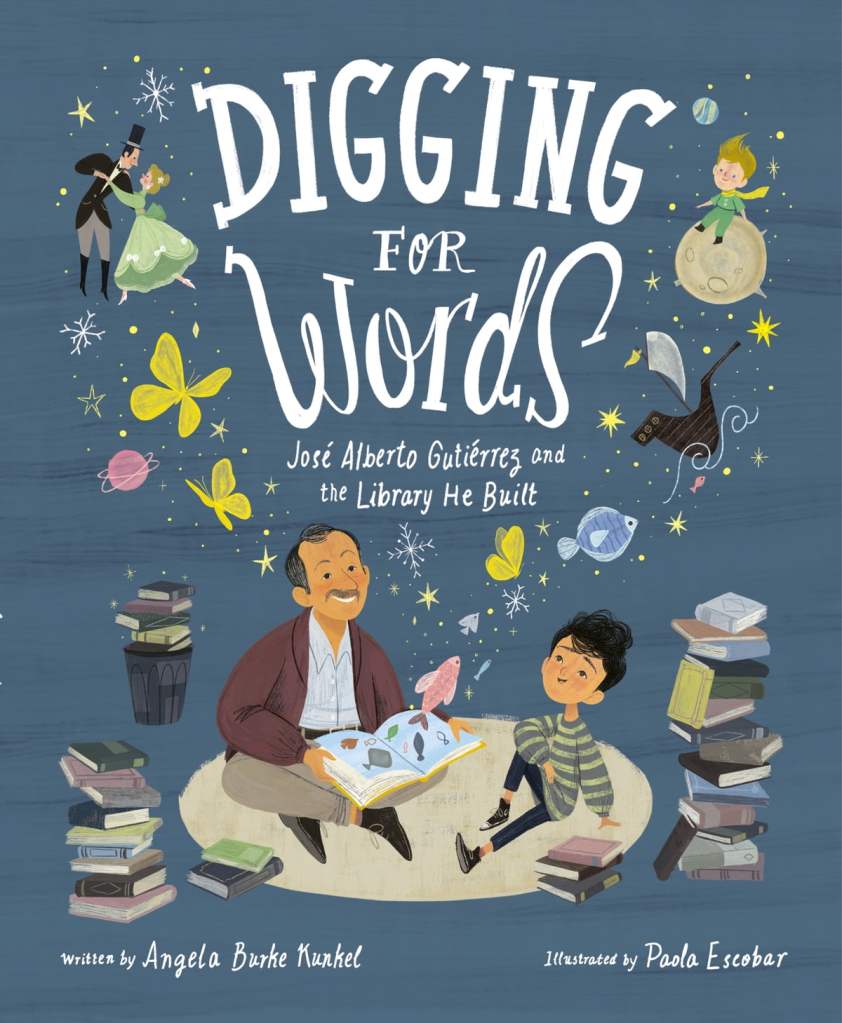
Digging For Words: José Alberto Gutiérrez and the Library He Built ( Schwartz & Wade) Written by Angela Burke Kunkel Illustrated by Paola Escobar
For ages: 4-8 You have likely never heard of José Alberto Gutiérrez, but neither had I. He was a garbage collector living and working in Bogota, Colombia, who started to notice people throwing books in the trash. Jose began collecting the books he found, which became the driving force in his daily life, building his collection. The first book that connects with him is Tolstoy’s Anna Karenina. Once his collection was large enough, Jose realized he wanted to share these beautiful texts with his community. So, in his working-class neighborhood, he builds a library named Paradise and gets to watch his neighbors get transported to the same worlds Jose experienced when he read the books. Paola Escobar’s illustrations do an extraordinary job of visualizing the experience of getting lost in a good book, feeling ensconced in a world different yet familiar to your own. I also love a book that highlights blue-collar/working-class people as also being intellectual, something I think is overlooked in extremely anti-intellectual cultures like the United States.
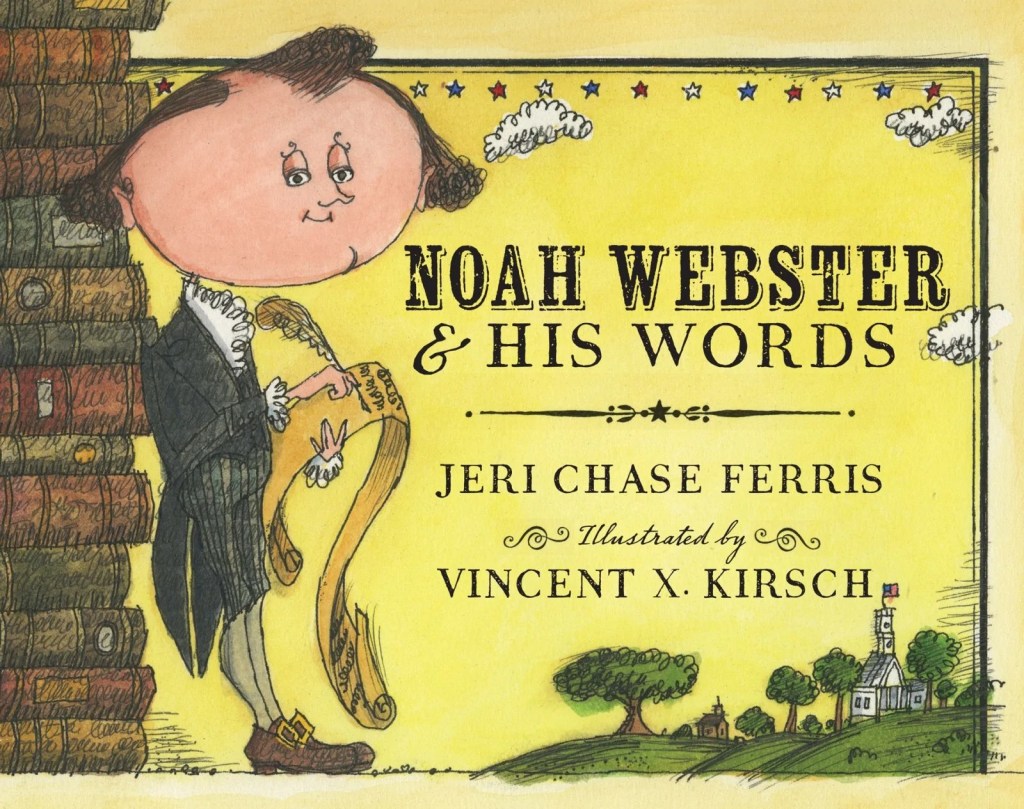
Noah Webster and His Words (Clarion Books) Written by Jerri Chase Ferris Illustrated by Vincent X. Kirsch
For ages: 6-9 Few people in history loved words as much as Noah Webster, so much that he developed the second most popular book to ever sell in the Western world, Webster’s Dictionary. From an early age, he was pretty clever, entering Yale at 15. Through this text, we learn he imagined a “second Declaration of Independence,” which would create a consistent spelling system for English in the United States. In the wake of the Revolutionary War, it was not uncommon to find some words with six or more spellings based on region or just the individual’s background. This could have easily been a dry, boring book. Still, it is Vincent Kirsch’s cartoonish illustrations & his creative choice of how to frame the words & pictures that elevate this into an entertaining read. Webster isn’t presented as a flawless saint; at one point, Kirsch inflates his head like a balloon on a page that talks about the scholar’s often pompous confidence. Because this is a book about dictionaries, many big words are used, and explanations on how to use & read these lexicons are provided. This is a fantastic example of how biographies for elementary students should be written.
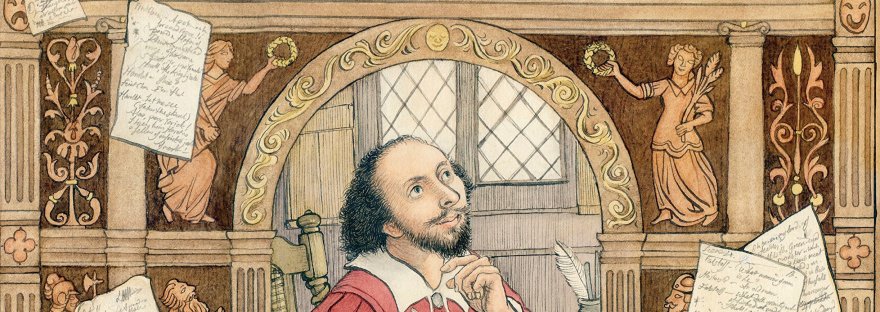
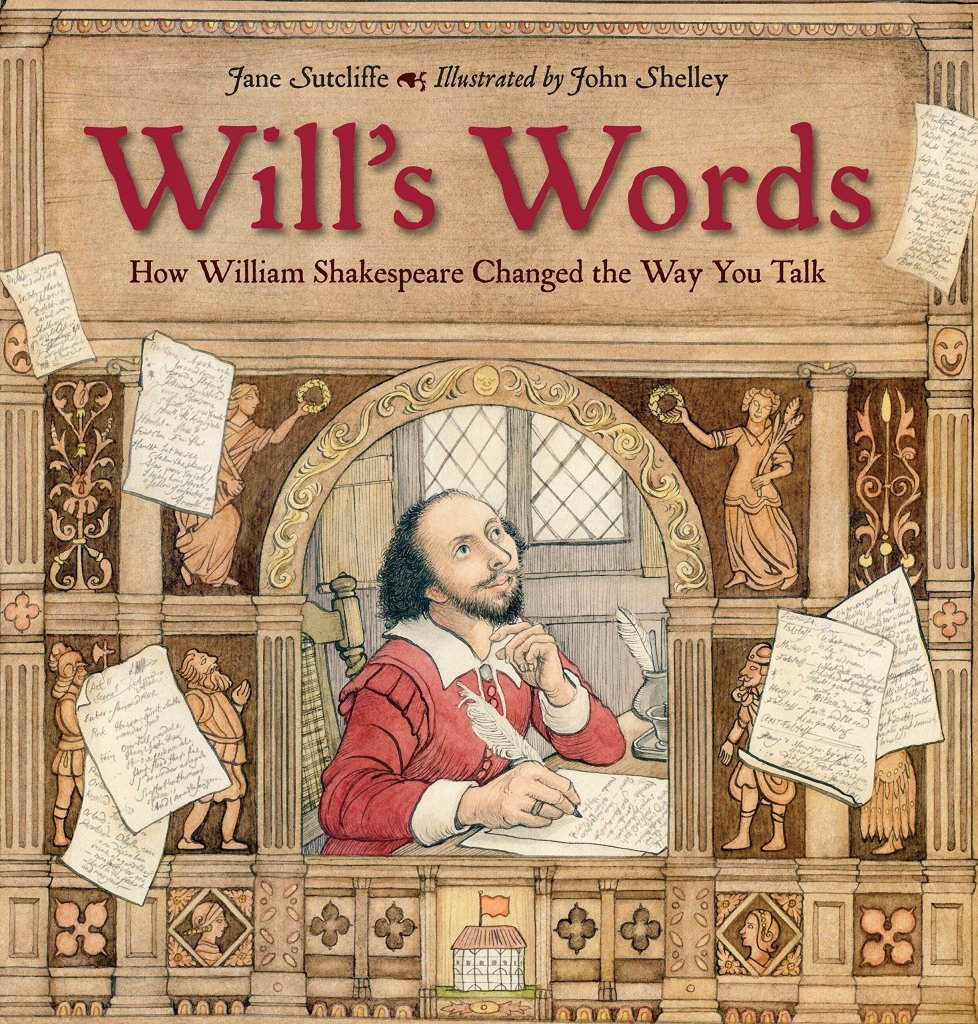
Will’s Words: How William Shakespeare Changed the Way You Talk (Charlesbridge) Written by Jane Sutcliffe Illustrated by John Shelley
For ages: 7-10 Children should be introduced to Shakespeare earlier in their education than in high school. Will’s Words is a book that can be that window into a world of art that shaped Western civilization. Author Jane Sutcliffe pulls a little meta-writing out and talks about how in writing a book about Shakespeare, you suddenly learn how many of our everyday words and phrases were invented/curated by him in his plays. “Too much of a good thing,” “household chores,” and “eyeball” are just some of the many examples of terms the playwright was the first to coin in his stories. Sutcliffe also includes the history of The Globe Theater and briefly touches on the many plays Shakespeare wrote and performed there. So if you are searching for an accessible text for upper elementary students to begin what will hopefully be a lifelong love of the Bard, Will’s Words might do the trick.
My Brother is Away (Random House Studio) Written by Sara Greenwood Illustrated by Luisa Uribe
For ages: 4-8 Seven percent of all U.S. children have a parent in prison, amounting to 2.7 million kids. When you add in siblings, extended family, and family friends, that number grows ever higher. The American carceral system is structured & operated in a frigid, unfeeling way. It is not so concerned with rehabilitation as it is with keeping facilities full so private operators can scoop up large armfuls of government money. As an educator, you can show a feeling of warmth & compassion for students who have loved ones in prison through how you approach the subject. A fantastic first start is My Brother is Away.
A little girl narrates this story, sharing that her older brother is far away, which makes her sad. She gazes into his empty bedroom, remembers their fun times, and tries to pretend he’s still around. She has a strong bond with this older sibling, and his absence is felt powerfully. Eventually, she takes a long journey until she arrives at a gray, stony block building surrounded by fences. In the visiting room, the narrator is reunited with her brother, who wears a telltale jumpsuit. They hug, and she is so joyful that they get to spend even a little time together.
The brother’s crime in this book is never detailed and isn’t important. Instead, the book aims to show empathy for children who have lost a loved one to this system. Maybe he needs to be incarcerated; perhaps he has been convicted and sentenced unfairly. That doesn’t matter. What does is that we understand that the brother is an essential person in the narrator’s life, a figure that helped her grow in many ways. The author ends the book with a beautiful note, a reminder, “If someone you love is in prison, I want you to know you aren’t alone, either.”
Activities
If a student has a loved one incarcerated, have them journal about their feelings and share if they choose to. If a student doesn’t know anyone who is jailed, have them journal about what they imagine how that must feel.
Have students pretend they are a friend of the narrator. Write about what they would do to make sure their friend was supported.
Create a schoolwide support group for children who have loved ones in jail. This could involve making little care packages or writing notes that let these children know they are loved. This would be done with the consent of parents/guardians and the student themselves if they are comfortable sharing this information with their peers.
The Eyebrows of Doom (Tiger Tales) Written by Steve Smallman Illustrated by Miguel Ordóñez
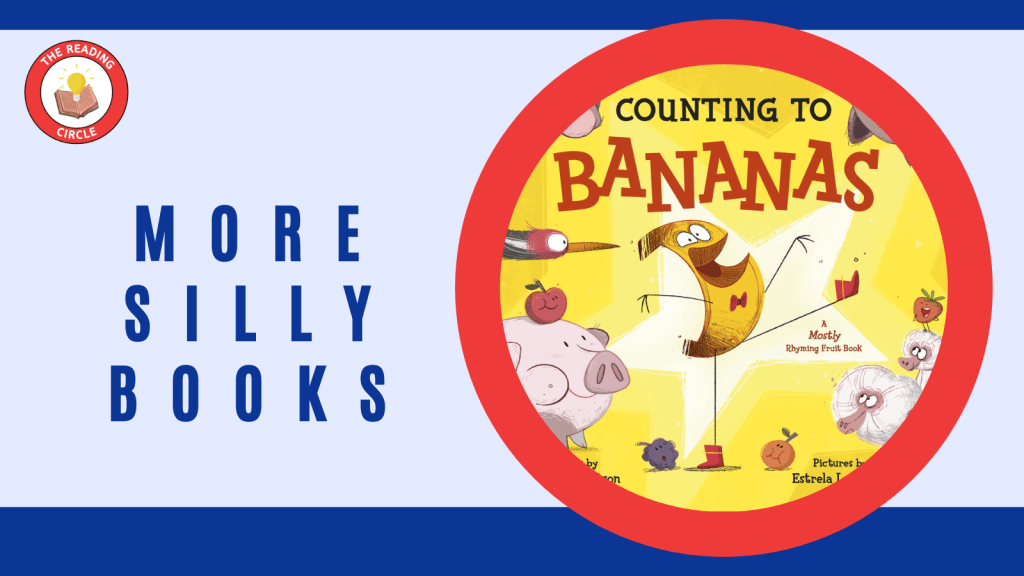
For ages: 4-8 Absurdity is one of the effective forms of comedy to present a child with. They can identify elements that don’t adhere to the norms of everyday life and quickly notice the humor as a result. My favorite times reading aloud to children have been with a silly book. A reader who isn’t afraid to embrace goofiness and apply it to their reading style will have an audience of captivated children. It’s the same reason people have flocked to great storytellers for generations; humor & enthusiasm are contagious feelings that can be transferred via stories.
The Eyebrows of Doom starts us off with a silly premise. Bear is sweeping up his abode one day and a pair of slugs, covered in the accumulated dust, proclaim they are the titular Eyebrows of Doom. The visual joke is that when they slap themselves above Bear’s eyes, he suddenly looks evil due to their menacing tilt down towards his nose. Unfortunately, these Eyebrows also cause the bearer to do mean things, pulling pranks and causing mischief. They hop from animal to animal, leaving a trail of destruction wherever they go. At one point, the Eyebrows attach themselves to Seagull, who goes about bombing beach-going humans with his poop. The book even concludes with a tease that the specter of the eyebrows may not be gone completely. Do I smell a sequel?
Frequently, we are recommended books that have a big Lesson or Allegory to teach the children. Shouldn’t picture books exist to moralize the youth? Well, there are undoubtedly many that do that. Still, we seem to lose the sense that reading is a pleasurable experience. Few things are more delightful than laughter and joy. If a book can provide that, it is a good book….in my book. Books like The Eyebrows of Doom are perfect brain-break books; they can give a moment of relief for students who have been working hard, be it on daily work or those ridiculous & unnecessary standardized tests. Your students are hard workers, and they deserve a laugh & a break. The Eyebrows of Doom is that sort of read.
Activities
Draw yourself with the eyebrows and what prank they would make you pull.
Extend the drawing by writing a story about what happens when the Eyebrows find you.
Create a warning poster for the community about the Eyebrows, including signs that the Eyebrows might be in your area.
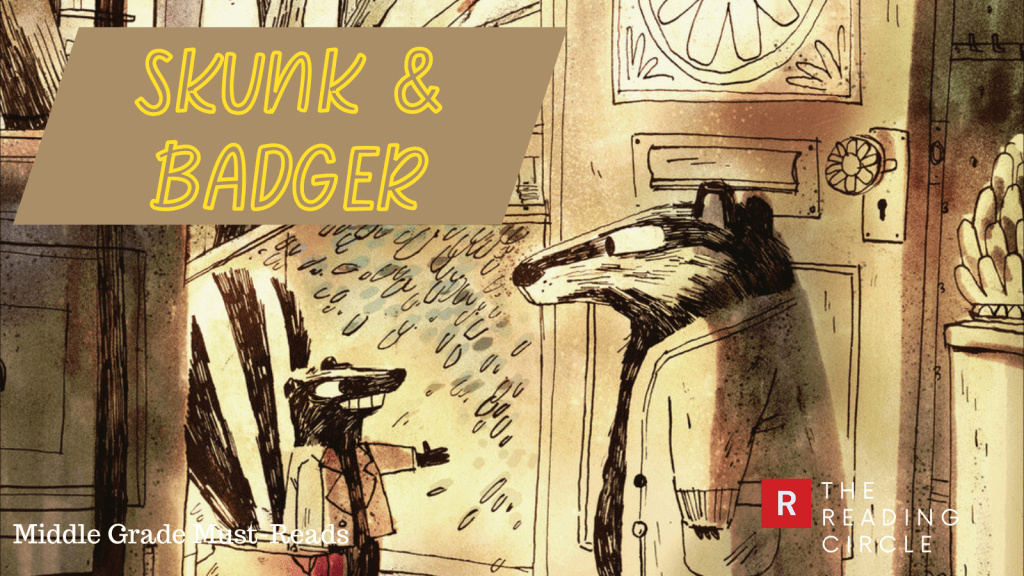
Skunk and Badger (Algonquin Young Readers) Written by Amy Timberlake Illustrated by Jon Klassen
I was immediately struck by how unexpectedly unusual and pleasant this book was from the first page. Author Amy Timberlake is tapping into that same creative vein that has given us books like Beatrix Potter’s bibliography, Frog & Toad, The Wind in the Willows, The Odd Couple, and the Wallace & Gromit movies. It’s a world of animals that behave strikingly like people, all the same, with little daily struggles, annoyances, and triumphs. As an adult, I felt very connected to this book and would be fascinated to know how a child would process it. There is no big epic story, just the interactions between these two roommates. It’s a cozy world that I felt compelled to crawl inside and hang out for a while. It’s also a genuinely hilarious book, with humor coming from the characters’ responses to each other and silly anxieties over tackling simple problems.
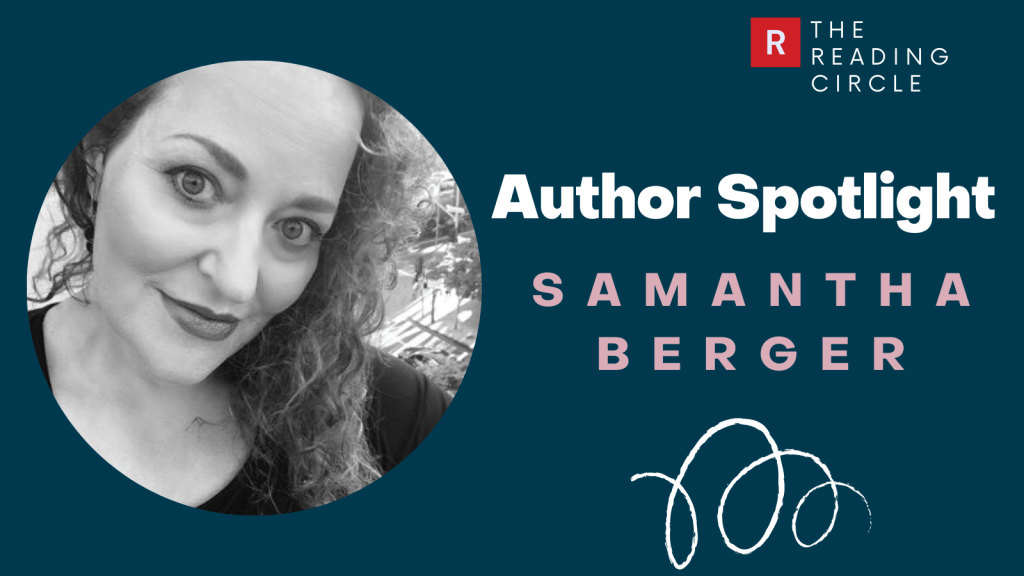
Samantha Berger is one of those people who exudes a beautiful shining light of joy. You can see it in her photos, hear it in her interviews, but most importantly, read it in her picture books. Berger’s career has seen her writing copy for Nickelodeon promos and cartoons, penning comic books & commercials, and even working as a voice-over artist. She has an infectious enthusiasm that can be seen in how excited children get reading her books. You can’t help but feel happy when you come to those final pages and want to start again. Berger’s advice for young writers is to embrace it as a form of play and play daily. Spend a lot of time daydreaming and writing down your ideas. Before you know it, you’ll have your own story to share with the world.


 The Reading Circle