
asian-american, humor, illustration, science, spotlight

Spotlight: The Upside Down Detective Agency/Usha and the Big Digger

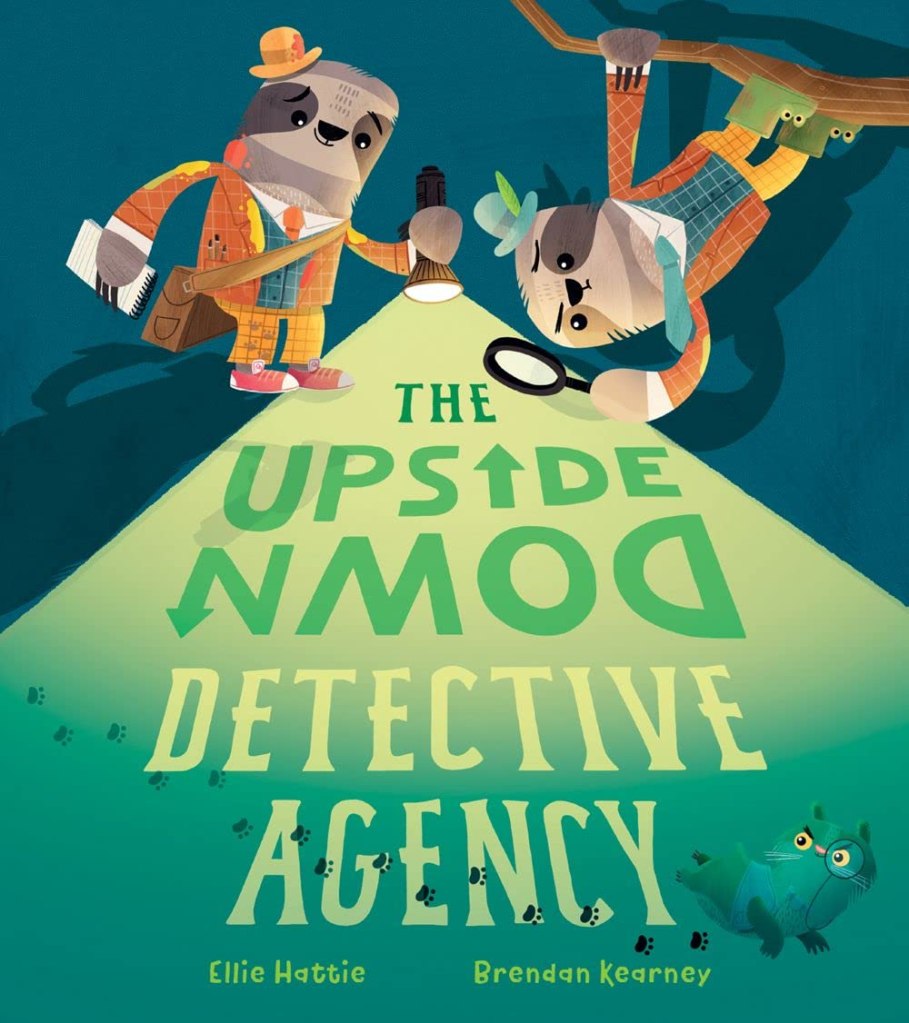
The Upside Down Detective Agency (Kane Miller Books / EDC Publishing)
Written by Ellie Hattie
Illustrated by Brendan Kearney
For ages: 4-8
As a child, I loved books with intricate maze-like illustrations. You could spend hours on a single two-page spread pouring over the details. Within those illustrations were other small stories that sparked my imagination. As a teacher, I have seen that these types of books always draw in even the most hesitant independent readers. It gives them something to latch onto through the illustrations so that even if they cannot read every printed word they are experiencing storytelling. The Upside Down Detective Agency is exactly that sort of book and it made me grin ear to ear while I was reading it.

Stella & Stan are a pair of sloths that work as detectives. One day someone knocks on their office door. It’s Lady Veronica Velocity Speed, a famous race car driver whose specially designed diamond warp drive has been stolen. Stella & Stan rush into action…well, as quickly as sloths can rush and they need the reader’s help in noticing clues. There is no way this book can be read without audience interaction and that is going to make it a crowd pleaser in your home or classroom. It’s a book that helps children develop their observation and attention to detail, all while having fun in the process.

Activities

1. Have students pick their favorite page from the book. Discuss what elements make it their favorite page. Then have the student take what was talked about and compose a short paragraph about their favorite page.

2. Any good detective agency needs an advertisement to let people know they are there. Have students make a brochure for the Upside Down Detective Agency. They need to explain who the detectives are and give a testimonial from their latest client, Lady Veronica Velocity Speed.

3. For your students that want a big challenge, have them write the next adventure for the Upside Down Detective Agency. They will need a client, a crime, and a solution. A colorful detailed illustration should also be an expectation.


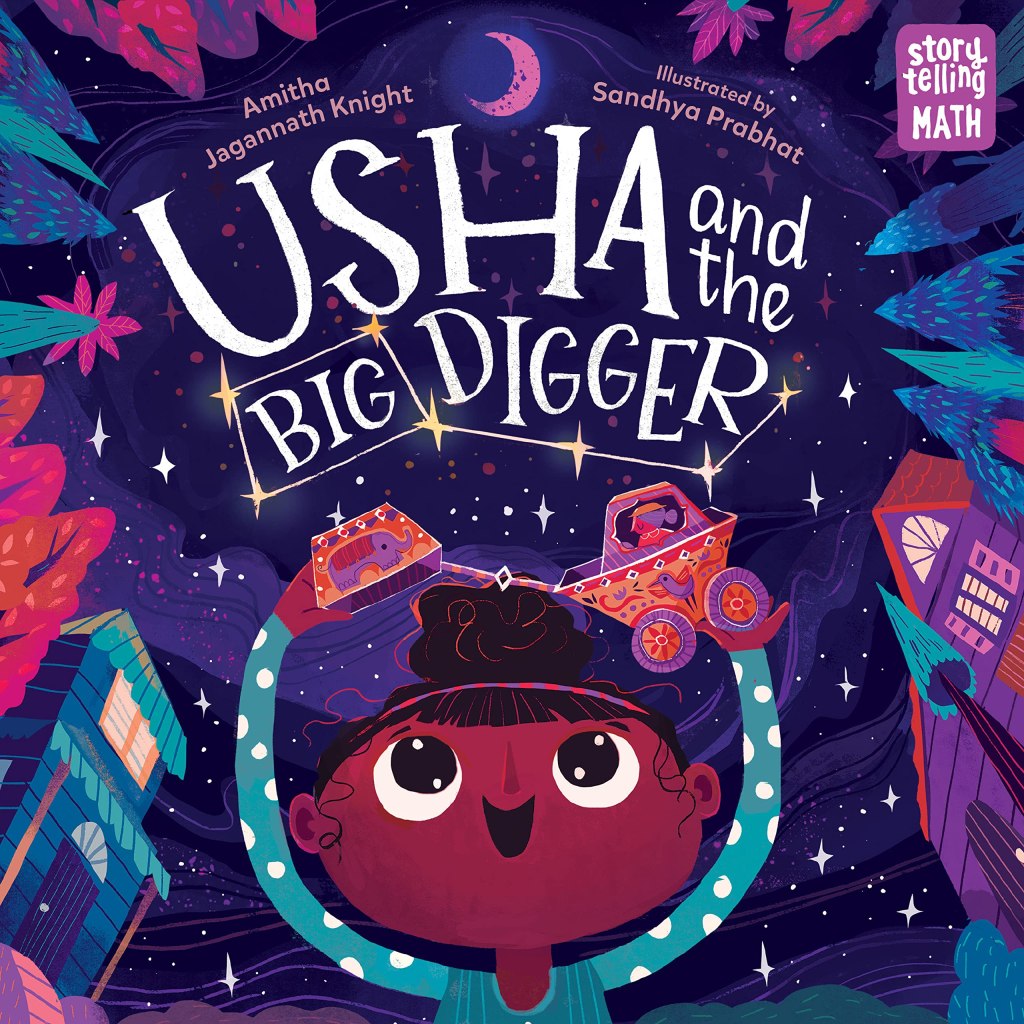
Usha and the Big Digger (Charlesbridge)
Written by Amitha Jagannath Knight
Illustrated by Sandhya Prabhat 
For ages: 4-8
While billed as part of a series of Math storytelling books, I wouldn’t say this book is a great example of the concept it’s trying to convey: orientation. It’s lacking some concrete STEM explanations in the back matter but that is okay because it’s an incredibly charming story. Usha is lying in the backyard with her big sister Aarti looking at the stars one night. Aarti points out the Big Dipper constellation but that is not what Usha sees. The little girl sees a big digging machine and insists that is what the stars are shaped like. Cousin Gloria arrives and contemplates things further by saying she sees a kite in that cluster of stars.

The illustrations here are perfectly done to draw in the eye. They burst with color and expressive faces. I appreciate the diversity on display with dark skinned Southeast Asian people represented. It is implied that Gloria is actually bi-racial (Black as well as South Asian). While the content isn’t hard math, it does provide some good social-emotional lessons in perspective. None of the three girls is wrong, they are just seeing something different in the same place and learning how to accept each other’s views is what is important. For a book about Math concepts, it was a little difficult for me to see it but this is a fantastic book overall.

Activities

1. Introduce the constellations to your students. There are a total of 88 so go with some of the more well-known ones (e.g. The Big Dipper, Ursa Major, Cassiopeia, etc.). Have students turn the images around until they see something. Have a discussion about why they see what they see.

2. Now that your students know about the constellation, have them write a short myth that explains how that constellation came to be in the sky. You will likely want to read a short fable from the past that does this so they have a sense of what their story should be like.

3. Have your students write an email to Aarti and Usha. They should help them figure out how not to get into such big arguments.


black history, culture, disabilities, hispanic, illustration, social-emotional

Book List: Our Beautiful Hair

Happy to Be Nappy (Little, Brown Books for Young Readers)
Written by bell hooks
Illustrated by Chris Raschka

For ages: 1-5
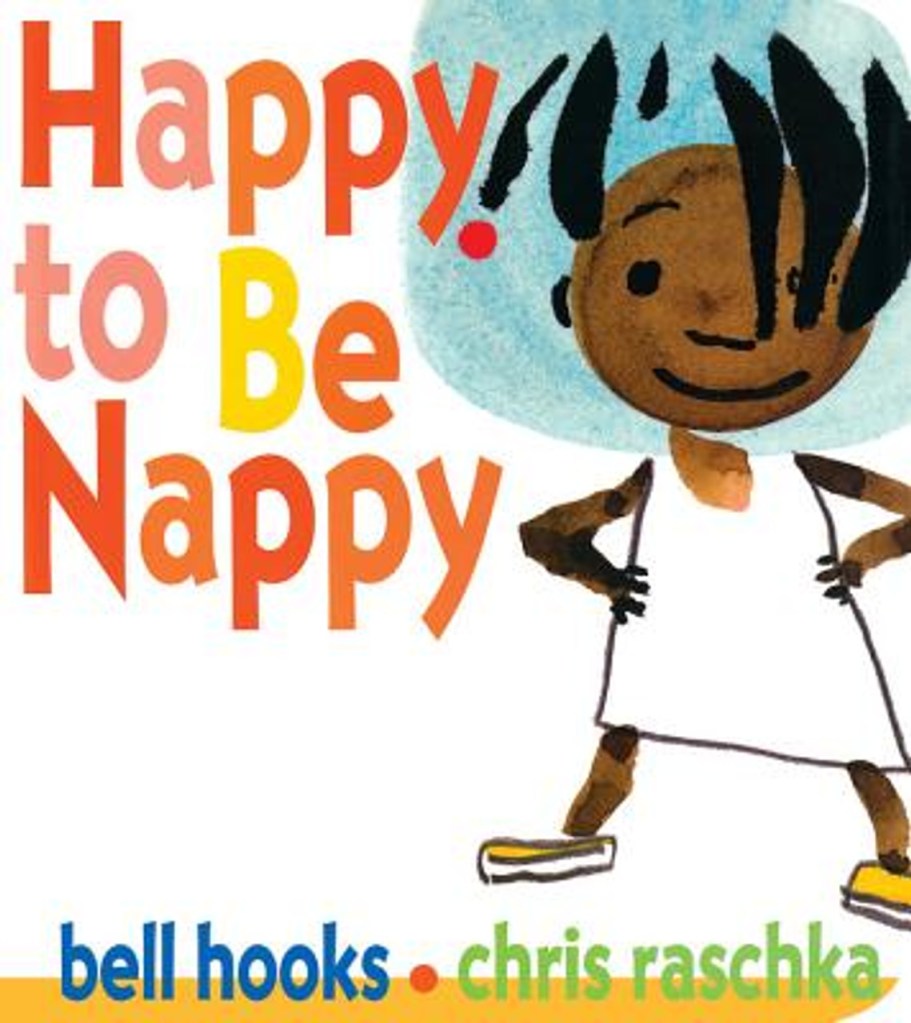
This board book is not your typical baby lit. Instead, it’s taken from the words of noted author bell hooks and celebrates the beauty of Black hair. Hooks provides beautifully descriptive language to talk about her hair, comparing it to the fluffiness of cotton, frizzy, fuzzy, and able to be styled in a seemingly endless number of ways. Hair is evoked as a method of bonding. Mothers & daughters spending time together. The illustrations by Chris Raschka evoke the crayon drawings of a young child for whom this book is intended, playful stick figures with colors going outside the lines. While appearing simple from the outside, Happy to Be Nappy is a beautiful celebration of Black hair and its many styles and presentations.

Continue reading “Book List: Our Beautiful Hair”
humor, illustration, jon klassen, spotlight

Spotlight: The Rock From the Sky/The Old Truck

The Rock From the Sky (Candlewick)
Written & Illustrated by Jon Klassen

For ages: 5-8
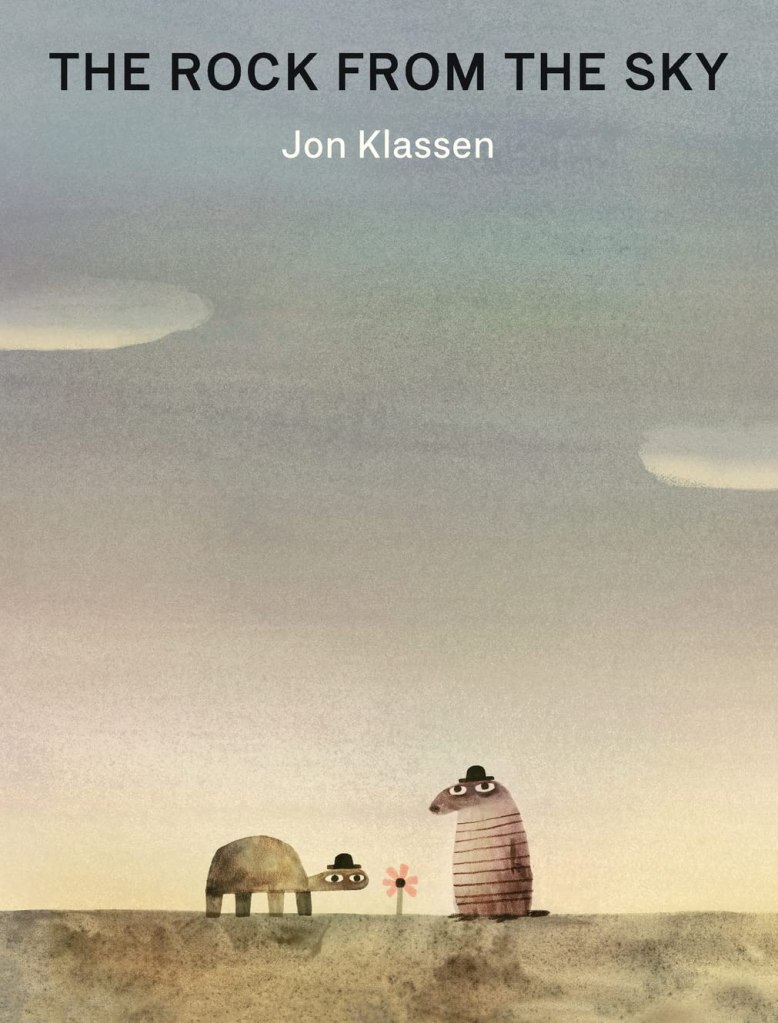
Author Jon Klassen’s books are some of the most remarkable children’s literature published at the moment. On the surface, they appear incredibly simplistic; his art style is very clear & direct. There aren’t many words in his books either. However, Klassen is taking big ideas and communicating them in ways that are easy to catch. Yet, his work also lends itself to some deep analysis; he seems deeply philosophical in his writing. The Rock From the Sky is a hilarious and thought-provoking book told in chapters that play with expectations and perspective.

We follow a turtle, an armadillo, and a snake through five chapters. In part one, the turtle has a spot he loves, but the armadillo feels uneasy. In the second part, the turtle falls but won’t accept help. In part three, the duo imagines what the future must be like, encountering something mean. In part four, the armadillo and snake enjoy watching the sunset. And things wrap up in the fifth part; the turtle gets annoyed with the titular rock and takes it out on his friends. This doesn’t sound like much on the surface, a series of disconnected episodes. However, Klassen spins comedic magic out of it all.

Klassen loves dry, deadpan comedy, and that’s found in the reactions of his characters. They seem to look at the reader in the same manner characters from the office gaze into the camera when something ridiculous happens. It’s a much more subtle way of breaking the fourth wall, a gimmick many children’s books have presented in the past; it’s just so sly here. Klassen is also a student of iconic theater, and he’s remixing Waiting for Godot with his very focused cast and setting. This is a story about silliness and absurdity, and that’s something children especially need in these dire, dreadful times.

Activities

  1. Have your child imagine another animal that could be added to the cast of this story. Depending on their age & ability, have them talk out/draw/write a new chapter and how this new animal changes things up.
  2. Klassen’s books are like little plays. Have your child/students/family act out the book’s chapters. Assign a part to each person and even gather props if you’d like. If you’re feeling up for it, share your performance as a video on YouTube.
  3. Have your child/students make a profile of their favorite character. Aspects to include would be likes, dislikes, fears, behavior, and thoughts. To push your writers further, ask them to explain how this character is like/unlike themselves.

The Old Truck (Norton Young Readers)
Written by Jared Pumphrey
Illustrated by Jerome Pumphrey

For ages: 3-5
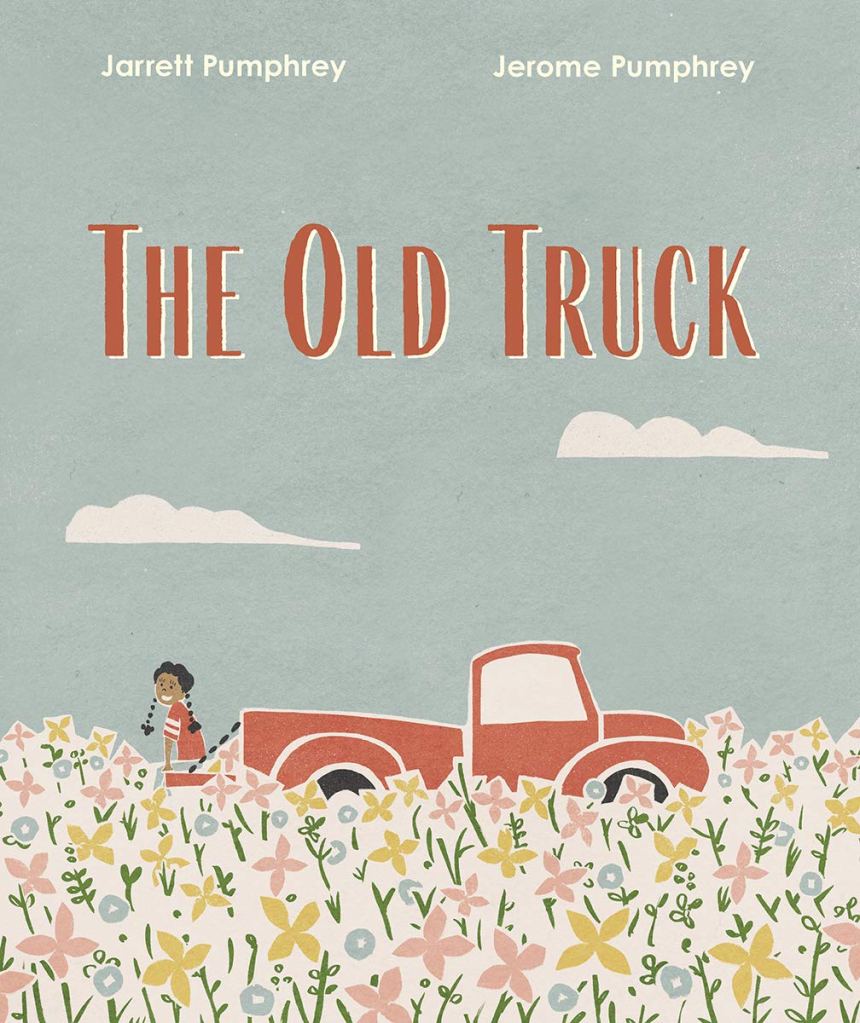
Like The Rock From the Sky, The Old Truck is another beautifully simplistic book with so much underneath the surface. Brothers Jared and Jerome Pumphrey have used ink stamps to illustrate the book, hand-making over 250 stamps to tell their story. The result of the clear communication of the drawings is that even your earliest emerging readers can page through the text and fully understand what is happening. However, even older students can find rich themes focused around age, usefulness, and finding beauty in things people might toss away. 

The story describes how a pickup truck works hard for the farmer and his family. Much of the narrative is found in the illustrations, which illuminate the simple prose. We see a little girl, the farmer’s daughter, who becomes the central human character in the story. The family loads livestock and produce into the vehicle’s bed, and at certain points, repairs must be made on the old friend. The most interesting segment comes when the truck is parked beside the barn and forgotten for many years. The text describes this as the truck going to sleep and dreaming, and in these visions, he’s transformed into a boat, a blimp, and a moon lander. The grass grows around the red truck, and it seems to be rusted and lost. However, the daughter, now an adult, gets it running again, and the automobile finds a new lease on life.

Living in a world focused on destructive consumption can make us forget old valuable things. They often get tossed aside, lost in closets, attics, and the garage collecting dust. The Old Truck points out that some items may seem useless and get set aside for a time. However, with love and care on our part, we can discover these objects are extraordinary and can keep providing the help we need. If you have ever loved a beat-up old truck, car, or van, then you’re going to find something exceptional here. It’s also a fantastic reminder that even older people, who can get sidelined in our culture, are just as valuable as anyone else in our communities.

Activities

  1. Because The Old Truck was illustrated using ink stamps, it provides an excellent opportunity for your young writers/artists to experiment in the genre. Have your student take a familiar story or one of their own and illustrate it using sponge stamps
  2. Have your child explore the objects that are boxed up in your house. Ask them to choose some forgotten thing that still has a use, even if it needs to be fixed up a little. If you like, have them write a short journal about what makes this object special.
  3. The human characters in The Old Truck don’t ever say anything. By examining the illustrations, have students write about what they believe the farm girl’s motivations were to repair the old truck.