black history, black lives, history, middle grade, social-emotional

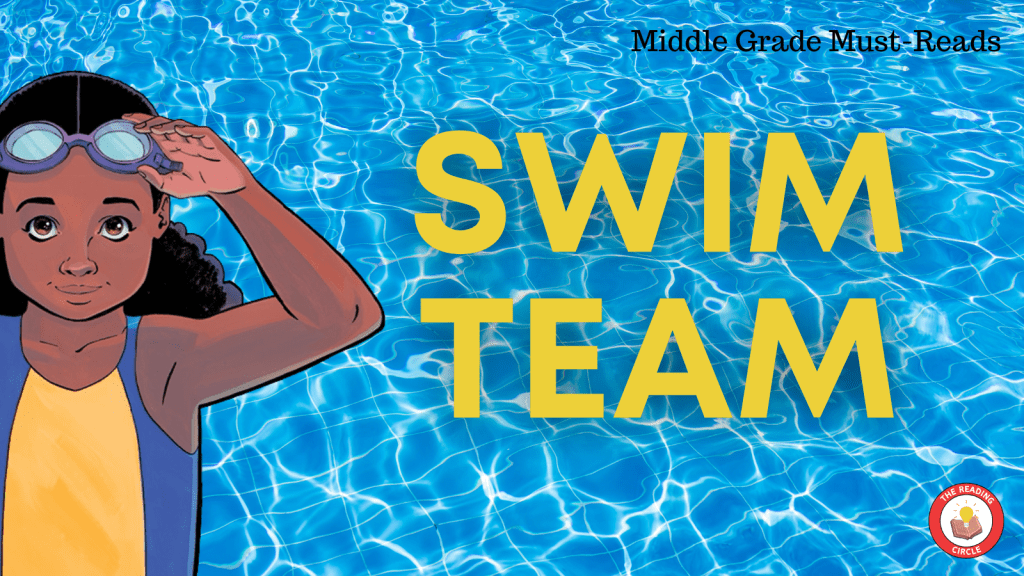
Middle Grade Must-Reads: Swim Team

Swim Team (HarperAlley)
Written & Illustrated by Johnnie Christmas

For ages: 8-12
The story of how white supremacy erased beautiful cities has been shielded from white people’s view for at least a generation or two since it happened. Only in the last year have I learned that many cities across the country used to have public swimming facilities and even public amusement parks with rides. Where did these places go? When segregation was finally ruled unconstitutional, and these places were opened up to Black families, only then did the municipal leaders decide to shutter and demolish them. Now, most American suburbs and small towns have an absence of places for young people to play safely. I know the small Southern town I come from has nothing for the youth and plenty of drug problems caused by this cancerous boredom. How foolish that some white people should be filled with so much hate that they would torpedo their own children’s & grandchildren’s enjoyment of public spaces. 

Continue reading “Middle Grade Must-Reads: Swim Team”
author spotlight, illustration, social-emotional

Author Spotlight: Shaun Tan

You rarely see picture books that work for little children but become much more powerful the older you get. Shaun Tan writes and illustrates those very types of books that feel like modern classics. Tan finds ways to talk about profoundly difficult & complex ideas in a manner that a child will understand. Born in the port city of Fremantle, Western Australia, Tan was drawn to art & storytelling from an early age. Around age eleven, he developed a deep interest in the Twilight Zone and the books of Ray Bradbury, both of which are apparent as influences in his work today. A brief dalliance with the idea of being a chemist in high school eventually became Tan shifting from academics at university to focusing on his art. The result is an incredibly distinct art style that combines traditional linework with collage elements. Reading and viewing Tan’s work expands your consciousness about what a picture book can do & say. If you are unfamiliar with his work, please check it out and think about what children in your life would click with these unique & moving texts.


The Lost Thing (Lothian Children’s Books)
Written & Illustrated by Shaun Tan

For ages: 4-8
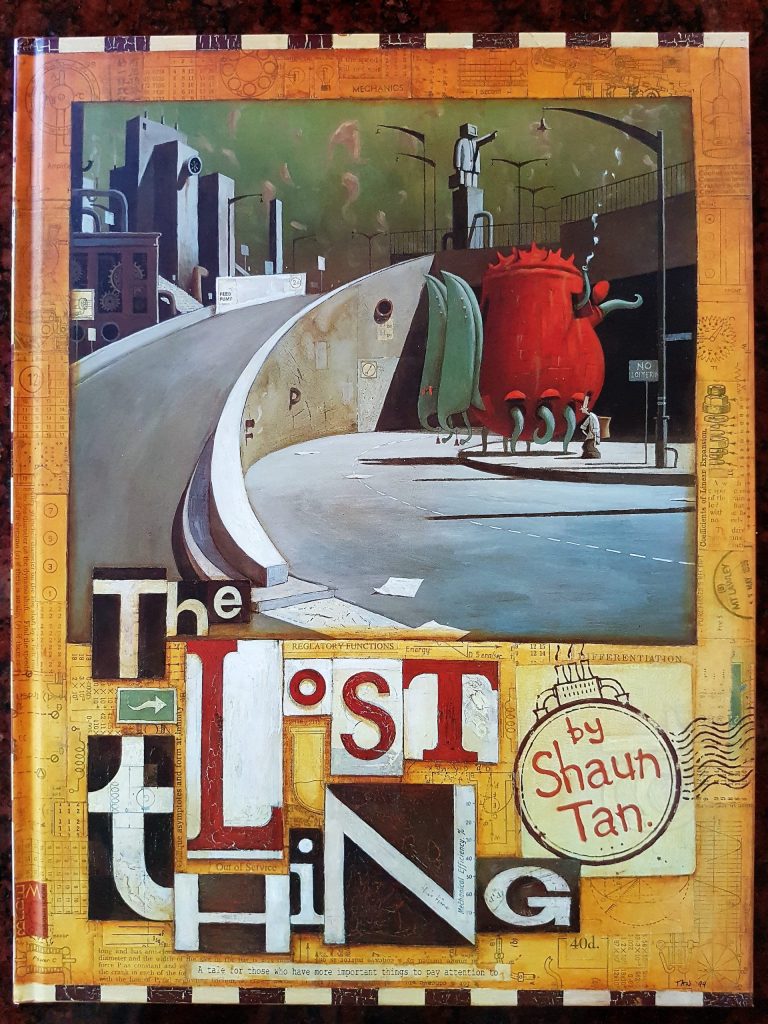
Tan made his debut as an author with this picture book which delivers a fairly standard plot made into something extraordinary through his art. A little boy finds a lost creature on the beach and tries to find the owner. He asks his parents if he can keep it. That is met with a no. So, our protagonist assumes he will have to hand the creature over to the authorities and hope for the best. However, the best place for this creature is discovered in the end. The images stand out because this lost thing is a towering hermit crab-like animal. Instead of a shell, it has nested inside a massive red teapot-like structure. Tan presents the city setting of the story as drab & gray. The creature is often the most colorful thing on the page. These visual cues are part of the story’s theme, an observation that the most beautiful/strange people & things have a difficult time finding a place in this world. Still, there is always somewhere that will embrace them with open arms.


The Red Tree (Hodder Children’s Books)
Written & Illustrated by Shaun Tan

For ages: 4-8
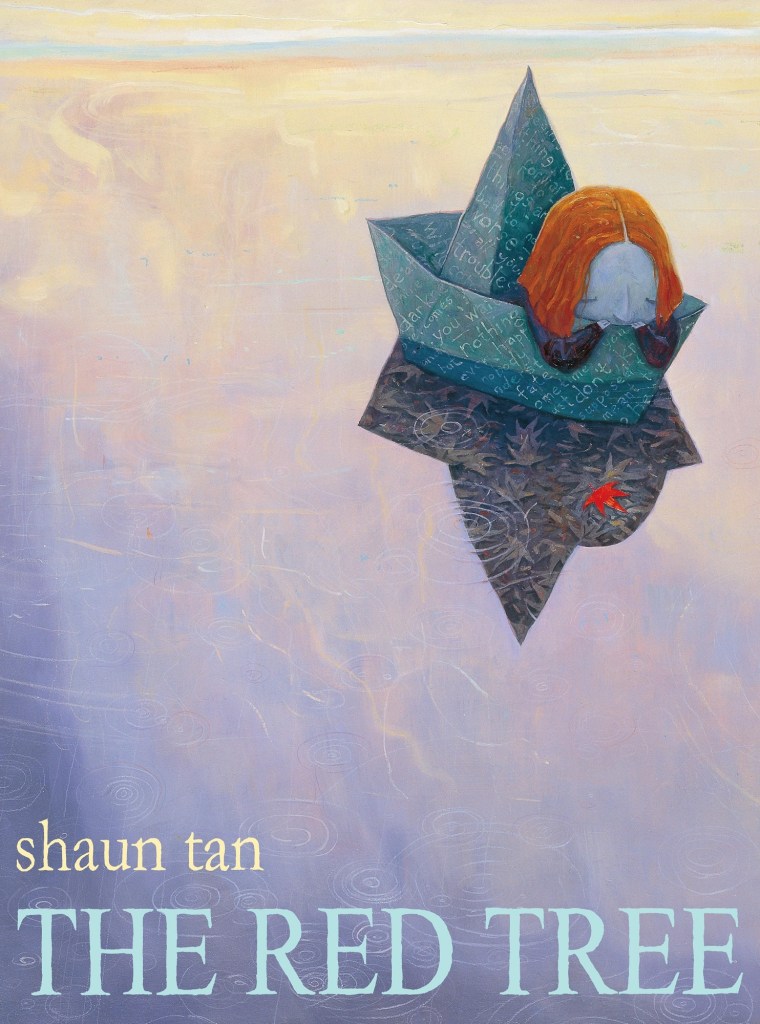
In recent years, more picture books have been published addressing the complexities of human emotions, especially how children feel them. The Red Tree is enigmatic and requires the reader to engage with the text and think about what is happening. A little girl wakes up one morning and immediately shares how little she looks forward to the day. The world is colored by her mood, which is drab & bleak. Strange things abound: a fish floats over her head and spiders rain from the sky inside her bedroom. She wanders around a confusing world that often isn’t what it appears to be at first glance. Finally, she comes home, still feeling down. But something is different in her bedroom now; a bright gorgeous red-leafed tree sprouts and changes her mood. This is the only time we see her smile. I adore that Tan refuses to be so evident as to spell out what is going on in this story. I can guarantee the students who need to hear this one will get it, though. Tan can show depression in a form that, sadly, too many children relate to, but they need to see & hear they aren’t alone. Other people sometimes feel the same things, so there is a community to find that can provide support.


Cicada (Arthur A. Levine Books)
Written & Illustrated by Shaun Tan

For ages: 9-12
Cicada is one of my favorite picture books of all time. That age range might come as a surprise. Still, this book will be most impactful with slightly older students as it works with some of the heaviest themes they are likely to encounter. Cicada is an office drone but also an insect. He wears a little suit and toils away in his cubicle for a company whose purpose we never quite understand. We see the world from his perspective, meaning people’s faces are obscured because they are tall. Cicada is a strong worker but is regularly bullied and marginalized in the workplace. His speech is exceptionally primitive, often missing direct/indirect objects and using incorrect subject-verb agreement. There is a rhythm to it that would make a read-aloud a pretty powerful thing. Despite feeling so sad for most of its length, Tan has a clever twist at the end that changes how we view Cicada’s perspective. What it does is mirror our own lives back on us: how we often marginalize people that are different & how adults accept such awful work/living conditions without protest. Cicada is a fantastic piece of literature & a vital meditation on examining our lives.

animals, family, humor, social-emotional

Spotlight: My Brother Is Away/The Eyebrows of Doom

My Brother is Away (Random House Studio)
Written by Sara Greenwood
Illustrated by Luisa Uribe

For ages: 4-8
Seven percent of all U.S. children have a parent in prison, amounting to 2.7 million kids. When you add in siblings, extended family, and family friends, that number grows ever higher. The American carceral system is structured & operated in a frigid, unfeeling way. It is not so concerned with rehabilitation as it is with keeping facilities full so private operators can scoop up large armfuls of government money. As an educator, you can show a feeling of warmth & compassion for students who have loved ones in prison through how you approach the subject. A fantastic first start is My Brother is Away.

A little girl narrates this story, sharing that her older brother is far away, which makes her sad. She gazes into his empty bedroom, remembers their fun times, and tries to pretend he’s still around. She has a strong bond with this older sibling, and his absence is felt powerfully. Eventually, she takes a long journey until she arrives at a gray, stony block building surrounded by fences. In the visiting room, the narrator is reunited with her brother, who wears a telltale jumpsuit. They hug, and she is so joyful that they get to spend even a little time together. 

The brother’s crime in this book is never detailed and isn’t important. Instead, the book aims to show empathy for children who have lost a loved one to this system. Maybe he needs to be incarcerated; perhaps he has been convicted and sentenced unfairly. That doesn’t matter. What does is that we understand that the brother is an essential person in the narrator’s life, a figure that helped her grow in many ways. The author ends the book with a beautiful note, a reminder, “If someone you love is in prison, I want you to know you aren’t alone, either.”

Activities

  1. If a student has a loved one incarcerated, have them journal about their feelings and share if they choose to. If a student doesn’t know anyone who is jailed, have them journal about what they imagine how that must feel.
  2. Have students pretend they are a friend of the narrator. Write about what they would do to make sure their friend was supported.
  3. Create a schoolwide support group for children who have loved ones in jail. This could involve making little care packages or writing notes that let these children know they are loved. This would be done with the consent of parents/guardians and the student themselves if they are comfortable sharing this information with their peers.

The Eyebrows of Doom (Tiger Tales)
Written by Steve Smallman
Illustrated by Miguel Ordóñez

For ages: 4-8
Absurdity is one of the effective forms of comedy to present a child with. They can identify elements that don’t adhere to the norms of everyday life and quickly notice the humor as a result. My favorite times reading aloud to children have been with a silly book. A reader who isn’t afraid to embrace goofiness and apply it to their reading style will have an audience of captivated children. It’s the same reason people have flocked to great storytellers for generations; humor & enthusiasm are contagious feelings that can be transferred via stories.

The Eyebrows of Doom starts us off with a silly premise. Bear is sweeping up his abode one day and a pair of slugs, covered in the accumulated dust, proclaim they are the titular Eyebrows of Doom. The visual joke is that when they slap themselves above Bear’s eyes, he suddenly looks evil due to their menacing tilt down towards his nose. Unfortunately, these Eyebrows also cause the bearer to do mean things, pulling pranks and causing mischief. They hop from animal to animal, leaving a trail of destruction wherever they go. At one point, the Eyebrows attach themselves to Seagull, who goes about bombing beach-going humans with his poop. The book even concludes with a tease that the specter of the eyebrows may not be gone completely. Do I smell a sequel?

Frequently, we are recommended books that have a big Lesson or Allegory to teach the children. Shouldn’t picture books exist to moralize the youth? Well, there are undoubtedly many that do that. Still, we seem to lose the sense that reading is a pleasurable experience. Few things are more delightful than laughter and joy. If a book can provide that, it is a good book….in my book. Books like The Eyebrows of Doom are perfect brain-break books; they can give a moment of relief for students who have been working hard, be it on daily work or those ridiculous & unnecessary standardized tests. Your students are hard workers, and they deserve a laugh & a break. The Eyebrows of Doom is that sort of read.

Activities

  1. Draw yourself with the eyebrows and what prank they would make you pull.
  2. Extend the drawing by writing a story about what happens when the Eyebrows find you.
  3. Create a warning poster for the community about the Eyebrows, including signs that the Eyebrows might be in your area.
author spotlight, humor, illustration, social-emotional

Author Spotlight: Samantha Berger

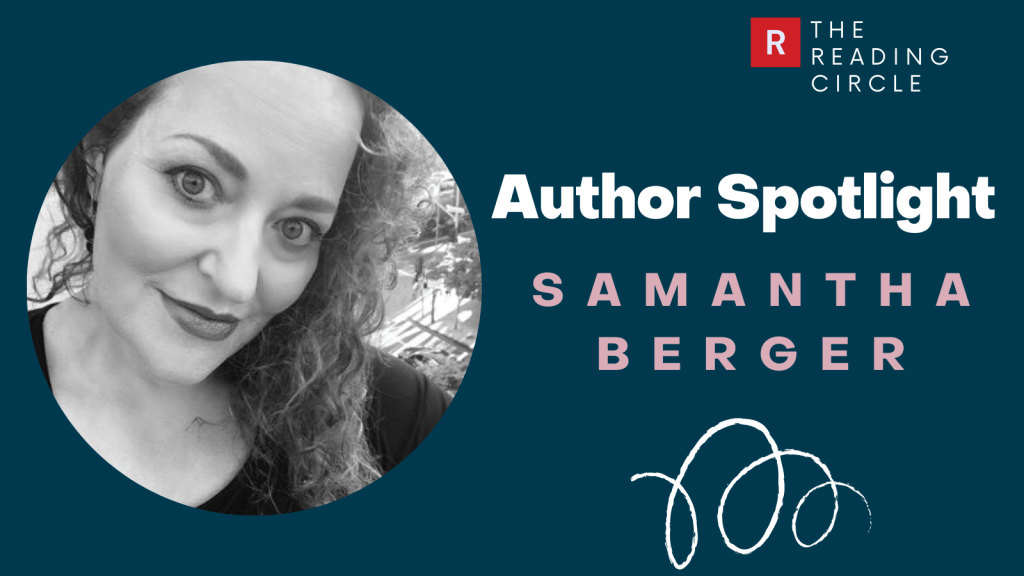
Samantha Berger is one of those people who exudes a beautiful shining light of joy. You can see it in her photos, hear it in her interviews, but most importantly, read it in her picture books. Berger’s career has seen her writing copy for Nickelodeon promos and cartoons, penning comic books & commercials, and even working as a voice-over artist. She has an infectious enthusiasm that can be seen in how excited children get reading her books. You can’t help but feel happy when you come to those final pages and want to start again. Berger’s advice for young writers is to embrace it as a form of play and play daily. Spend a lot of time daydreaming and writing down your ideas. Before you know it, you’ll have your own story to share with the world.

Continue reading “Author Spotlight: Samantha Berger”
asian-american, black lives, book list, hispanic, social-emotional

List: Moving to a New Home

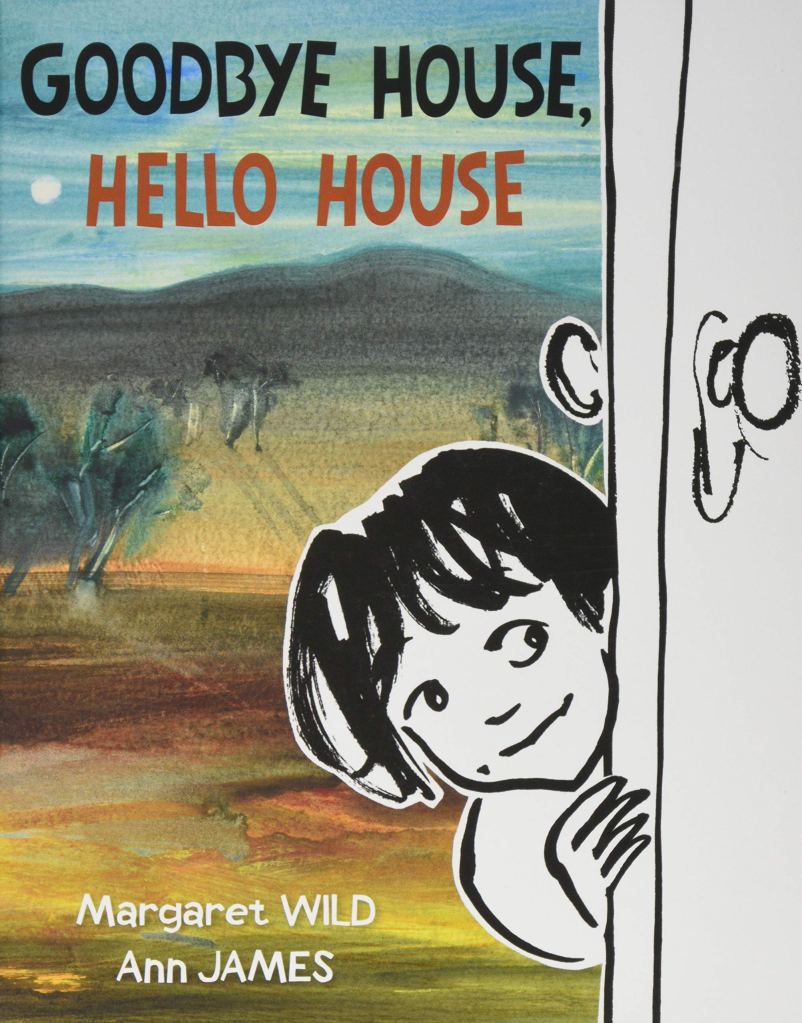
Goodbye House, Hello House (Blue Dot Kids Press)
Written by Margaret Wild
Illustrated by Ann James

For ages: 3-7
Emma is moving from a home in the country to one in the city. The rhythmic prose follows the girl as she notes all the last things she does in the only house she’s ever known. When she arrives at her new home, she does the opposite, recognizing a whole host of firsts. The symmetry of the narratives makes it perfect for comparing and contrasting or talking about accepting change healthily. Ann James’s illustrations feel like a child’s crayons or watercolor paints, letting colors bleed over lines.

Continue reading “List: Moving to a New Home”
animals, culture, family, social-emotional

Spotlight – A Perfect Wonderful Day With Friends/Brand New Bubbe

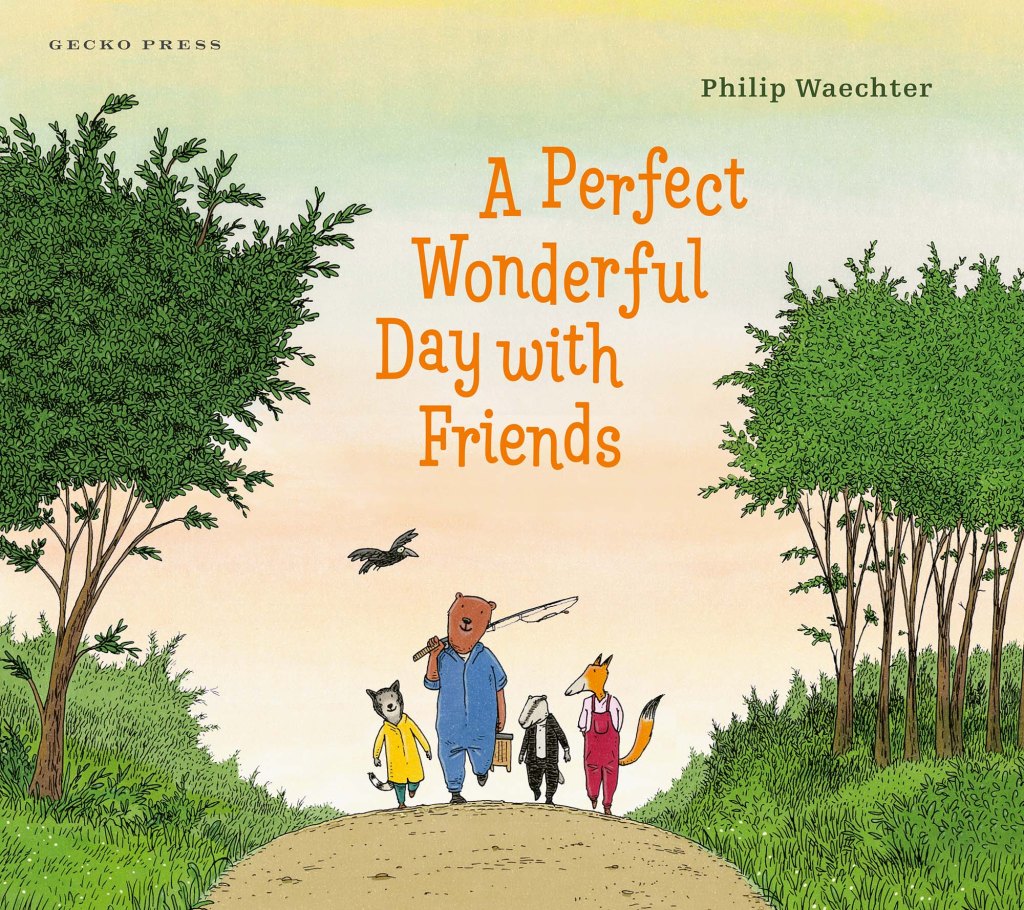
A Perfect Wonderful Day With Friends (Gecko Press)
Written & Illustrated by Philip Waechter

For ages: 4-8
Raccoon decides he wants to bake an apple cake to cure his boredom. However, there are no eggs in the house. Fox owns chickens, so maybe she will help him out. When Raccoon arrives at Fox’s home, he finds she has a leaky roof that needs repairs. The two head to Badger’s house, hoping he has a ladder. Well, Badger is having difficulty with a crossword puzzle. Fox thinks Bear might solve it, and the trio heads to visit him. They stop for a delicious blackberry picnic and find Bear isn’t home when they reach their destination. Crow is circling overhead and guides them to Bear, who is fishing along the river. Unfortunately, he’s not having luck catching anything. So, the friends jump into the water for a refreshing swim. 

Continue reading “Spotlight – A Perfect Wonderful Day With Friends/Brand New Bubbe”
asian-american, author spotlight, social-emotional

Author Spotlight: Andrea Wang

Andrea Wang loves to tell stories that have a personal connection to her own life as a Chinese-American. She was born in Cambridge, Massachusetts, in 1970. During Andrea’s childhood, she came to love the Chinese myths of her family’s culture. As a toddler, they moved to Yellow Springs, Ohio, an extremely rural town. As a result, she developed a profound love of reading and exploring nature around her. The family moved back to Massachusetts when Andrea was in middle school, letting her experience urban life. A Master’s degree in environmental science led to a consultancy job for the state of Mass. She is also married and has had two sons. While staying home to care for her children, Andrea discovered a love of writing that came out of her hunger to read. Stories from her life and the broad scope of Asian culture are present in everything she writes, helping us hear voices not often represented in American children’s literature.

Continue reading “Author Spotlight: Andrea Wang”
autism, book list, disability awareness, social-emotional

Book List: Understanding Autism

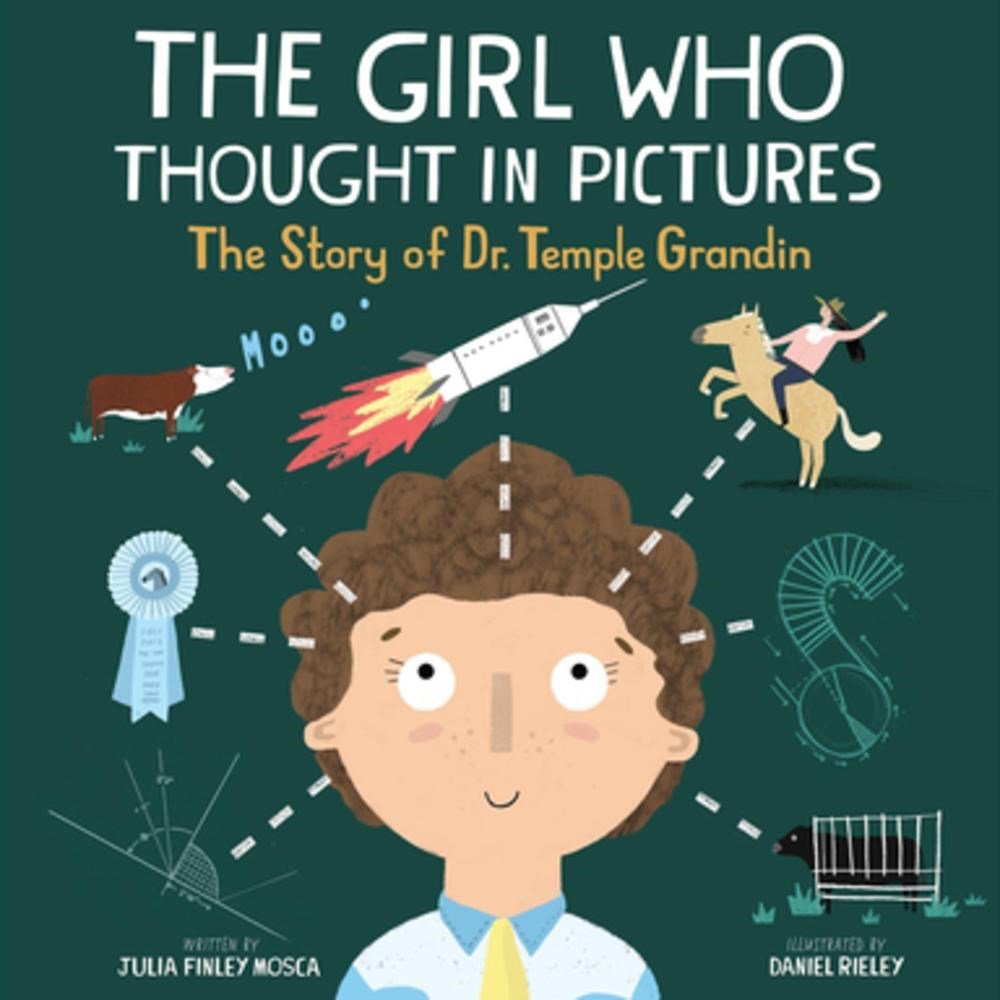
The Girl Who Thought in Pictures (The Innovation Press)
Written by Julia Finley Mosca
Illustrated by Daniel Rieley

For ages: 4-8
My first encounter with the concept of autism came through Temple Grandin. I was a child when I saw a report about her on ABC’s 20/20, and at the time, I didn’t fully understand what made her different. I know much more now as an adult and someone on the spectrum. This story, told in rhyme, teaches children about Grandin by starting with her childhood. First, she feels frustrated when trying to communicate with other children. Eventually, a high school teacher fosters a love of science in the young woman who invents a special machine that will soothe cattle, keeping them from a panic so they can be more humanely slaughtered. There are lots of extras in the back pages that will extend your student’s learning. This is also one of the few books I could find that talks about autism from the autistic person’s perspective.


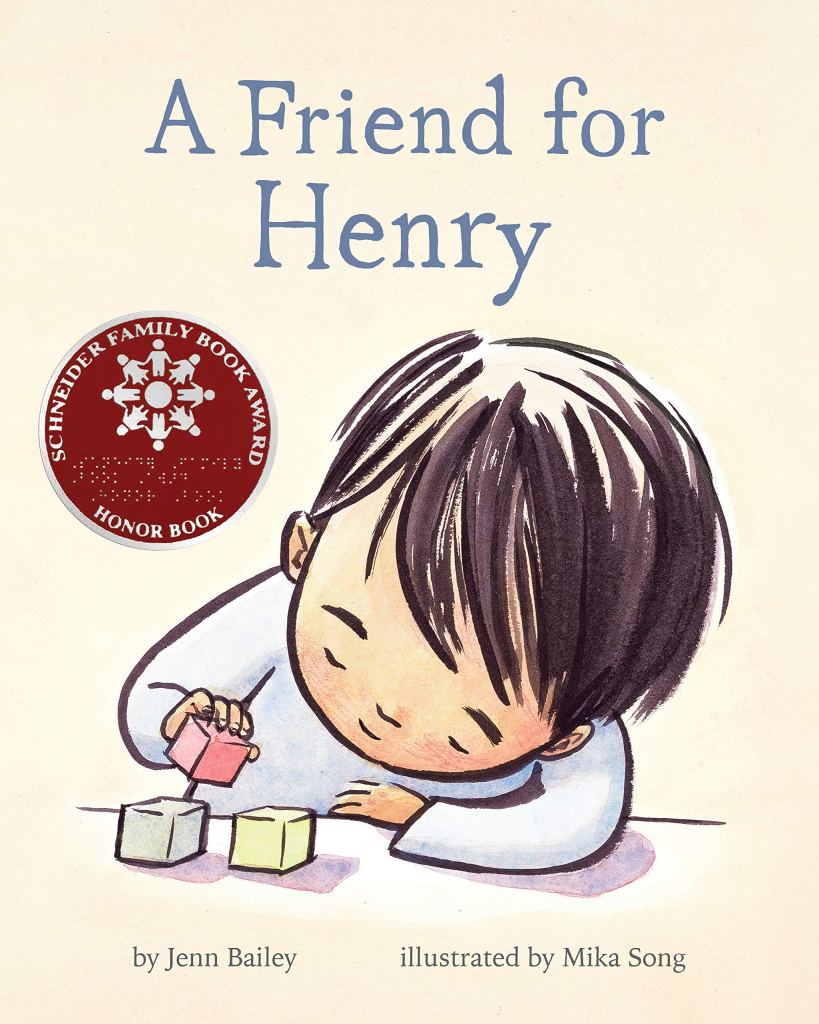
A Friend For Henry (Chronicle Books)
Written by Jenn Bailey
Illustrated by Mika Song

For ages: 4-8
Henry is looking for a new friend in his classroom but getting frustrated. The other children don’t make sense sometimes. They scream so loud. They can’t stay in their seats. They like things that Henry does not like. While the text never explicitly states that Henry is autistic, we can infer it through his behavior and traits. The most fun Henry has is when he can sit quietly and watch the class goldfish swimming in her bowl. Eventually, Henry does find Katie, someone who seems to have patience for him and shares the same desire to be still & quiet. Henry can become more flexible when he finds someone that shows him empathy. This is an excellent text to help children understand classmates who may see things differently. 

Continue reading “Book List: Understanding Autism”
humor, social-emotional, spotlight

Spotlight: Ice Cream Face/Two Dogs

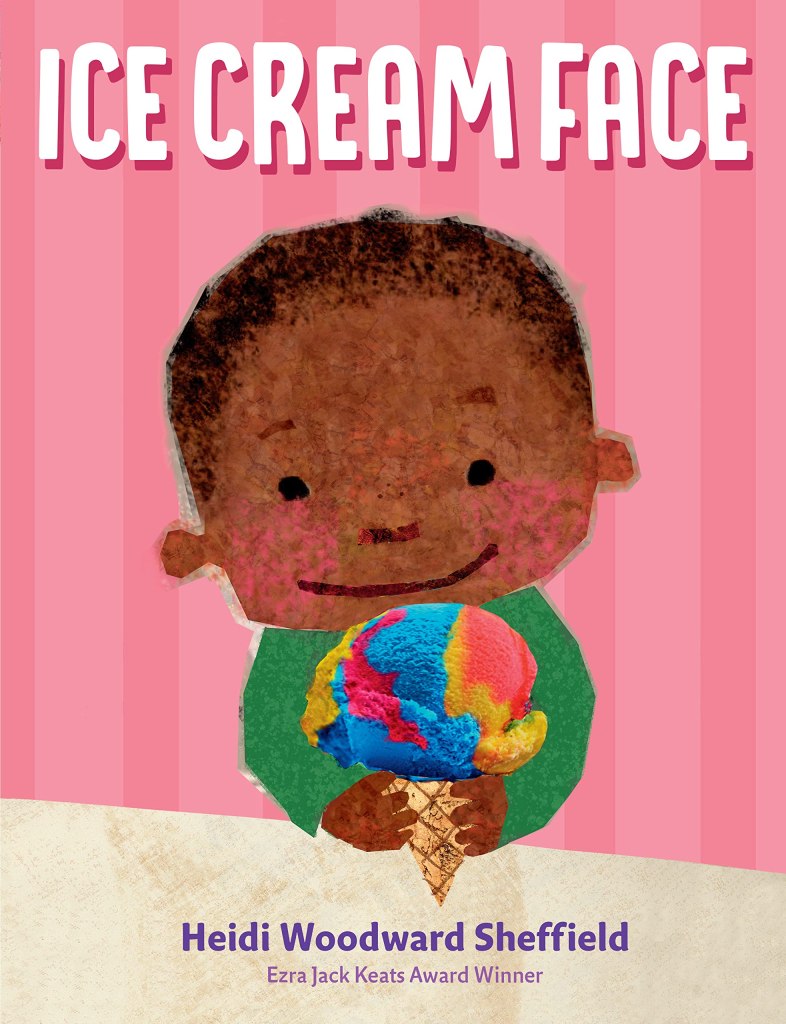
Ice Cream Face (Nancy Paulsen Books)
Written & Illustrated by Heidi Woodward Sheffield

For ages: 3-7
It’s hard for kids not to have a strong opinion about ice cream. Ask your students what their favorite flavor of ice cream is the next time you’re gathered on the carpet, having a morning meeting. The conversation will keep itself alive for much longer than you likely plan on it. In Ice Cream Face, readers meet a little boy who loves the tasty cold treat just as much as your students. What’s happening in the book is less a celebration of dessert and more an exploration of emotions and how we express them through our faces.

Continue reading “Spotlight: Ice Cream Face/Two Dogs”
author spotlight, black history, black lives, social studies, social-emotional

Author Spotlight – Jacqueline Woodson

From top to bottom, Jacqueline Woodson is someone who was born to write. She grew up splitting her life between time in South Carolina and New York, learning a lot from both places. After college, Woodson did a lot of technical writing, from children’s packaging to the California standardized tests. After enrolling in a children’s book writing class led by Delacorte editor Bebe Willoughby, Woodson finally found someone who saw the immense talent she possessed. I find Woodson’s work to be some of the most beautiful and pointed in addressing the social-emotional needs of children, especially Black children. She has been forthright in her opinion that “bleakness” and “hopelessness” have no place in children’s literature without at least a strong notion of hope added to counter them. While Woodson has written for all ages, I am only familiar with her picture book work, and it is some of the best out there right now. She can deftly tackle things many educators may be scared of at the moment, aggressive right-wing movements making it “awkward” to talk about. Woodson’s writing is so laser-focused on speaking to the child that she is not interested in catering to adult hatemongers who want to muddy the child’s thinking. 

While you are likely to hear about Woodson’s more recent books (like The Day You Begin or The Year We Learned to Fly), I want to recommend some older pieces from her bibliography. 

Continue reading “Author Spotlight – Jacqueline Woodson”