humor, illustration, jon klassen, spotlight

Spotlight: The Rock From the Sky/The Old Truck

The Rock From the Sky (Candlewick)
Written & Illustrated by Jon Klassen
For ages: 5-8
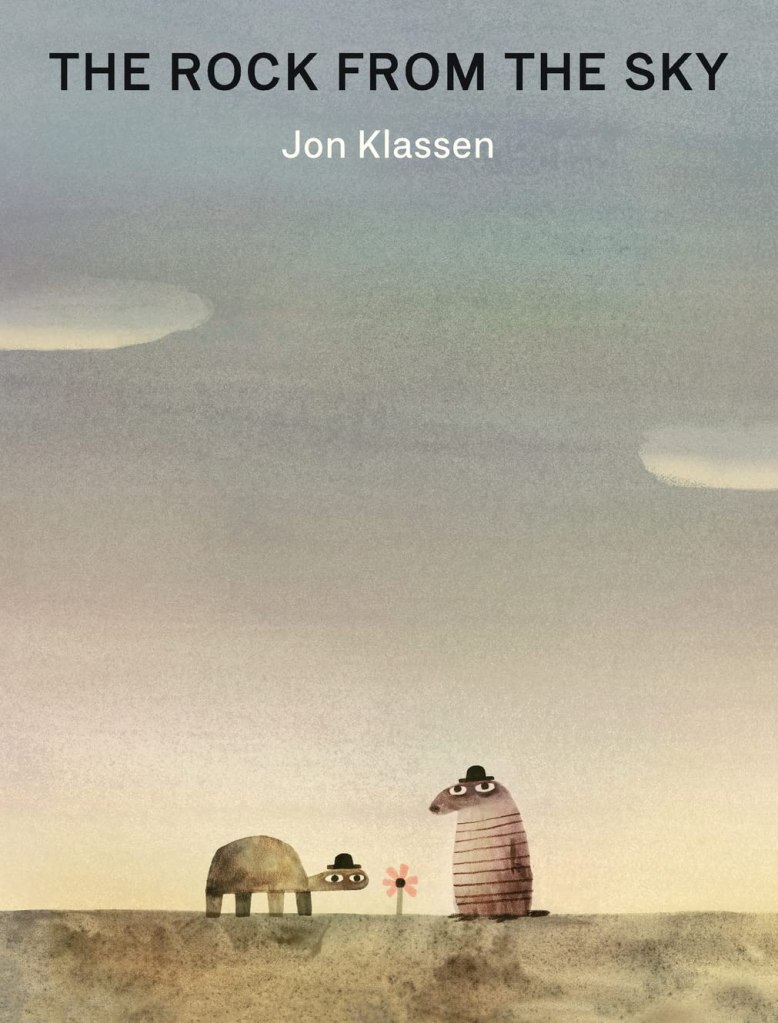
Author Jon Klassen’s books are some of the most remarkable children’s literature published at the moment. On the surface, they appear incredibly simplistic; his art style is very clear & direct. There aren’t many words in his books either. However, Klassen is taking big ideas and communicating them in ways that are easy to catch. Yet, his work also lends itself to some deep analysis; he seems deeply philosophical in his writing. The Rock From the Sky is a hilarious and thought-provoking book told in chapters that play with expectations and perspective.

We follow a turtle, an armadillo, and a snake through five chapters. In part one, the turtle has a spot he loves, but the armadillo feels uneasy. In the second part, the turtle falls but won’t accept help. In part three, the duo imagines what the future must be like, encountering something mean. In part four, the armadillo and snake enjoy watching the sunset. And things wrap up in the fifth part; the turtle gets annoyed with the titular rock and takes it out on his friends. This doesn’t sound like much on the surface, a series of disconnected episodes. However, Klassen spins comedic magic out of it all.

Klassen loves dry, deadpan comedy, and that’s found in the reactions of his characters. They seem to look at the reader in the same manner characters from the office gaze into the camera when something ridiculous happens. It’s a much more subtle way of breaking the fourth wall, a gimmick many children’s books have presented in the past; it’s just so sly here. Klassen is also a student of iconic theater, and he’s remixing Waiting for Godot with his very focused cast and setting. This is a story about silliness and absurdity, and that’s something children especially need in these dire, dreadful times.

Activities

  1. Have your child imagine another animal that could be added to the cast of this story. Depending on their age & ability, have them talk out/draw/write a new chapter and how this new animal changes things up.
  2. Klassen’s books are like little plays. Have your child/students/family act out the book’s chapters. Assign a part to each person and even gather props if you’d like. If you’re feeling up for it, share your performance as a video on YouTube.
  3. Have your child/students make a profile of their favorite character. Aspects to include would be likes, dislikes, fears, behavior, and thoughts. To push your writers further, ask them to explain how this character is like/unlike themselves.

The Old Truck (Norton Young Readers)
Written by Jared Pumphrey
Illustrated by Jerome Pumphrey
For ages: 3-5
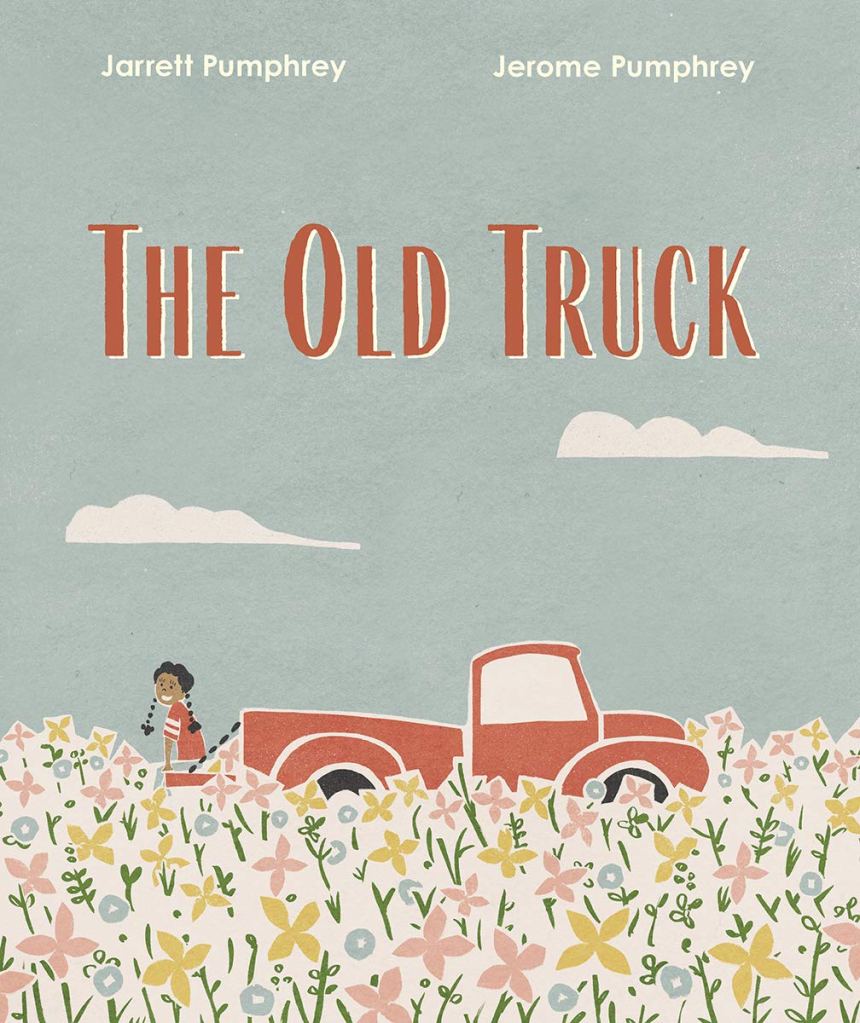
Like The Rock From the Sky, The Old Truck is another beautifully simplistic book with so much underneath the surface. Brothers Jared and Jerome Pumphrey have used ink stamps to illustrate the book, hand-making over 250 stamps to tell their story. The result of the clear communication of the drawings is that even your earliest emerging readers can page through the text and fully understand what is happening. However, even older students can find rich themes focused around age, usefulness, and finding beauty in things people might toss away. 

The story describes how a pickup truck works hard for the farmer and his family. Much of the narrative is found in the illustrations, which illuminate the simple prose. We see a little girl, the farmer’s daughter, who becomes the central human character in the story. The family loads livestock and produce into the vehicle’s bed, and at certain points, repairs must be made on the old friend. The most interesting segment comes when the truck is parked beside the barn and forgotten for many years. The text describes this as the truck going to sleep and dreaming, and in these visions, he’s transformed into a boat, a blimp, and a moon lander. The grass grows around the red truck, and it seems to be rusted and lost. However, the daughter, now an adult, gets it running again, and the automobile finds a new lease on life.

Living in a world focused on destructive consumption can make us forget old valuable things. They often get tossed aside, lost in closets, attics, and the garage collecting dust. The Old Truck points out that some items may seem useless and get set aside for a time. However, with love and care on our part, we can discover these objects are extraordinary and can keep providing the help we need. If you have ever loved a beat-up old truck, car, or van, then you’re going to find something exceptional here. It’s also a fantastic reminder that even older people, who can get sidelined in our culture, are just as valuable as anyone else in our communities.

Activities

  1. Because The Old Truck was illustrated using ink stamps, it provides an excellent opportunity for your young writers/artists to experiment in the genre. Have your student take a familiar story or one of their own and illustrate it using sponge stamps
  2. Have your child explore the objects that are boxed up in your house. Ask them to choose some forgotten thing that still has a use, even if it needs to be fixed up a little. If you like, have them write a short journal about what makes this object special.
  3. The human characters in The Old Truck don’t ever say anything. By examining the illustrations, have students write about what they believe the farm girl’s motivations were to repair the old truck. 
community, culture, race, social-emotional, spotlight

Book Spotlight: Milo Imagines the World/All Because You Matter

Milo Imagines the World (G.P. Putnam’s Sons Books for Young Readers)
Written by Matt de la Peña
Illustrated by Christian Robinson

For ages: 4-8
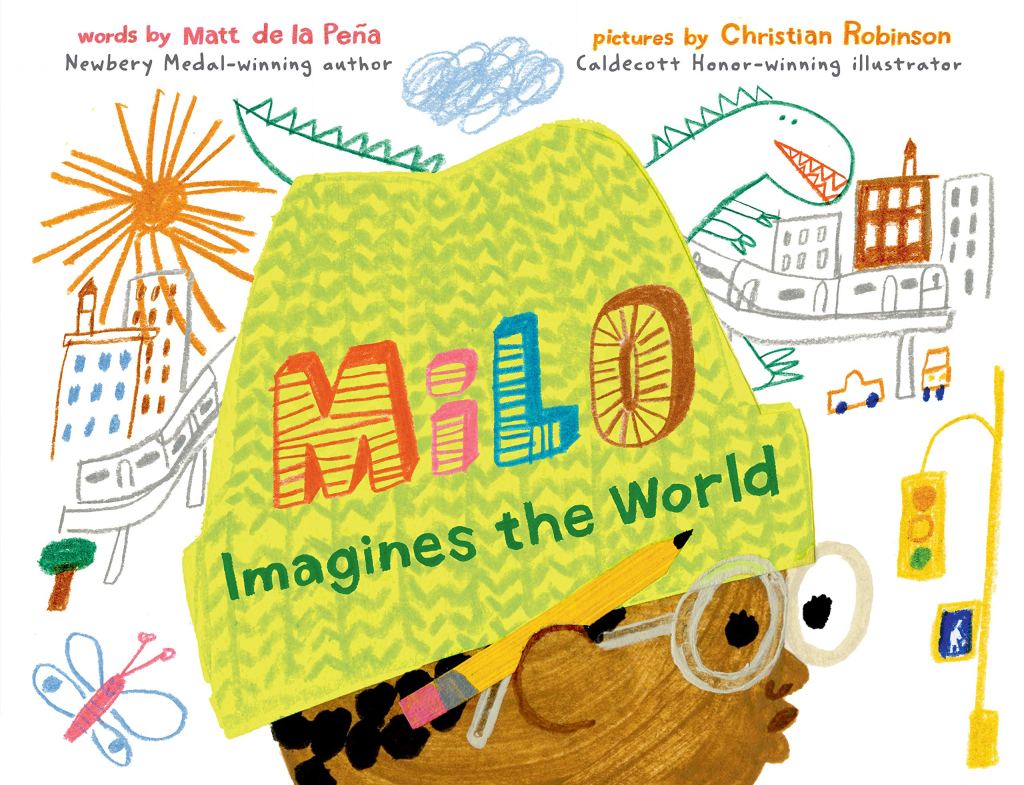
I adore Matt de la Peña’s work, and Milo Imagines the World is his best to date. This is the sort of book that came along at the exact right moment to speak to both children and adults. It talks to us about the assumptions we make about strangers and how these are often wrong. There’s undoubtedly a survival mechanism behind our brains’ ability to try and paint a mental picture of unfamiliar people. The phrase “Don’t judge a book by its cover” is one that touches on our relationships with strangers as well as literature. So you might see the cover of this fabulous book and think you know what it is. Like myself, you would be wrong.

Milo and his older sister are taking their weekly Sunday subway ride. The destination isn’t revealed until later, which plays into our assumptions about the protagonist. Milo gets out his sketchbook and people-watches. When he sees someone that interests him, he draws what he imagines their life at home might be like. A sour-looking passenger lives in a rat-infested apartment. A doorman outside a lovely building yells at a group of boisterous teenagers wearing colorful clothes. A boy wearing a suit lived surrounded by servants.

Milo is entirely wrong, though with a gut punch that reveals the destination of his trip, a city jail. Milo’s mother is incarcerated there, and so is the mother of the little boy in the suit. This sudden realization of how wrong he was causes Milo to revisit his subway sketches. Now he imagines private lives full of love and family, a stark difference from when he first saw these people. De la Peña’s language is rich and descriptive, some of the most vital writing I’ve seen in a picture book in years. The illustrations by Christian Robinson are child-like yet not simple; they burst with color and perfectly capture the feel of a child’s thoughts. The story told here is vital for children everywhere. In my opinion, this is a required text for every primary classroom in the 21st century.

Activities

1. This is a fantastic book to introduce younger students to the idea of implicit bias. You could prepare images that might surprise children (male nurse, blind person reading braille, wheelchair basketball players). Ask the children if anything about these images surprises them and discuss what media has made them think people are limited to be.

2. Because Milo’s mother is in jail, there are a lot of assumptions people might make about her. With your student, make a list of five great things about Milo’s mom. Have students use details from the text and pictures to find these beautiful things.

3. Have students brainstorm a personal narrative (drawing and/or short essay) about a time they learned something about a person that surprised them. It could be someone they personally know or a famous figure. Please make sure they spend time writing about their assumption, the truth, and why they felt surprised.


All Because You Matter (Orchard Books)
Written by Tami Charles
Illustrated by Bryan Collier

For ages: 4-8
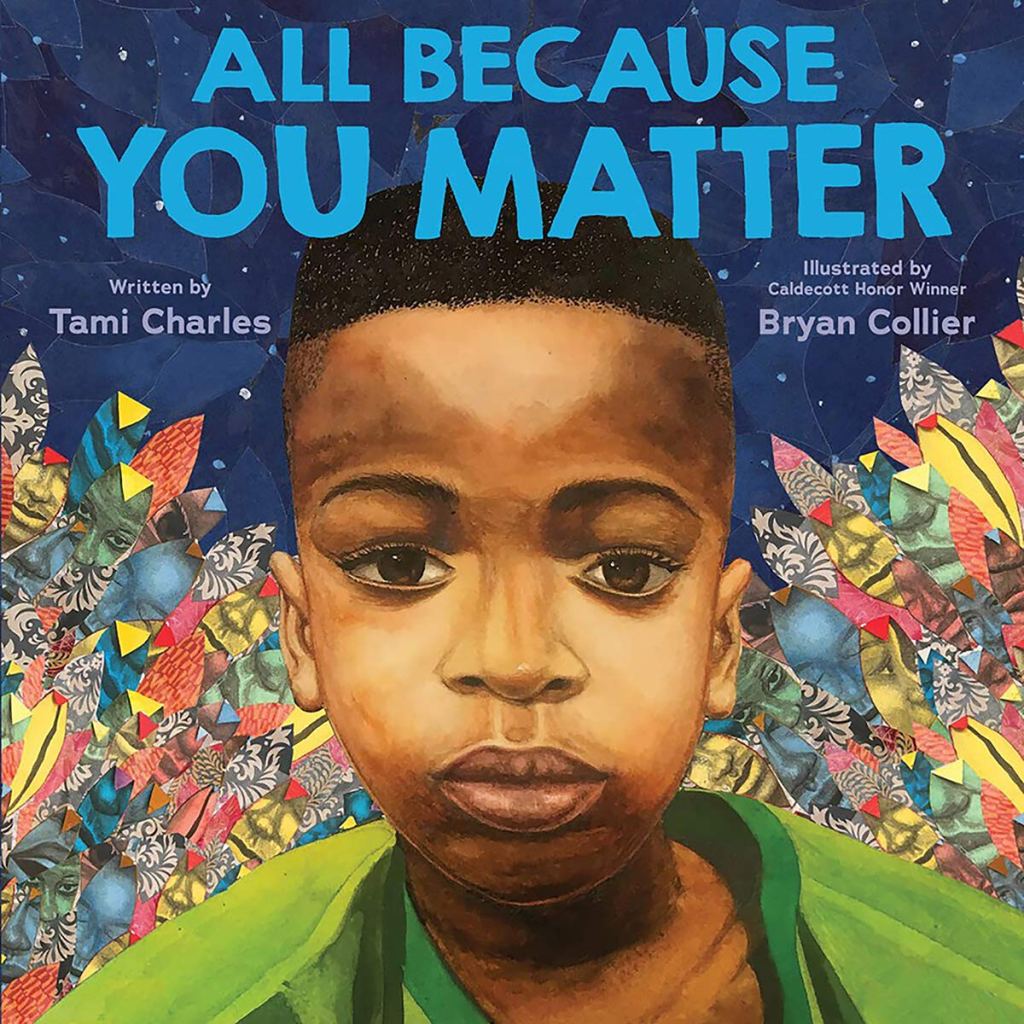
One of the most infuriating things in the current discourse in America is the willing refusal to acknowledge the meaning of the phrase “Black Lives Matter.” Among certain groups, they pretend as if it means to elevate Black lives above others rather than its actual intention: to give value to the lives of a group of people continually harmed in American society. Black children constantly see and hear about people who look like them murdered by police or civilians. Then the people who can change the broken systems are entirely unwilling. To contemplate the psychological/emotional/spiritual pain, these children have to feel can be overwhelming. Imagine how they must feel. Tami Charles wants to help these children feel beautiful and empowered despite society trying to marginalize them. 

Charles speaks to “you, dear child.” She speaks as a mother, a teacher, a caregiver. This beautifully illustrated poem begins by talking about how the child’s ancestors dreamed of them for generations; the arrival of this child was an event like no other. Every challenge they overcame, every slight they suffered, was all to get to where this fantastic child was born. The narrator acknowledges the sad reality of things, invoking the names Trayvon/Tamir/Philando. Despite the protestations of ill-intended “parent groups,” Black children know these names, and no amount of book banning can silence the truth. The book does not focus on the tragedies, but Charles knows it would be dishonest to pretend they didn’t happen.

Charles has stated she wrote this book to provide a starting point to discuss race in 21st century America. It is centered in a place of love and care; the word “matter” is so important. Black children’s lives matter, and that is something many have to be actively told because the world at large is not relaying the message. The book exists to encourage children never to forget they are loved by the people they know but also those in their family and community even if they passed long before that child was even a thought. This isn’t just a well-meaning flowery text meant to make the reader feel good. It touches on how it feels for a child to see ream after ream of pages marked up with red and Fs despite how hard they try. It reminds children of how beautiful their skin and hair are, no matter what the media might tell them. Like Milo Imagines the World, this is a book for now and forever. 

Activities

1. Have students make a list or drawings about ways that they matter. This could be about special skills they know, ways they help in their home & community, just everything they love about themselves, and they see as important. 

2. Tami Charles wrote this book with her son in mind. Have students write a letter to Tami Charles. Tell her what you thought about Because You Matter. Then, have them share a few details about themselves and compose a question they would like to ask the author.

3. In the text, a boy enters a new classroom, and someone makes fun of his name. Have your student write their name as large as possible on a single sheet of paper and decorate it to reflect their feelings and interests. Celebrate everyone’s names.

social-emotional, spotlight

Spotlight – Don’t Hug Doug/Rissy No Kissies

Don’t Hug Doug (He Doesn’t Like It) (Penguin Random House)
By Carrie Finison
Illustrated by Daniel Wiseman

For ages: 3-7
Don’t Hug Doug introduces us to the bespectacled young Doug. We learn about his interests and personality and the fact that he doesn’t like hugging anyone besides his mother. The narrator reminds us that this is not because Doug is mad; he doesn’t like hugs. Further, into the book, we’re introduced to people of all genders, ages, and races and shown how they each have their hug preferences. As if anticipating questions from young readers, the narrator informs us that the only way we can know what people prefer is to ask them kindly. 

Continue reading “Spotlight – Don’t Hug Doug/Rissy No Kissies”
culture, food, spotlight

Spotlight – A Pizza With Everything On It/Soul Food Sunday

If you are a parent or teacher, you know how food can be a powerful motivator for children. It’s not just that they want to eat it, but they have strong opinions about what they like and don’t like. If you ever need a child to write an opinion paper, just ask them about a food they have strong feelings about, and the report simply writes itself. Food is also something we share with the people we love and therefore bonds communities together. The preparation and serving of food is one way people show that they love each other. These two books center on children sharing a food experience with a significant adult in their family. While one is silly & chaotic and the other is joyful & heartwarming, they both capture how vital food is to being alive.

Continue reading “Spotlight – A Pizza With Everything On It/Soul Food Sunday”